


Quick Summary
- AI chatbots collect vast amounts of user data, raising privacy concerns.
- Recent incidents highlight vulnerabilities in chatbot data handling.
- Users lack transparency on how their data is stored and used.
- Regulators are increasing scrutiny on AI chatbot privacy practices.
- Companies are implementing new privacy features in 2026.
- Understanding privacy risks helps users protect their personal data.
AI chatbots have become ubiquitous in 2026, powering everything from customer service to personal assistants. Yet, as their use expands, so do concerns over AI chatbot privacy. Users increasingly worry about how their data is collected, stored, and potentially exploited.
With recent high-profile data breaches and regulatory investigations, understanding the privacy implications of AI chatbots is more urgent than ever. This article breaks down the core issues, recent developments, and practical steps you can take to safeguard your personal information.
AI chatbot privacy in 2026: background and core concerns
AI chatbots process millions of interactions daily, generating enormous data troves. This data fuels improvements but also exposes users to risks like unauthorized access and misuse. Privacy advocates warn that many companies lack transparency about data practices.
Major incidents, such as the 2025 breach at a leading customer support chatbot provider, exposed vulnerabilities and prompted regulators to scrutinize privacy policies. As AI evolves, so do the challenges of safeguarding personal data.
Regulatory bodies like the FTC and the European Data Protection Board are stepping up oversight, demanding clearer disclosures and stricter controls. The question is: how well are companies meeting these standards?
For a deeper dive into AI data handling, see AI chip market trends and search engine AI developments.
Key Privacy Concerns in AI Chatbots
- Data collection often occurs without explicit user consent.
- Personal data is stored long-term, increasing breach risks.
- Many chatbots lack end-to-end encryption.
- Users are rarely informed about how their data is used.
"Transparency and user control are essential to building trust in AI chatbot privacy."
Privacy Expert
What happened recently — core details of the latest privacy incident
In July 2026, a major AI chatbot platform suffered a data breach affecting over 10 million users. Hackers exploited a vulnerability in the company's API, gaining access to chat logs, personal identifiers, and payment info.
The breach prompted immediate investigations, with regulators demanding explanations and stricter compliance measures. The company issued a public apology and pledged to overhaul its security protocols.
This incident underscores the ongoing vulnerabilities in AI chatbot data handling and the importance of robust security measures. It also raises questions about the efficacy of current privacy policies.
For more details on the incident and its fallout, visit TechCrunch coverage and Bloomberg.
Did You Know?
- Many chatbots store conversations for training purposes.
- Users often unaware that their chats are analyzed for AI improvement.
"Security lapses in AI chatbots can lead to severe privacy breaches."
Cybersecurity Analyst
How AI chatbots process and store user data — deeper mechanics
Most AI chatbots operate by collecting user inputs and storing them in cloud servers for analysis and machine learning. Data is often anonymized but can still contain sensitive information.
Advanced chatbots use techniques like differential privacy and federated learning to minimize data exposure. Yet, many implementations still rely on centralized storage, creating single points of failure.
Understanding how data flows from input to storage helps users grasp their privacy risks. For a technical overview, see AI hardware innovations and data privacy principles.
Mechanics of Data Handling in AI Chatbots
- Data is collected via user inputs and stored in cloud servers.
- Encryption varies across providers, often lacking end-to-end encryption.
- Techniques like federated learning reduce data centralization.
- Long-term storage increases the risk of breaches.
"Efficient data handling requires transparency and strong security practices."
AI Privacy Researcher
Official reactions and industry responses to privacy concerns
Major AI companies like Google and Microsoft have issued statements emphasizing their commitment to user privacy. They are rolling out features like data controls and transparency dashboards in 2026.
Regulators are increasing pressure, with the GDPR and CCPA enforcing stricter compliance. Some companies face fines or sanctions for violations.
Industry groups are calling for standardized privacy frameworks to build user trust. Meanwhile, privacy advocacy groups push for stronger regulations and user rights.
To explore how companies are responding, visit our Tech News section for ongoing updates on AI privacy policies.
Industry Response to Privacy Concerns
- Major firms are adopting privacy dashboards and controls.
- Regulatory bodies are increasing scrutiny and fines.
- Industry groups seek standardized privacy frameworks.
"Proactive privacy measures are essential for maintaining user trust."
Industry Analyst
Practical implications and steps users can take in 2026
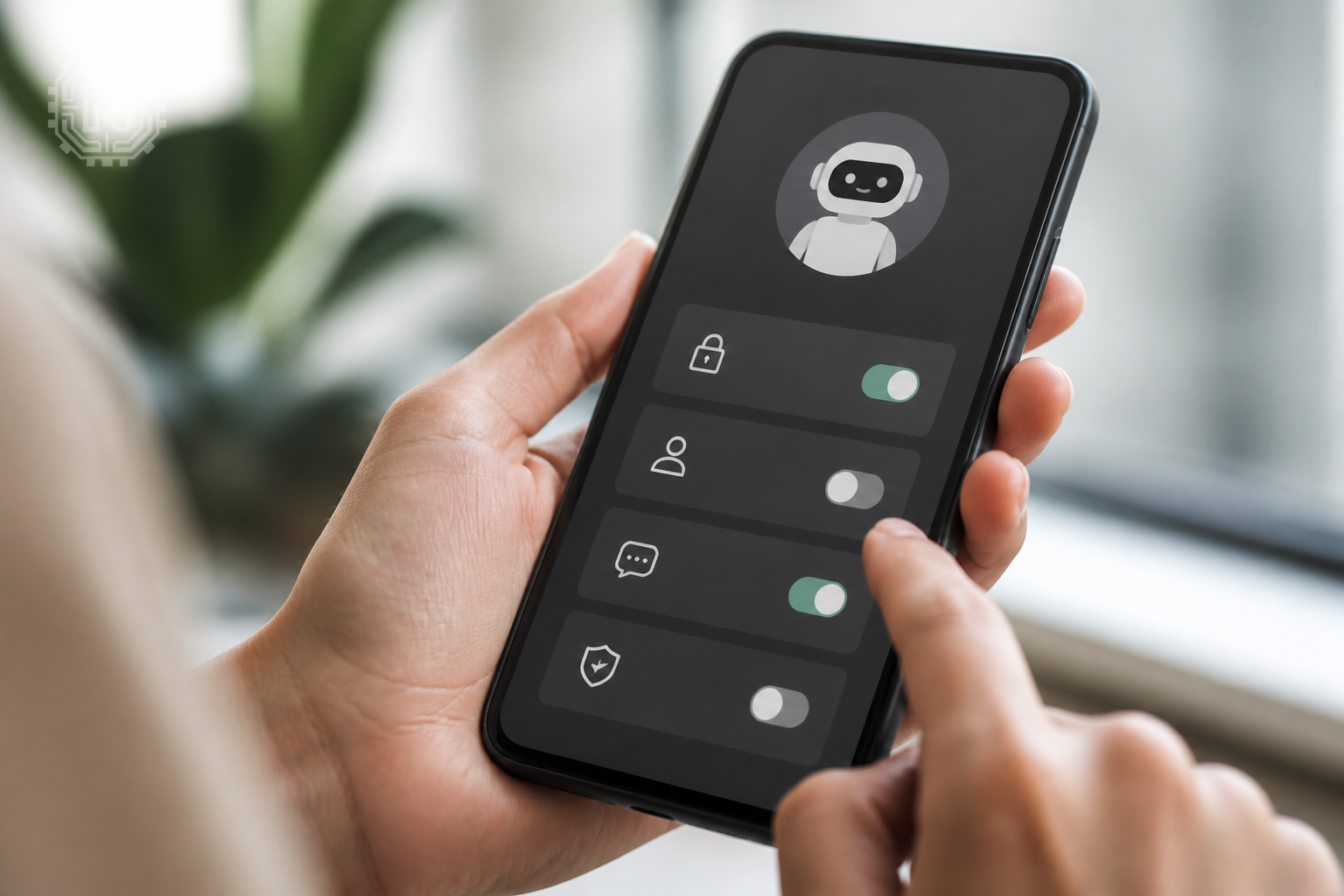
Users should regularly review privacy settings on chatbots and disable data sharing when possible. Use strong, unique passwords and enable two-factor authentication.
Be cautious about sharing sensitive information during interactions. Look for privacy labels and transparency disclosures from providers.
For added security, consider using VPNs or privacy-focused browsers when engaging with AI chatbots. Stay informed about updates and new privacy features.
To learn more about privacy best practices, see our guide on privacy tips and tricks.
Why Privacy Matters in AI Chatbots
- Protects personal information from misuse or theft.
- Builds user trust and confidence in AI services.
- Complies with legal and regulatory requirements.
"Informed users are better equipped to protect their data."
Cybersecurity Expert
Why privacy in AI chatbots is crucial — context and comparison
Compared to traditional web browsing, AI chatbots process more personal data, increasing privacy risks. Unlike static websites, chatbots actively analyze and store conversations, amplifying concerns.

Other digital services like email or social media have established privacy standards, but AI chatbots are still catching up. This disparity highlights the need for stronger industry norms.
For a broader perspective, see AI evolution and how privacy measures are evolving alongside.
"Without proper safeguards, AI chatbots can become privacy liabilities."
Data Privacy Specialist
Future outlook — what’s next for AI chatbot privacy in 2026 and beyond
Expect further tightening of privacy regulations globally, with new laws targeting AI-specific data handling. Companies will need to adopt privacy-by-design principles more rigorously.
AI developers are investing in privacy-enhancing technologies like homomorphic encryption and secure multi-party computation to protect user data.
Consumers will demand more transparency and control, pushing providers to innovate in privacy features. The industry’s focus is shifting toward trustworthy AI.
For ongoing updates, follow our coverage of Google’s latest AI models and hardware advancements shaping AI privacy.
Editorial Sources
Conclusion
As AI chatbots become even more embedded in daily life, their privacy implications grow more serious. Staying informed and proactive is the best way to protect your personal data in 2026 and beyond. Companies must also prioritize transparency and security to build lasting trust.
Frequently Asked Questions
How do AI chatbots collect user data?
They gather inputs during interactions, storing conversations for analysis and training, often without explicit user awareness.
Are AI chatbots safe to use in terms of privacy?
Safety varies; many lack end-to-end encryption, and users should review privacy policies before sharing sensitive info.
What regulations affect AI chatbot privacy in 2026?
Laws like GDPR and CCPA are tightening controls, requiring companies to improve transparency and data handling.
How can I protect my personal data when using AI chatbots?
Review privacy settings, avoid sharing sensitive info, and use privacy tools like VPNs and secure browsers.
What are the biggest risks associated with AI chatbot data?
Data breaches, unauthorized access, and misuse of personal conversations are key concerns.
Will AI chatbots become more private in the future?
Yes, companies are investing in privacy technologies, and regulations will push for better data protections.
What should companies do to improve AI chatbot privacy?
Implement transparent policies, adopt privacy-by-design, and enhance security measures.
How does data storage differ between chatbot providers?
Some store data centrally for analysis, while others use decentralized or encrypted methods to reduce risks. For more on Tech News, explore Newtechzy. You can also review our Privacy Policy and Cookie Policy, or learn more About us.
Related Topics
Explore our detailed guides on AI privacy and security to stay ahead in 2026. Protect your data and understand your rights today.
Start Your Journey Today!


