

Quick Summary
- AI chip market growth accelerates in 2026 due to AI demand.
- Major companies like NVIDIA, AMD, and Samsung lead innovation.
- New architectures improve AI processing efficiency.
- Supply chain issues impact chip availability and prices.
- Investments in AI-specific hardware are at record levels.
- Future trends point toward specialized AI chips for edge computing.
The AI chip market in 2026 is booming, with industry giants racing to develop faster, more efficient processors for AI workloads. As demand for AI applications surges across sectors, the competition among chipmakers has intensified, pushing innovation and investment to new heights.
This article explores the current state of the AI chip industry, the key players, technological breakthroughs, and what the future holds for AI hardware in the next few years.
AI chip market 2026: Background and Industry Drivers
The evolution of AI-specific hardware has been a core driver of the semiconductor industry’s growth. As AI models become more complex, requiring massive computational power, the need for specialized chips has become urgent.
Companies like NVIDIA, AMD, and emerging startups are investing billions into developing next-generation AI processors. According to NVIDIA, their latest GPUs are optimized for large-scale AI training, enabling faster model development.
Global chip shortages and supply chain disruptions have added complexity, but also opportunities for innovation in manufacturing and design. The trend toward AI-optimized chips is not just about performance; energy efficiency and cost reduction are equally critical.
For a deeper dive into this evolution, see our post on AI chip advancements 2026.
Key Facts About 2026 AI Chip Market
- Market expected to reach $50 billion in revenue.
- Major players include NVIDIA, AMD, Intel, and Samsung.
- AI chips now dominate the semiconductor R&D budget.
- Edge AI hardware gaining prominence alongside data center chips.
"AI-specific hardware is now the backbone of enterprise AI deployment, transforming industries."
Industry Analyst
Core Technologies Driving AI Chip Innovation in 2026
Advancements in architecture, such as tensor processing units (TPUs) and neuromorphic chips, are at the forefront of innovation. These architectures offer significant improvements in processing speed and power efficiency.
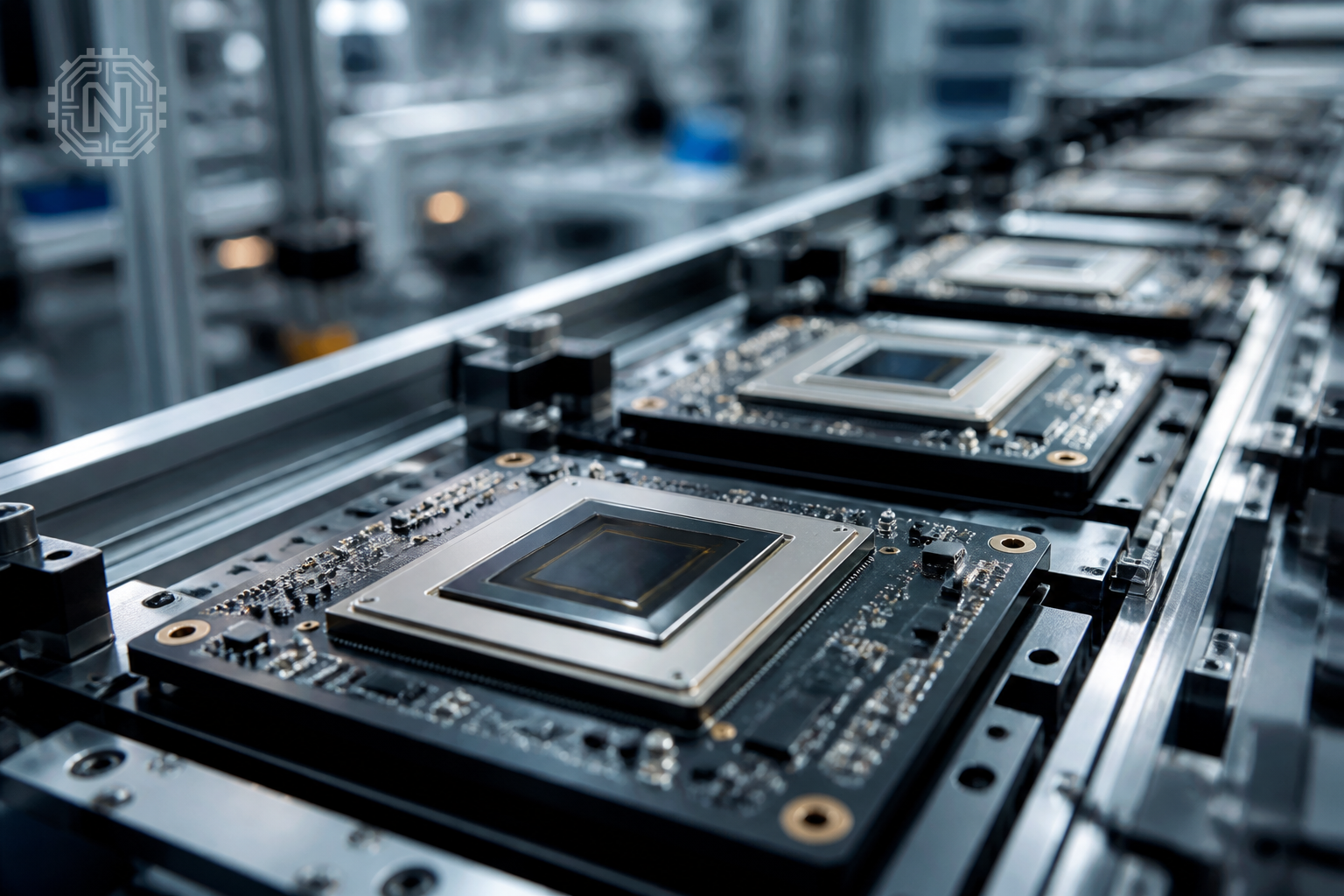
NVIDIA’s Hopper architecture, announced in late 2025, exemplifies this trend with dedicated cores for AI inference and training. Similarly, AMD’s MI300 series targets high-performance data centers.
Manufacturers are also exploring 3D chip stacking and advanced packaging techniques to increase density and reduce latency. These innovations help meet the demands of real-time AI applications.
For a technical overview, see our detailed breakdown of AI chip architectures.
Pros and Cons of Current AI Chip Technologies
- High performance for training large models.
- Energy efficiency improvements reduce operational costs.
- Manufacturing complexity increases costs.
- Supply chain constraints limit availability.
Major Players and Market Competition
Leading the charge are NVIDIA with its AI-optimized GPUs, and AMD’s recent push into AI accelerators. Samsung and Intel are also investing heavily, aiming to capture parts of the edge AI market.
NVIDIA’s dominance is driven by its CUDA ecosystem and early investments in AI-specific hardware. Meanwhile, startups like Graphcore and Cerebras are challenging with innovative chip designs.
The market is also seeing increased activity from Chinese firms like Huawei and Alibaba, focusing on domestic AI hardware solutions amid geopolitical tensions.
For a comparative analysis, check our market comparison chart.
"The competition among AI chip makers is fierce, with each pushing unique architectures to outpace rivals."
Tech Industry Expert
Supply Chain and Pricing Challenges in 2026
Global supply chain disruptions continue to affect the availability of advanced semiconductor components. The chip shortage has driven prices upward, impacting OEMs and consumers alike.
Manufacturers are responding by increasing investments in local fabrication facilities, but these projects take years to mature. In the meantime, shortages persist, especially for high-end AI chips.
This scarcity influences AI hardware adoption, especially in smaller enterprises and startups unable to afford premium chips.
For strategies on navigating these challenges, see our guide on managing supply chain disruptions.
Implications for Industry and Future Outlook
The rise of specialized AI chips is reshaping industries such as healthcare, finance, and autonomous vehicles. Faster, more efficient hardware accelerates AI deployment across sectors.

Looking ahead, we expect continued innovation, with more focus on edge AI chips for IoT devices and autonomous systems. The market’s growth will also be driven by AI democratization, making hardware more accessible.
Investments in R&D are likely to increase, with governments and private sectors competing to secure leadership in AI hardware innovation.
Stay updated with our ongoing coverage on future AI hardware developments.
Comparison of Leading AI Chips in 2026
| Feature | NVIDIA Hopper | AMD MI300 | Intel Ponte Vecchio | Samsung Galaxy AI |
|---|---|---|---|---|
| Performance | Top-tier for training | High for data centers | Optimized for inference | Edge AI focus |
| Power Efficiency | Excellent | Good | Moderate | High |
| Manufacturing Process | TSMC 4nm | TSMC 5nm | Intel 7 | Samsung 5nm |
| Target Market | Data centers | Data centers | Data centers & HPC | Edge devices |
Conclusion
The AI chip market in 2026 is characterized by rapid innovation, intense competition, and ongoing supply challenges. As industry leaders push the boundaries of performance and efficiency, the landscape is set to evolve further, shaping the future of AI across all sectors.
Frequently Asked Questions
What is the current state of the AI chip market in 2026?
The market is rapidly growing, driven by demand for AI processing, with major investments from industry giants and innovative startups.
Which companies are leading AI chip development in 2026?
NVIDIA, AMD, Samsung, Intel, and emerging startups like Graphcore and Cerebras are leading the innovation race.
What technologies are driving AI chip innovation in 2026?
Architectures like tensor processing units (TPUs), neuromorphic chips, and advanced packaging are key drivers.
How are supply chain issues affecting AI chip availability?
Disruptions have increased costs and shortages, impacting adoption, especially among smaller firms.
What future trends are expected in AI hardware?
Growth in edge AI chips, AI democratization, and more specialized hardware for autonomous systems.
How does AI hardware impact other industries?
Faster, efficient chips accelerate AI deployment in healthcare, finance, automotive, and beyond.
Are AI chips becoming more energy-efficient?
Yes, new architectures focus heavily on reducing power consumption while boosting performance.
What are the main challenges facing AI chip manufacturers?
Supply chain constraints, high R&D costs, manufacturing complexity, and geopolitical tensions. For more on Tech News, explore Newtechzy. You can also review our Privacy Policy and Cookie Policy, or learn more About us.
Related Topics
Stay ahead in AI technology by following our latest updates on chip innovations. Explore more on how AI hardware is shaping tomorrow's world or contact us for expert insights.
Start Your Journey Today!


