

Quick Summary
- AI chips in 2026 feature significant performance improvements.
- Major firms like NVIDIA, AMD, and Intel lead the innovation.
- New architectures improve efficiency and reduce power consumption.
- Industry partnerships drive faster development cycles.
- Emerging startups challenge established players.
- Future trends point to specialized AI chip designs.
AI chip advancements in 2026 are transforming how artificial intelligence is processed, with breakthroughs in architecture and efficiency. Leading companies like NVIDIA and AMD are pushing the boundaries, promising faster, more power-efficient AI hardware that will impact everything from data centers to edge devices.
Understanding these developments is crucial as AI becomes more embedded in everyday tech. This article explores what’s happening now, why it matters, and how it will shape AI hardware in the near future.
AI chip advancements in 2026: background and industry context
The race for better AI chips has heated up over the past few years, driven by the explosive growth of AI applications in cloud computing, autonomous vehicles, and edge devices. Companies like NVIDIA, AMD, and Intel are investing heavily in new architectures to stay ahead.
Recent industry reports indicate that the global AI chip market will reach over $200 billion by 2028, up from $50 billion in 2023, reflecting rapid innovation and adoption. This surge is fueled by the need for faster processing and lower latency in AI workloads.
Strategic partnerships and acquisitions are shaping the landscape. For example, NVIDIA’s recent acquisition of Arm and AMD’s partnership with Samsung aim to accelerate chip development cycles. Learn more about AI infrastructure in India and how it influences global trends.
Official statements from industry leaders highlight a focus on specialized architectures like tensor cores and neuromorphic chips, designed to optimize AI workloads. These innovations are setting the stage for a new era of AI hardware.
Key Facts About 2026 AI Chips
- Performance improvements of up to 3x over 2023 models
- Power efficiency gains of 50% or more
- Introduction of neuromorphic and quantum-inspired chips
- Major investments from global tech giants
- Growth driven by AI in autonomous systems and data centers
"AI hardware in 2026 is entering a new phase with architectures tailored specifically for AI workloads, promising unprecedented speed and efficiency."
Industry Analyst
What are the core innovations in AI chips in 2026?
New architectures are at the heart of 2026’s AI chip revolution. Tensor processing units (TPUs) now incorporate AI-specific cores that deliver higher throughput with lower power consumption. Companies like NVIDIA and AMD have unveiled chips that leverage 3D stacking and advanced fabrication techniques.
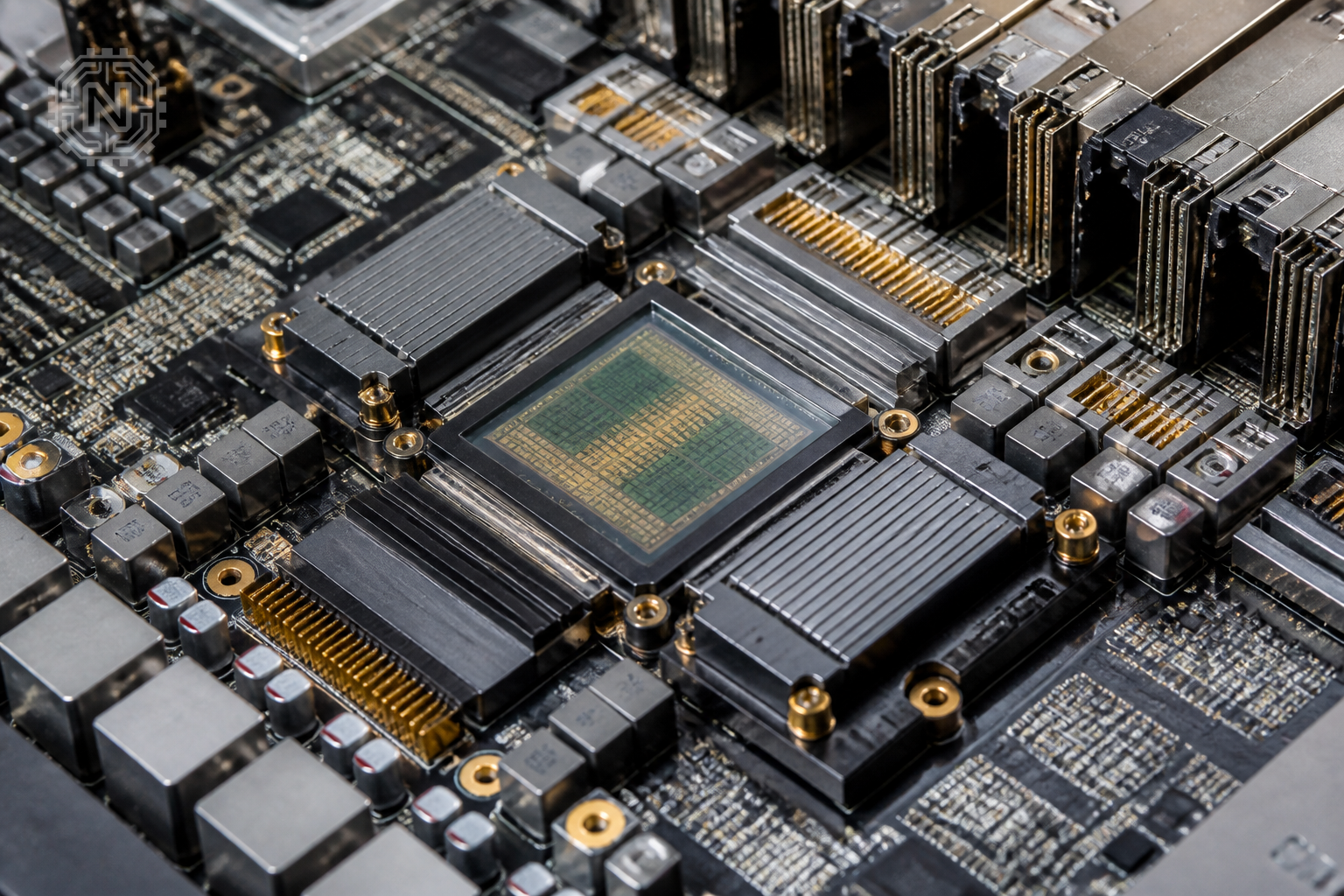
Neuromorphic chips, inspired by biological neural systems, are gaining traction for edge AI applications. These chips mimic brain function, offering high efficiency for pattern recognition and decision-making tasks.
Moreover, quantum-inspired algorithms are being embedded into hardware, promising exponential speed-ups for certain AI tasks. These innovations are pushing the limits of what’s possible in AI processing.
For a detailed comparison of chip architectures, see this latest industry report.
Pros and Cons of 2026 AI Chips
- Pros: Higher speed, lower power, tailored for AI workloads
- Cons: Higher development costs, supply chain complexities
"The new architectures are setting a new standard for AI hardware, with a focus on efficiency and scalability."
Tech Industry Expert
How do these advancements impact AI performance and industry adoption?
The improvements in chip design directly translate to faster AI training and inference, enabling real-time applications like autonomous driving and smart assistants. Data centers can process larger datasets more efficiently, reducing operational costs.
Edge devices, from drones to smartphones, benefit from smaller, more efficient chips that extend battery life and enhance AI capabilities without requiring constant cloud connectivity. This democratizes AI access and expands its reach.
Industry adoption is accelerating as companies seek competitive advantages. According to industry reports, the deployment of advanced AI chips in cloud and edge environments is expected to grow by 40% annually through 2028.
Why AI Chip Advancements Matter
- Enable faster, more efficient AI applications
- Reduce operational costs for data centers
- Expand AI to edge devices and IoT
- Drive innovation in autonomous tech and robotics
"These chip advancements are crucial for scaling AI and making it more accessible across industries."
AI Industry Analyst
What’s next for AI hardware in 2026 and beyond?
Future trends indicate a move toward even more specialized chips, such as application-specific integrated circuits (ASICs) optimized for particular AI tasks. The rise of chiplet designs allows for modular, scalable hardware systems.
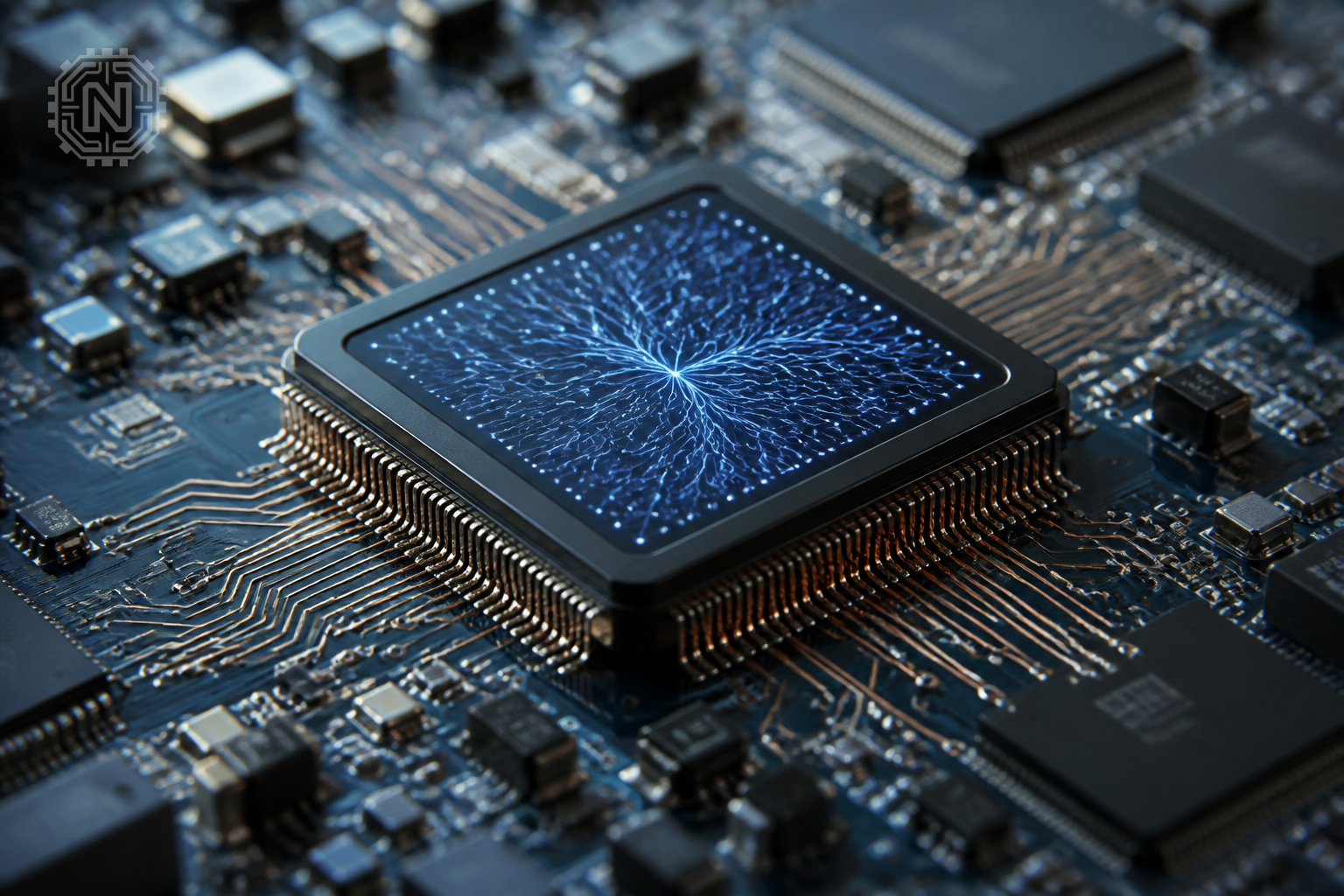
Emerging technologies like optical computing and spintronics could further boost performance, reducing latency and power draw. Companies are also exploring AI chips that integrate seamlessly with quantum processors for hybrid computing.
Regulatory and supply chain challenges remain, but industry leaders are optimistic about continued growth. Regular updates can be tracked on our tech news section.
Future Outlook for AI Chips
- Growth of ASICs and chiplet architectures
- Emergence of optical and spintronic computing
- Increased integration with quantum hardware
- Focus on sustainability and supply chain resilience
"The next phase of AI hardware will focus on specialization, scalability, and integration with quantum tech."
Futurist and Tech Analyst
Editorial Sources
Conclusion
AI chip advancements in 2026 are setting the stage for a new era of faster, more efficient AI processing. From industry giants to startups, the race for better hardware continues to accelerate, promising profound impacts across sectors and applications. Staying informed on these innovations is essential for understanding AI’s future trajectory.
Frequently Asked Questions
What are the main types of AI chips in 2026?
The main types include tensor processing units (TPUs), neuromorphic chips, and quantum-inspired processors.
How much performance improvement is expected in 2026 AI chips?
Performance is expected to triple compared to 2023 models, with significant gains in speed and efficiency.
Are AI chips in 2026 more power-efficient?
Yes, new architectures reduce power consumption by at least 50%, enabling better performance at lower energy costs.
Which companies lead AI chip innovation in 2026?
NVIDIA, AMD, Intel, and emerging startups are leading the charge with new architectures and designs.
What impact do AI chip advancements have on data centers?
They enable faster processing, lower costs, and support larger, more complex AI workloads.
Will AI chips become more specialized in 2026?
Absolutely, application-specific chips are on the rise, optimizing performance for particular AI tasks.
How do neuromorphic chips differ from traditional processors?
They mimic brain-like neural processes, offering high efficiency for pattern recognition and decision-making.
What future technologies could further boost AI hardware?
Optical computing, spintronics, and hybrid quantum-AI chips are promising areas for future breakthroughs. For more on Tech News, explore Newtechzy. You can also review our Privacy Policy and Cookie Policy, or learn more About us.
Related Topics
Want to stay ahead in AI hardware? Explore our latest updates and insights on upcoming trends to keep your projects competitive.
Start Your Journey Today!


