


Quick Summary
- Hardware upgrades boost gaming performance across platforms.
- Software updates and driver optimizations improve stability.
- New GPU architectures deliver better efficiency and power.
- Network improvements reduce latency and lag.
- Performance benchmarks show significant gains in 2026.
- Emerging tech sets new standards for smooth gameplay.
Gaming performance in 2026 is at a pivotal point, driven by the latest hardware innovations and software optimizations. As gamers demand higher frame rates, lower latency, and richer visuals, industry leaders are racing to deliver these improvements in real-world scenarios. Explore more Gaming coverage on Newtechzy.
From cutting-edge graphics cards to smarter game engines, this year’s advancements are shaping how players experience their favorite titles. Understanding these trends helps gamers and developers stay ahead in a competitive landscape.
Gaming performance in 2026: Hardware innovations fueling better gameplay
High-performance gaming in 2026 hinges on the latest GPU architectures. Companies like NVIDIA, AMD, and Intel have launched new flagship graphics cards in late 2025, with the NVIDIA GeForce RTX 5090 and AMD Radeon RX 8900 XT leading the way.
These GPUs feature advanced ray tracing cores, improved rasterization, and more efficient power consumption, enabling higher resolutions and frame rates. Notably, the adoption of chiplet designs and 3D stacking has boosted processing power without increasing physical size.
In addition, hardware manufacturers have focused on better cooling solutions and power delivery systems, allowing gamers to push their hardware further without risking thermal throttling. This results in smoother gameplay and less lag during intensive scenes.
For PC builders, the shift toward PCIe 5.0 support and DDR5 memory has created a more balanced platform for high-end gaming setups. Meanwhile, console manufacturers like Sony and Microsoft have integrated custom AMD RDNA 3-based APUs, delivering comparable performance with optimized power efficiency.
These hardware developments are complemented by improvements in storage technology, such as NVMe SSDs with higher throughput, reducing load times and streamlining open-world experiences. Overall, hardware innovation remains the backbone of enhanced gaming performance in 2026.
Key Hardware Improvements in 2026
- New GPU architectures boost frame rates and ray tracing quality.
- Support for PCIe 5.0 and DDR5 enhances data transfer and memory speed.
- Advanced cooling solutions enable higher performance thresholds.
- Custom console chips deliver high-end gaming experiences on dedicated hardware.
- Faster SSDs cut load times significantly.
"The latest GPUs and hardware architectures are setting new standards for gaming performance in 2026."
Industry Analyst
How game developers are optimizing for peak performance in 2026
Game developers are increasingly tailoring their engines for the latest hardware capabilities. Engines like Unreal Engine 5 and Unity have added features specifically designed to maximize GPU utilization and reduce bottlenecks.
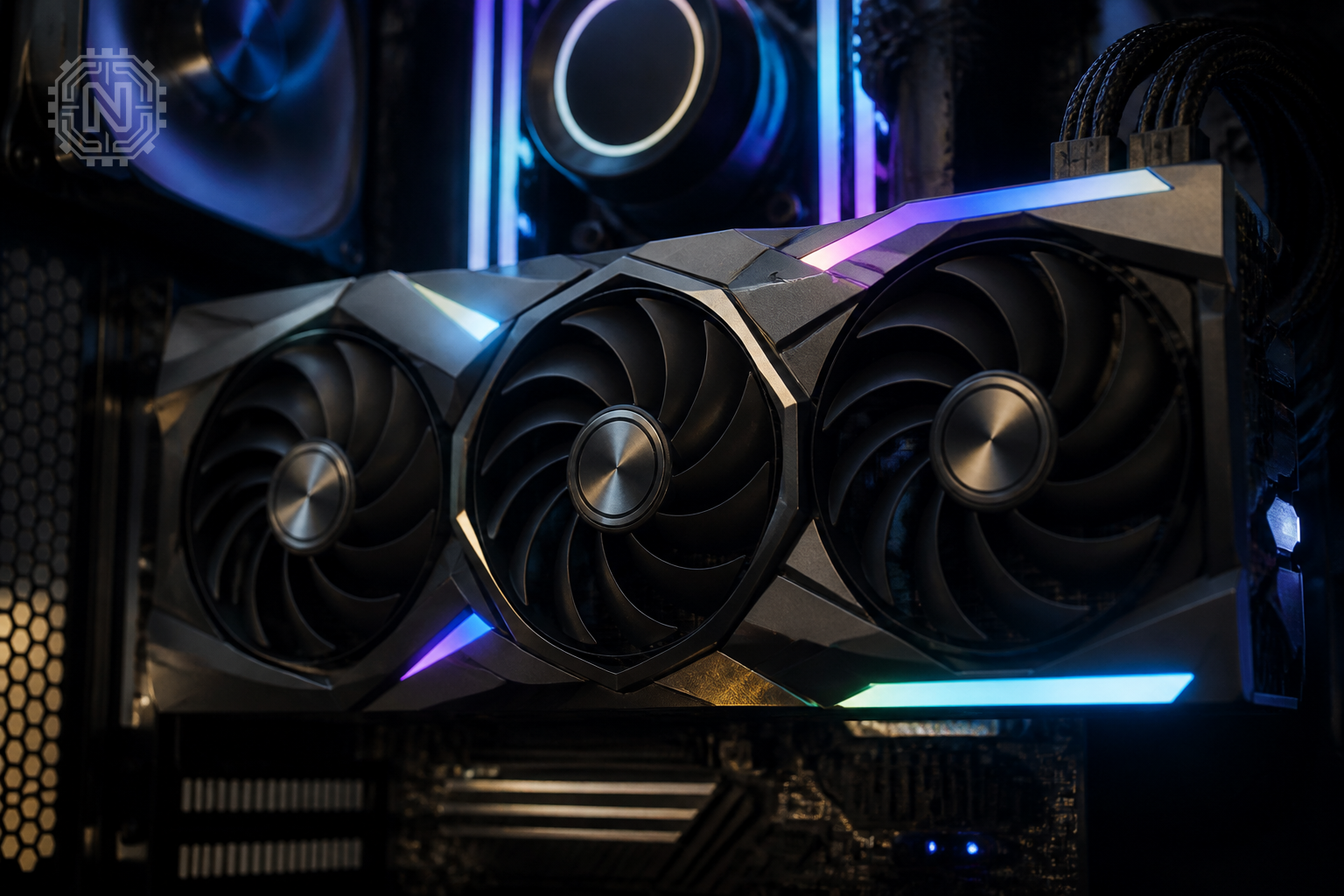
In 2026, developers are leveraging AI-driven algorithms for dynamic level streaming, real-time rendering adjustments, and predictive load balancing. These techniques help maintain high frame rates even in demanding scenes.
Adaptive resolution scaling, where the game adjusts visual fidelity based on real-time performance metrics, has become standard. This ensures smooth gameplay without sacrificing visual quality.
Furthermore, developers are optimizing network code to reduce latency and improve multiplayer stability, vital for the growing eSports and co-op markets. Official tools from engine providers now include detailed performance profiling, enabling fine-tuning before release.
As a result, gamers experience fewer crashes, less stuttering, and more consistent frame rates, even on mid-range hardware. The focus on optimization is a key driver of the overall performance improvements seen this year.
Developer Optimization Strategies
- Use of AI for dynamic rendering adjustments.
- Enhanced profiling tools for performance tuning.
- Adaptive resolution scaling for smooth visuals.
- Network code optimization reduces latency.
"Developers are pushing engine capabilities to match the hardware advancements for better player experiences."
Game Industry Expert
Practical impacts of gaming performance improvements in 2026
Gamers now enjoy higher frame rates, often exceeding 144Hz, making fast-paced titles much more fluid. This reduces motion blur and enhances reaction times, crucial in competitive gaming.
Visual fidelity has also improved dramatically, with ray-traced lighting and higher resolutions becoming standard even on mid-tier setups. This creates more immersive worlds and realistic effects.
Load times have shrunk thanks to faster SSDs, enabling near-instant transitions and less downtime between matches or levels. These improvements lead to a more engaging and less frustrating experience.
Multiplayer and eSports communities benefit from lower latency and more stable connections, fostering fairer play and reducing disconnects.
However, these advancements come with increased power requirements and hardware costs, which can be a barrier for some users. Still, the overall experience for most players has never been better.
Why Gaming Performance Matters in 2026
- Higher frame rates improve reaction times in competitive titles.
- Enhanced visuals boost immersion and realism.
- Reduced load times keep players engaged.
- Better multiplayer stability fosters fair play.
- Hardware demands may increase costs for gamers.
"The continuous tech improvements are transforming how players experience games daily."
Gaming Tech Analyst
Comparison of gaming hardware and software trends in 2026
In 2026, hardware like NVIDIA’s RTX 5090 and AMD’s RX 8900 XT lead the market, offering significant gains over previous generations. On the software side, game engines are now optimized for multi-core CPUs and GPU architectures.
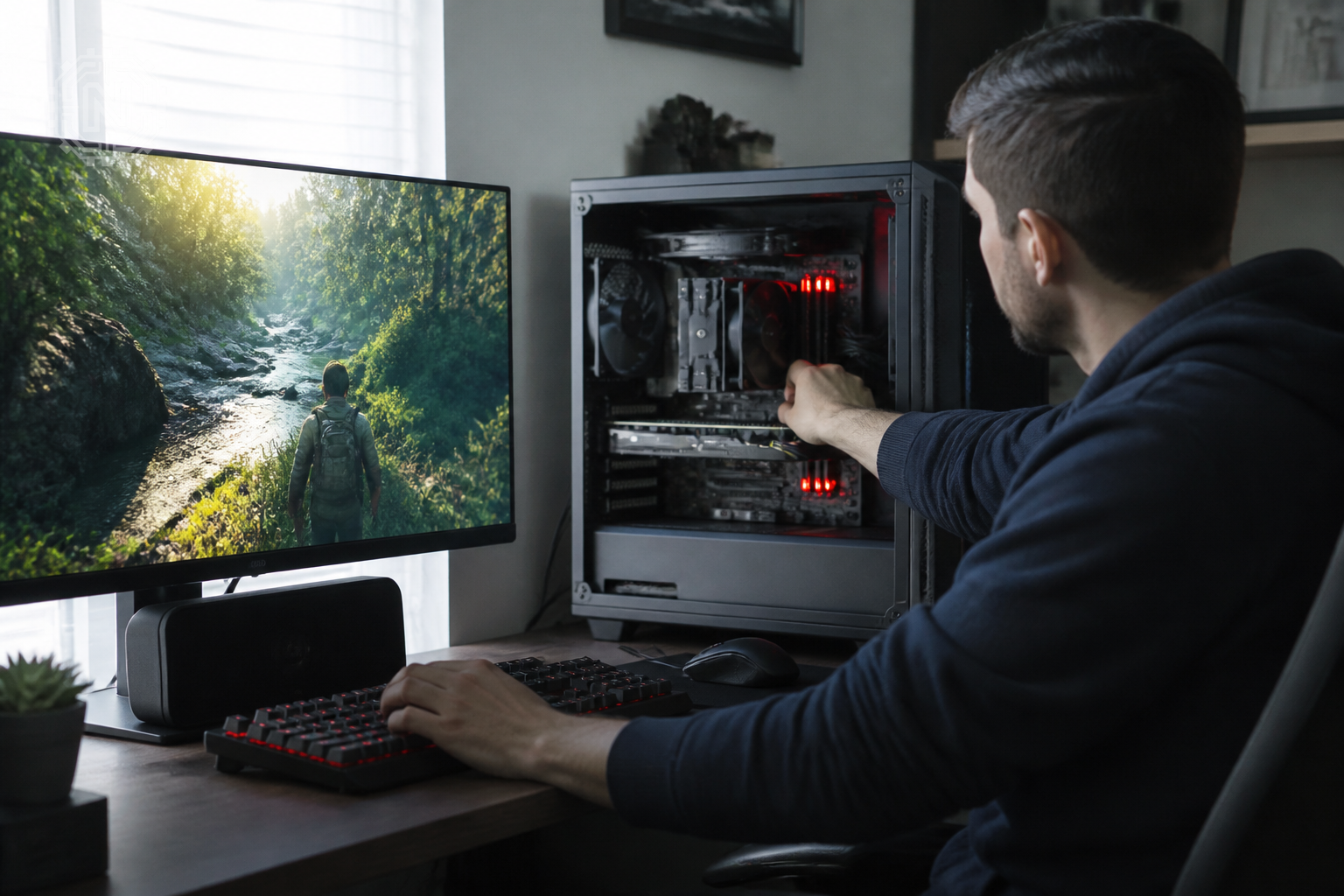
While high-end setups deliver the best performance, mid-range hardware can now run AAA titles smoothly at 1080p and 60 FPS thanks to smarter rendering techniques and driver updates.
Cloud gaming services are also gaining ground, with platforms like Xbox Cloud Gaming and NVIDIA GeForce NOW offering streaming at higher resolutions with minimal latency, provided users have fast internet connections.
Comparing these trends highlights a shift toward hybrid solutions—powerful local hardware combined with cloud processing—to meet diverse player needs.
Overall, the convergence of hardware advancements and software optimization is setting a new standard for accessible, high-quality gaming experiences in 2026.
Future outlook: What’s next for gaming performance?
Looking ahead, AI-driven rendering and real-time upscaling technologies like DLSS 4 and FSR 3 will become standard, pushing performance even further without additional hardware costs.
Next-generation GPUs are rumored to incorporate dedicated AI cores for real-time scene optimization, drastically reducing latency and power consumption.
Advances in 3D audio, haptic feedback, and VR hardware will complement visual improvements, creating more immersive experiences.
As hardware becomes more efficient, developers will focus on creating richer, more complex worlds without sacrificing frame rates or stability.
Ultimately, gaming performance in 2026 is just the beginning; ongoing innovations promise even more dramatic shifts in the coming years.
Future of Gaming Performance
- AI-powered rendering will become mainstream.
- New GPUs will feature dedicated AI cores.
- Hardware efficiency improvements will lower costs.
- Immersive tech like VR and 3D audio will advance.
Editorial Sources
Conclusion
Gaming performance in 2026 reflects a combination of hardware breakthroughs, software optimization, and network improvements. These advances deliver smoother, more immersive experiences but also set higher demands on hardware. Staying updated with these trends helps gamers and developers alike to adapt and thrive in this rapidly evolving environment.
Frequently Asked Questions
How much does gaming hardware cost in 2026?
High-end gaming hardware can cost from $1,000 to over $2,500, depending on specifications and brand.
Are new GPUs worth upgrading to in 2026?
Yes, they offer significant performance gains, especially for demanding AAA titles and high-resolution gaming.
What is the best gaming CPU in 2026?
Intel’s 14th Gen Core i9 and AMD’s Ryzen 9 7950X are among the top choices for high-performance gaming.
How do software updates improve gaming performance?
They optimize rendering, reduce bugs, and enhance compatibility with new hardware, resulting in smoother gameplay.
Is cloud gaming a viable alternative in 2026?
Absolutely, if you have a fast internet connection, cloud gaming offers high-quality experiences without expensive hardware.
What future tech will impact gaming performance?
AI upscaling, real-time scene optimization, and more efficient GPUs will drive future improvements.
Do gaming laptops match desktop performance in 2026?
High-end gaming laptops now approach desktop performance, but often at a premium price and with shorter lifespan.
How can I improve gaming performance on my current setup?
Update drivers, optimize game settings, and ensure your hardware is clean and well-cooled. For more on Gaming, explore Newtechzy. You can also review our Privacy Policy and Cookie Policy, or learn more About us.
Related Topics
Explore more about gaming tech trends and upgrade your setup today. Stay ahead with our latest updates and expert insights.
Start Your Journey Today!


