


Quick Summary
- Traditional systems such as behavior trees, finite-state machines, navigation meshes, and utility AI still control most moment-to-moment gameplay.
- Deep learning and generative AI are increasingly used for conversational characters, autonomous companions, animation, testing, content workflows, and gameplay prototyping.
- NVIDIA ACE, Microsoft Muse, Google DeepMind SIMA 2, and Unity's AI tools show how the technology is moving from research demonstrations into practical development pipelines.
- AI can make games more reactive and accessible, but it does not automatically create better gameplay or believable characters.
- Privacy, safety, latency, cost, moderation, copyright, and creative control remain important challenges.
- The most realistic near-term future is hybrid game design: reliable scripted systems supported by carefully bounded AI features.
In 2026, gaming AI is advancing quickly, but the reality is more nuanced than the idea that every non-player character now thinks like a human. Most released games still depend on predictable systems such as behavior trees, pathfinding, scripted dialogue, and hand-authored rules because these tools are efficient, testable, and easier to balance.
What has changed is the growing use of deep learning and generative AI around those traditional systems. Developers are experimenting with AI-powered conversations, autonomous companions, animation, quality assurance, asset workflows, player support, and models that can simulate or generate short sequences of gameplay. These technologies can make games feel more responsive, but they also introduce new technical and ethical responsibilities.
Important Context
Gaming AI is a broad term. It includes decades-old techniques such as pathfinding and finite-state machines as well as newer neural networks, large language models, reinforcement learning, and world models. Deep learning is an additional tool, not a complete replacement for conventional game logic.
Gaming AI in 2026: What Has Actually Changed?
The biggest shift is the move from isolated research demonstrations toward tools that can be integrated into real development workflows. NVIDIA ACE provides cloud and on-device components for speech, intelligence, animation, and autonomous in-game characters. In 2026, NVIDIA also expanded its Game Agent SDK and Unreal Engine integrations for developers building local AI companions and gameplay systems.
Some early implementations demonstrate the direction of travel. NVIDIA has highlighted experimental autonomous characters in games such as inZOI and NARAKA: BLADEPOINT Mobile PC Version. These examples are important, but they should not be interpreted as proof that fully autonomous NPCs are now standard across the industry.

Microsoft Research's Muse represents a different branch of gaming AI. Muse is a World and Human Action Model designed for gameplay ideation. It can generate game visuals, controller actions, or both, based on research conducted with the game Bleeding Edge. Muse is best understood as a research and prototyping system rather than a replacement for a commercial game engine.
Google DeepMind's SIMA 2 also focuses on agents that can understand instructions, reason, learn, and act inside different 3D virtual environments. This work may influence future game characters and testing agents, but SIMA 2 is a research system, not a feature that players can assume is present in mainstream games.
Key Takeaways
- AI characters are becoming more capable, but deployment remains selective and tightly controlled.
- World models can support gameplay ideation and simulation, but they are not complete game engines.
- On-device inference can reduce network dependence and improve responsiveness, although hardware requirements still matter.
- Hybrid systems remain the practical choice for most studios.
Where Is Deep Learning Used in Games?
Deep learning can support several parts of game creation and operation. Its usefulness depends on the genre, platform, budget, latency requirements, and the amount of control a studio needs.
1. Conversational and autonomous characters
Language models can help characters interpret player requests and produce more flexible dialogue. When combined with memory, perception, planning, animation, and game-state restrictions, they can also support companions or enemies that respond to changing situations. Reliable implementations still need boundaries so characters do not reveal inappropriate content, contradict the story, break quests, or perform actions outside their permitted role.
2. Animation, speech, and facial performance
Neural models can improve lip-sync, facial animation, voice interaction, motion matching, and character responsiveness. These systems may reduce repetitive production work, but developers still need artistic direction, performance review, and clear permissions for voices and likenesses.
3. Development assistance and asset workflows
Unity's current AI tools include an in-editor assistant, an AI gateway, and an MCP server designed to work with project context. Tools like these can help developers inspect scenes, explain code, automate editor tasks, and accelerate prototyping. AI-generated assets still require licensing checks, disclosure where required, quality review, and human approval before release.
4. Testing and quality assurance
Machine-learning agents can explore levels, repeat actions, identify unusual states, and generate test scenarios. This can expand coverage, but automated testing cannot fully replace human playtesting because people evaluate fun, clarity, emotional impact, accessibility, and social behavior in ways that metrics may miss.
5. Personalization and adaptive systems
Games can use player data to recommend content, adjust assistance, detect frustration, or tune challenges. However, the safest approach is not to let a model silently manipulate difficulty or monetization. Players benefit from clear settings, explainable changes, opt-outs, and limits on the data used for personalization.
Did You Know?
Many features described as “AI” in games do not require deep learning. Enemy patrols, tactical decisions, companion behavior, and dynamic difficulty can often be implemented effectively with deterministic systems that are faster, cheaper, and easier to test.
How AI Is Changing Player Experiences
When used well, AI can make game worlds feel more responsive. A companion may understand a natural-language instruction, an NPC may react to nearby events, or a game may provide assistance that matches a player's skill level. The value comes from how these systems support the game's design, not from the presence of AI alone.
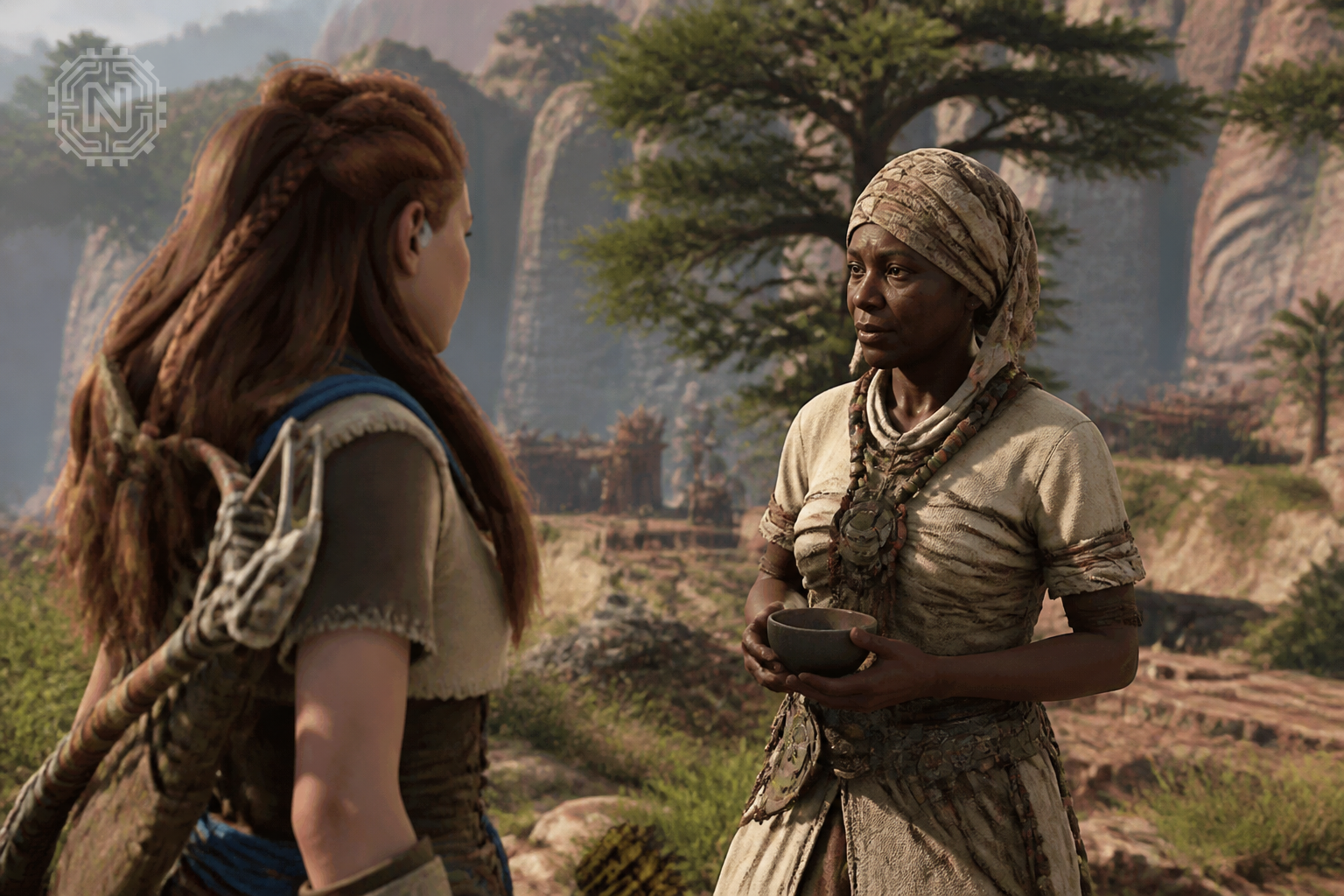
The strongest player-facing benefits are likely to include:
- More flexible interaction: players may communicate with characters using natural language instead of selecting only predefined dialogue options.
- Better accessibility: AI can support contextual hints, speech interfaces, captioning, text simplification, and adaptive assistance.
- More varied encounters: bounded AI systems can choose strategies or reactions based on the current game state.
- Stronger companions: co-playable characters may coordinate with players while following explicit gameplay rules.
- Faster iteration: development teams can test ideas and build prototypes more quickly, allowing more time for refinement.
There are limits. Unrestricted dialogue can become repetitive, inaccurate, unsafe, or disconnected from the story. Autonomous behavior can also damage level design when a character ignores pacing, reveals information too early, blocks progress, or solves challenges that the player was meant to experience. Good AI design therefore depends on constraints, fallback behavior, and extensive testing.
Traditional Game AI vs. Deep-Learning Systems
| Area | Traditional Game AI | Deep-Learning or Generative AI |
|---|---|---|
| Behavior | Uses authored rules, state machines, utility scores, and behavior trees. | Learns patterns from data or generates responses based on model inputs. |
| Predictability | Usually high, making behavior easier to test and balance. | Can vary between runs and may require moderation, guardrails, and fallbacks. |
| Performance | Often efficient on a wide range of hardware. | May require additional memory, compute, cloud services, or AI-capable hardware. |
| Creative control | Designers directly define available actions and outcomes. | Offers broader variation but can be harder to keep consistent with the game's story and rules. |
| Best use cases | Core combat, navigation, quests, puzzles, and deterministic encounters. | Conversation, content assistance, animation, testing, prototyping, and bounded autonomous behavior. |
| Main risk | Behavior can feel repetitive or overly scripted. | Outputs can be inconsistent, unsafe, costly, or difficult to reproduce. |
The comparison is not an either-or decision. A practical system may use a behavior tree for high-level safety and quest logic, a navigation system for movement, and a language model for optional conversation. This layered approach preserves reliability while creating room for more natural interaction.
Why the Hybrid Approach Matters
- Designers retain control over story-critical actions.
- AI features can fail safely without stopping progression.
- Studios can manage latency and infrastructure costs.
- Testing remains reproducible for important gameplay systems.
- Players receive variation without losing clarity or fairness.
Challenges, Risks, and Ethical Questions
Privacy and player data
Personalization and voice interaction may involve sensitive information. Developers should collect only the data they need, explain how it is used, protect it appropriately, and provide meaningful controls. Games and online services directed to children must also consider applicable child-privacy requirements, including the U.S. Children's Online Privacy Protection Rule.
Safety and moderation
Open-ended character dialogue can produce harmful, misleading, or age-inappropriate responses. Safety filters, age-aware design, topic restrictions, monitoring, reporting tools, and human review are essential, especially in games used by children or in social environments.
Bias and representation
Models can reproduce stereotypes or unevenly represent cultures, accents, identities, and communication styles. Diverse testing and editorial review are necessary before AI-generated dialogue, voices, characters, or stories reach players.
Copyright, consent, and creator rights
Studios need documented rights for training data, generated assets, voice performances, and digital likenesses. AI-assisted production should not bypass contracts, attribution, consent, or platform disclosure requirements.
Latency, cost, and reliability
Cloud-based AI may introduce network delay and recurring inference costs. On-device AI can improve privacy and responsiveness but may require newer hardware and careful optimization. In both cases, games need fallback behavior when a model is unavailable or produces an invalid response.
Creative accountability
AI-generated content still belongs inside a human-led creative and quality process. Developers remain responsible for what appears in the final game, how systems affect players, and whether the experience is fair, coherent, accessible, and safe.
Benefits and Trade-Offs
- Potential benefits: more natural interaction, faster prototyping, improved accessibility, broader testing, and richer companion behavior.
- Key trade-offs: higher infrastructure needs, inconsistent outputs, moderation demands, privacy risks, licensing questions, and reduced predictability.
What Comes Next for Gaming AI?
Over the next few years, gaming AI is likely to become more modular and better integrated with game engines. Developers may combine smaller on-device models with cloud systems, using each only where it provides a clear benefit. Character memory, planning, speech, animation, and world awareness may become separate components controlled by the game's core logic.
World models such as Microsoft Muse and Google DeepMind's Genie research point toward faster gameplay ideation and interactive environment simulation. Meanwhile, agents such as SIMA 2 suggest new possibilities for automated testing, training, accessibility, and co-play. These systems are promising, but current research should not be confused with finished consumer features.
The most credible outlook is not a world where AI independently creates and operates every game. It is a future where designers use AI selectively to expand interaction and production while retaining authorship, testing, safety controls, and final creative authority.
Editorial Sources
Conclusion
Gaming AI in 2026 is best understood as a growing collection of tools rather than a single technology replacing traditional game development. Deep learning is improving conversations, character systems, animation, testing, personalization, and prototyping, while conventional AI still provides the reliability required for core gameplay.
The best experiences will come from teams that use AI with a clear design purpose, strict technical boundaries, transparent data practices, and strong human oversight. Smarter technology can expand what games are able to do, but thoughtful game design will continue to determine whether those experiences are enjoyable and meaningful.
Frequently Asked Questions
What is gaming AI?
Gaming AI includes the systems used to control characters, navigation, decisions, difficulty, testing, content tools, and player interactions. It covers both traditional rule-based methods and newer machine-learning models.
Does every modern game use deep learning?
No. Most games still rely heavily on behavior trees, finite-state machines, pathfinding, scripted logic, and utility systems. Deep learning is used selectively where it adds practical value.
Can AI make NPCs more realistic?
Yes, AI can support more flexible dialogue, planning, perception, and reactions. Realism still depends on strong writing, animation, game rules, memory design, moderation, and testing.
What is Microsoft Muse?
Muse is a World and Human Action Model from Microsoft Research that can generate game visuals, controller actions, or both for gameplay ideation and research. It is not a complete commercial game engine.
What is NVIDIA ACE?
NVIDIA ACE is a suite of cloud and on-device AI technologies for building conversational, animated, and actionable in-game characters.
Will AI replace game developers and designers?
AI can automate or accelerate parts of development, but human teams remain responsible for creative direction, gameplay design, safety, quality, rights management, and final approval.
What are the main risks of AI in games?
Major risks include privacy issues, unsafe dialogue, bias, copyright and consent disputes, inconsistent behavior, cloud costs, latency, hardware requirements, and reduced creative control.
What is the likely future of gaming AI?
The likely future is a hybrid model in which traditional game systems control critical behavior while bounded AI components support conversation, companions, testing, accessibility, personalization, and content workflows. Explore more coverage in NewTechzy's Gaming section.
Related Topics
Explore More Gaming Technology
Read the latest explainers, product updates, and industry analysis covering AI, game development, hardware, and interactive entertainment.
Explore Gaming Articles


