


Quick Summary
- Chinese companies unveiled robots capable of wall scaling and martial arts in 2026.
- Investors are intrigued by the commercial and security potential of these robots.
- The robots use advanced AI and mechanical design for agility and precision.
- Official sources highlight ongoing prototypes, not mass production yet.
- This tech could impact security, manufacturing, and military sectors.
- Market analysts see significant investment opportunities ahead.
China’s robots that can perform Kung Fu and scale walls are no longer sci-fi. In 2026, Chinese firms showcased prototypes demonstrating remarkable agility and martial arts skills, drawing investor attention. These innovations hint at a future where robots could take on security, military, and industrial roles.
As China pushes to lead in robotics and AI, these developments reflect a broader strategy to dominate both commercial and strategic sectors. The question now is whether investors will back these high-tech machines enough to turn prototypes into profitable products.
China’s robots know Kung Fu and can scale walls — what’s happening in 2026
Chinese robotics companies have introduced robots that combine martial arts capabilities with wall-climbing agility. These machines utilize sophisticated AI, mechanical actuators, and lightweight materials to mimic human-like agility and combat skills.
Official demonstrations in late 2025 and early 2026 showed robots executing complex martial arts moves and scaling vertical surfaces with ease. Companies like DJI and Hanwha are leading the charge, aiming to commercialize these capabilities for security and industrial applications.
While these robots are still in prototype stages, the progress signals a shift in how robotics could be deployed in sensitive environments, military scenarios, or industrial sites that require advanced mobility and combat readiness.
For more on how China’s AI and robotics sectors are evolving, see our AI Chip Advancements 2026 report. The innovations in hardware and software are key to powering such agile robots.
Key Facts About China’s Kung Fu Robots
- Robots can perform martial arts moves with human-like precision.
- Wall-climbing capabilities use advanced grip and balance algorithms.
- Prototypes demonstrated in 2025-2026 showcase rapid development.
- Potential applications span security, military, and industrial sectors.
- Investors are watching for commercialization and mass production.
"These robots' agility and combat skills could redefine security and industrial automation."
Industry Analyst
How do these robots work — the mechanics behind their agility
The core of these robots’ capabilities lies in a combination of lightweight frame design, AI-driven movement algorithms, and adaptive grip systems. They use multi-joint actuators that mimic human muscle movements, allowing for complex martial arts maneuvers.
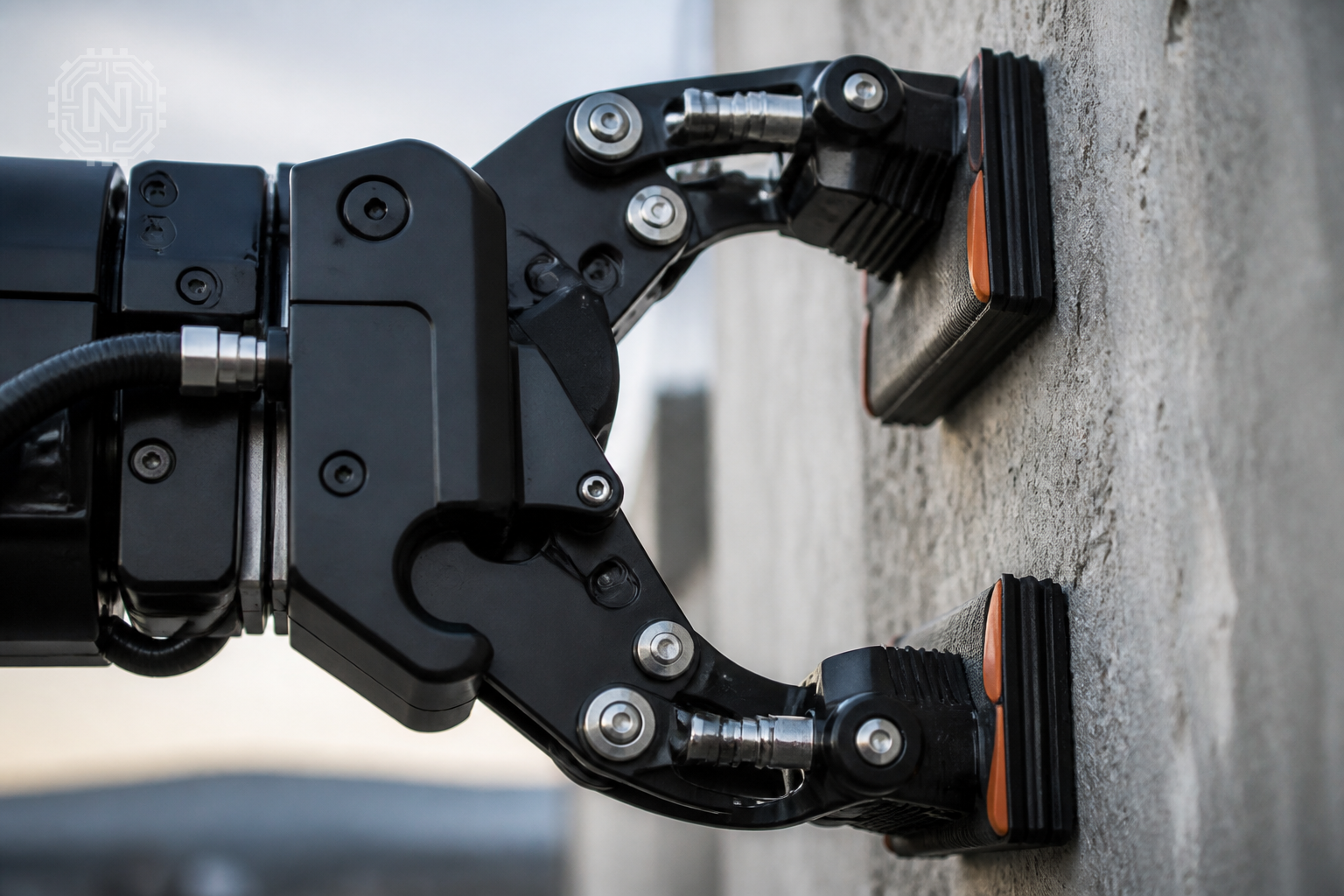
Wall climbing relies on a combination of suction cups, micro-spines, or adhesive materials that are activated based on surface type. Sensors constantly adjust the robot’s posture and grip to maintain balance during rapid movements.
AI software processes real-time data from onboard cameras and sensors, enabling precise control and obstacle navigation. Companies are also integrating machine learning models to improve agility over time.
These mechanical and AI innovations are supported by advancements in lightweight composite materials that reduce energy consumption and increase speed.
For technical deep dives, see our report on AI chip advancements which detail hardware that powers such robots.
Advantages and Challenges of Wall-Scaling Robots
- High mobility in complex environments
- Potential for rapid deployment in security scenarios
- Mechanical complexity increases maintenance needs
- High power consumption limits operational time
- Dependence on surface type for climbing success
Official responses and industry reactions to wall-climbing Kung Fu robots
Chinese government officials have acknowledged the potential of robotics to enhance national security and industrial competitiveness. However, they emphasize the importance of regulation and ethical considerations.
Major tech firms involved have stated that commercialization is still in early stages, with prototypes serving as proof of concept. They are cautious about overhyping capabilities before mass production.
International reactions are mixed; some see this as a leap forward in robotics, while others raise concerns about military applications and surveillance. The Chinese government stresses responsible development.
For insights into global robotics trends, visit our Tech News section.
"Official responses highlight cautious optimism about integrating these robots into future security frameworks."
Security Expert
Implications for security, industry, and future investments
The development of wall-climbing martial arts robots opens new avenues for security forces, industrial inspections, and military applications. Their ability to navigate complex terrains makes them ideal for reconnaissance or hazardous environment operations.
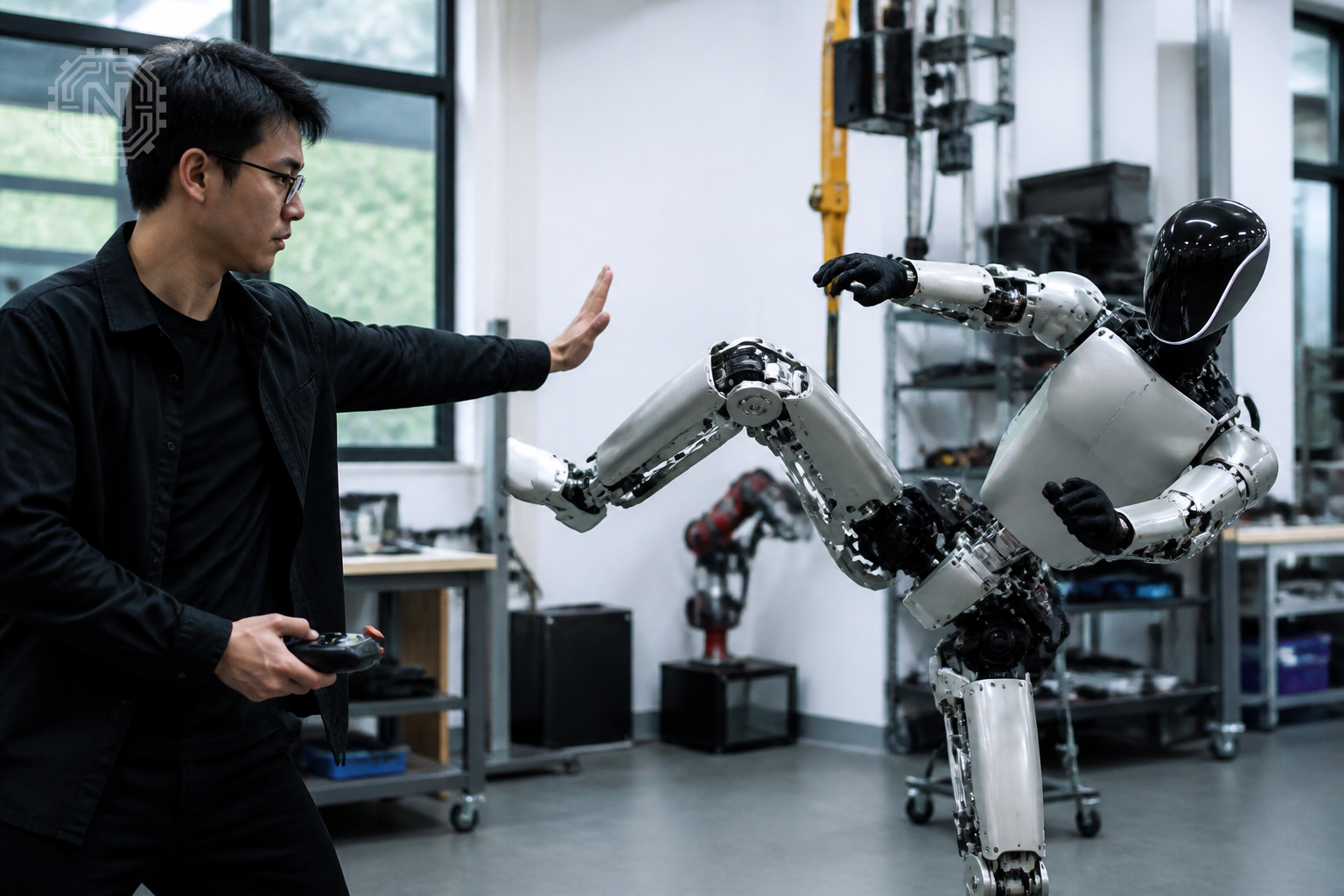
Investors are keenly watching startups and established firms pushing these technologies, betting on long-term gains. The potential to replace or augment human security personnel is significant but also raises ethical questions.
Manufacturers are exploring partnerships with defense contractors, while governments consider regulations to prevent misuse. The commercial market for such robots could reach billions if mass production scales successfully.
To understand market dynamics, see our China Memory-Chip Giants Gain Power report, which discusses broader tech investment trends.
Why Wall-Scaling Robots Matter in 2026
- They could significantly enhance security and surveillance.
- Transform industrial inspections in hard-to-reach areas.
- Raise ethical and privacy concerns globally.
- Drive billions in new market investments.
Future outlook — will China lead in martial arts robots?
China’s focus on integrating AI with robotics suggests these capabilities will improve rapidly. As prototypes mature, commercialization could begin as early as 2027, with widespread deployment in security and industrial sectors.
Global competitors like South Korea and the US are investing heavily in similar tech, but China’s government backing and manufacturing scale give it a strategic edge.
Expected advancements include even more sophisticated martial arts, autonomous decision-making, and longer operational times. The possibility of these robots participating in military or civilian security operations is real.
For a broader perspective, explore our AI Chip Advancements 2026 report, which discusses hardware trends enabling such robotics.
"China’s robotics innovation could set a new standard for agility and combat readiness in the coming decade."
Robotics Industry Expert
Editorial Sources
Conclusion
These wall-climbing, Kung Fu-capable robots exemplify China’s push to dominate advanced robotics and AI. While still in prototype stages, their potential impact on security, industry, and military sectors is enormous. Investors and regulators alike will watch closely as these machines move toward commercialization.
Frequently Asked Questions
How advanced are China’s wall-climbing robots in 2026?
They are still prototypes but demonstrate remarkable agility, capable of martial arts moves and climbing on various surfaces.
Can these robots replace security personnel?
Potentially, yes, especially in hazardous or hard-to-reach environments, but ethical and safety considerations are still under discussion.
What technology powers their wall-climbing ability?
They use a combination of suction, micro-spines, and AI-controlled grip systems for adaptive climbing.
Are these robots commercially available?
No, they are still in prototype stages, with commercial deployment expected around 2027 or later.
What are the main challenges facing these robots?
Mechanical complexity, power consumption, surface dependency, and high maintenance needs are key hurdles.
What sectors will benefit most from these robots?
Security, military, industrial inspections, and disaster response are primary sectors.
How does AI improve these robots’ performance?
AI processes sensor data for precise control, obstacle avoidance, and learning from experience to enhance agility.
Are there ethical concerns with martial arts robots?
Yes, particularly regarding surveillance, autonomous use in conflict zones, and privacy issues. For more on Tech News, explore Newtechzy. You can also review our Privacy Policy and Cookie Policy, or learn more About us.
Related Topics
Interested in the future of robotics? Stay updated with our latest reports and expert insights. Contact us to learn more about emerging tech trends.
Start Your Journey Today!


