

Quick Summary
- China memory chip giants CXMT and YMTC are gaining pricing power as AI data-center construction tightens memory supply.
- Reuters reported that CXMT signed a five-year ByteDance supply agreement worth more than $7 billion, after a separate Tencent agreement worth over $3 billion.
- CXMT raised $8.6 billion in Asia’s largest IPO of 2026 and is scheduled to begin trading in Shanghai on July 27.
- China is still behind global leaders in advanced HBM and EUV-based manufacturing, making equipment access a major strategic risk.
- The shift could intensify competition for Samsung, SK Hynix and Micron while giving Chinese AI companies a larger domestic supply base.
China’s memory-chip giants are entering a new phase of power. For years, domestic producers such as ChangXin Memory Technologies (CXMT) and Yangtze Memory Technologies Corp (YMTC) competed mainly as lower-cost alternatives to established suppliers. The rapid expansion of artificial-intelligence infrastructure has changed that equation.
AI servers require enormous amounts of fast memory to move model data between processors, store intermediate results and keep accelerators working efficiently. As cloud companies race to build data centers, demand has increased across high-bandwidth memory (HBM), server-grade DDR5 DRAM, enterprise solid-state drives and NAND flash. That demand is giving Chinese suppliers more control over prices, customers and long-term contracts.
Reporting note: Private deal values, customer negotiations and some capacity plans in this article are based on Reuters reporting citing people familiar with the matters. The companies did not publicly confirm every reported commercial detail.
Why AI Is Changing the Memory-Chip Market
AI performance is not determined by processors alone. A GPU or AI accelerator must continuously read and write huge volumes of data. When memory bandwidth is insufficient, expensive compute hardware can sit underused. That is why the current AI boom is creating demand for both premium HBM and large volumes of conventional DRAM and NAND flash.
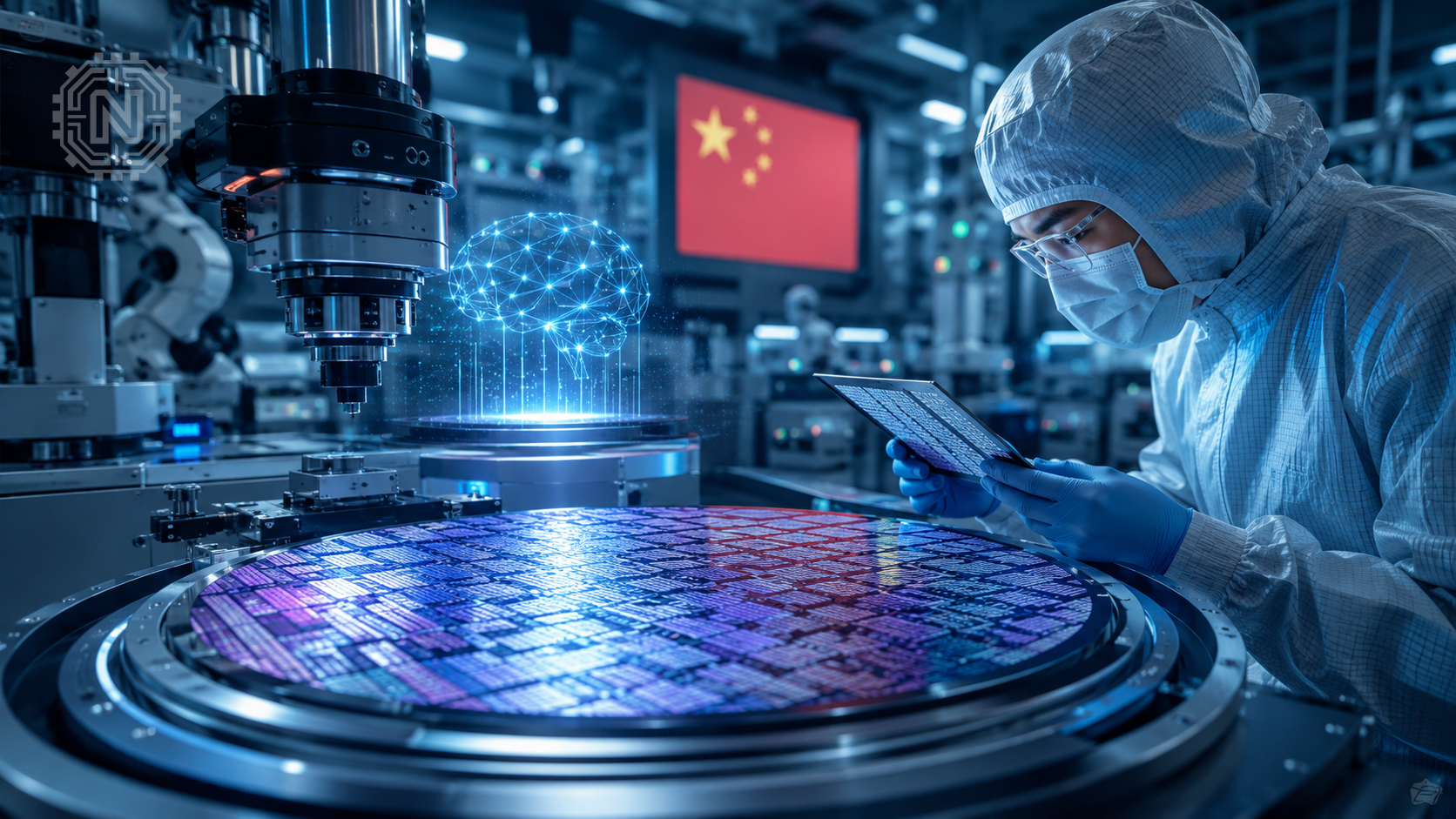
The result is a broad memory upcycle. Global leaders are prioritizing the most profitable advanced products, while Chinese cloud, smartphone and electronics companies are seeking reliable domestic supplies. This combination has strengthened CXMT and YMTC at exactly the moment Beijing is pushing for greater semiconductor self-reliance.
Key Takeaway
The most important change is not simply that Chinese companies can manufacture more chips. It is that tight AI-driven supply is allowing them to choose customers, negotiate longer contracts and resist demands for lower prices.
How CXMT and YMTC Gained New Pricing Power
Reuters reported that CXMT, now described as the world’s fourth-largest memory-chip maker, repeatedly raised prices for Huawei and held its position when the technology group sought relief. The same report said Chinese memory suppliers have sometimes charged more than larger South Korean competitors for comparable products because domestic buyers are competing for constrained supply.
For comparable 64GB DDR5 server-memory modules, Reuters cited Samsung pricing of about $1,240 per unit and reported that CXMT had recently charged more, without publishing CXMT’s exact price. Several Chinese electronics and technology firms also reportedly complained to the Ministry of Industry and Information Technology about memory-price increases and their effect on product launches.
This is a major reversal. Memory chips have traditionally been cyclical commodities: suppliers invest during boom periods, create excess capacity, and then face falling prices. AI demand is currently shifting bargaining power toward producers, especially those able to guarantee supply inside China.
The Deals and IPO Numbers Behind the Boom
Important Reported Numbers
- More than $7 billion: reported value of CXMT’s five-year supply agreement with ByteDance.
- More than $3 billion: reported value of an earlier CXMT agreement with Tencent.
- $8.6 billion: amount raised by CXMT in Asia’s largest IPO of 2026.
- $7.5 billion: CXMT’s reported first-quarter revenue, up 719% year over year.
- July 27, 2026: scheduled date for CXMT’s Shanghai market debut.
The reported ByteDance agreement is especially significant because it shows how AI companies are securing memory through multi-year commitments rather than relying only on spot purchases. ByteDance requires large volumes of server memory for cloud services, recommendation systems and generative-AI workloads. A long contract can protect supply for the buyer while providing predictable demand for the manufacturer.
CXMT’s IPO adds financial power to its operating momentum. The company plans to use the proceeds for production expansion, research and development, and working capital. Its public-market debut also gives investors a direct way to participate in China’s memory ambitions at a time when semiconductors are a national strategic priority.
CXMT vs YMTC: What Each Company Makes
| Company | Core Products | AI Relevance | Current Strategic Direction |
|---|---|---|---|
| CXMT | DRAM, DDR5, mobile memory and developing HBM | Server memory and high-bandwidth memory are essential for AI accelerators and data centers. | Expanding wafer capacity, raising IPO capital and seeking larger domestic and future overseas sales. |
| YMTC | 3D NAND flash, consumer and enterprise storage | NAND is used in SSDs that store training data, model checkpoints and large data sets. | Increasing use of domestic equipment, expanding fabs and entering overseas consumer-storage markets. |
CXMT and YMTC are complementary rather than direct equivalents. CXMT is primarily a DRAM producer, while YMTC specializes in NAND flash. Together, they cover two of the most important memory categories in modern computing. Chinese media and officials have consequently portrayed them as the country’s memory “twin stars.”
What It Means for the Global Chip Market
1. More Competition for Samsung, SK Hynix and Micron
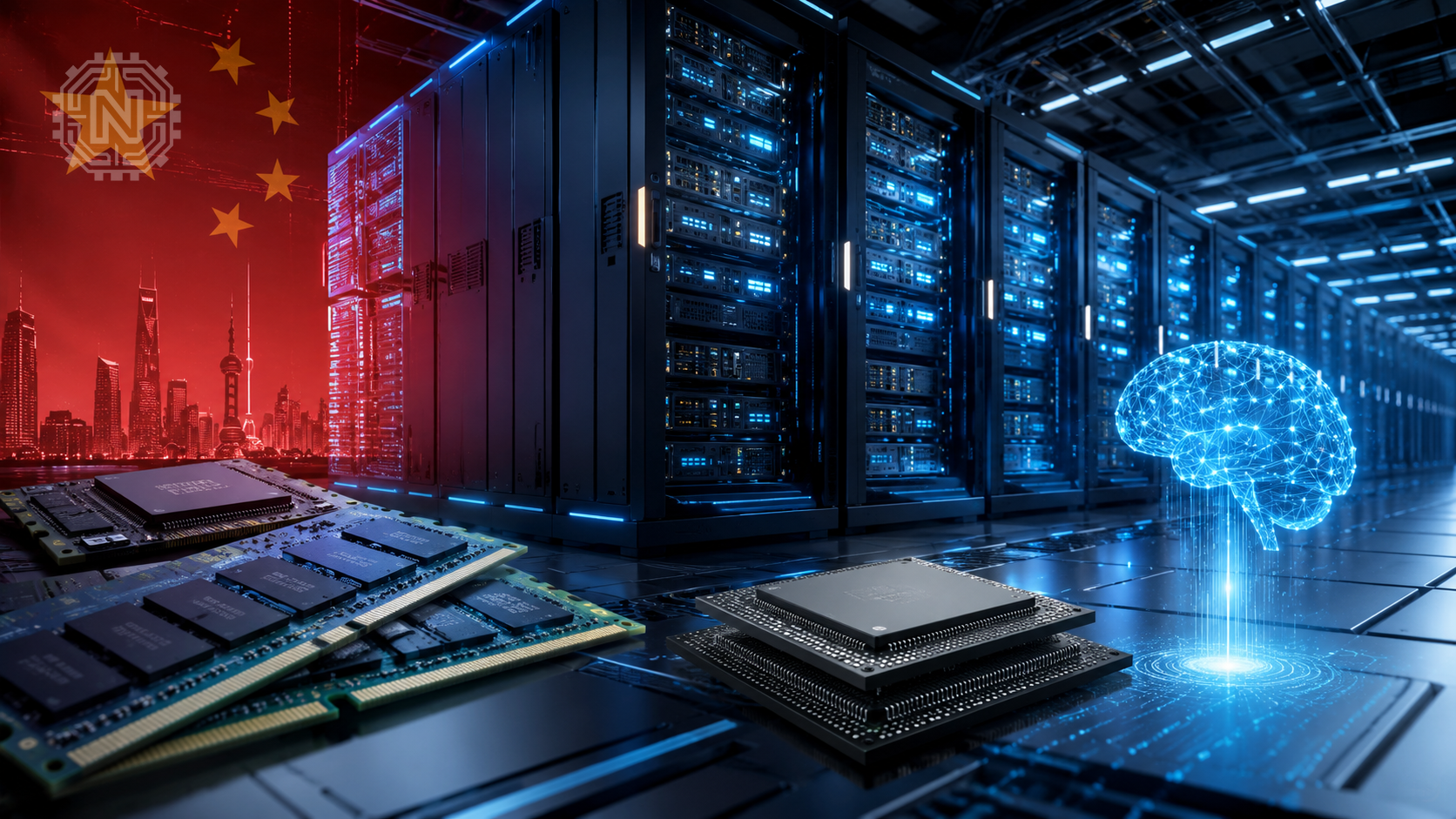
The global memory market has long been concentrated among Samsung Electronics, SK Hynix and Micron. CXMT’s growth introduces another supplier with scale, strong domestic demand and government-backed financing. In the near term, AI shortages may allow all major producers to benefit. Over a longer period, additional Chinese capacity could increase price competition, especially in mainstream DRAM.
2. A More Regionalized Supply Chain
Chinese authorities have encouraged state-owned firms and strategic technology companies to buy domestically produced chips. That policy can create a protected customer base for CXMT and YMTC. At the same time, U.S. restrictions and national-security concerns are dividing the global semiconductor market into more regional supply chains.
3. New Pressure on Consumer Electronics Prices
When manufacturers prioritize high-margin AI memory, less capacity may be available for PCs, phones and consumer SSDs. Higher DRAM and NAND prices can raise device costs or force brands to reduce memory specifications. China’s domestic expansion may eventually relieve some pressure, but new fabs take years to build, equip and qualify.
4. Memory Becomes a Strategic AI Asset
Access to GPUs receives most of the attention, yet AI systems cannot scale without enough memory and storage. The rise of CXMT and YMTC shows that memory capacity is becoming a strategic part of national AI policy, not merely a commodity component.
Export Controls and the Technology Gap
China’s memory companies still face major technical constraints. CXMT and YMTC rely on deep-ultraviolet lithography for many production steps, while leading foreign competitors use more advanced extreme-ultraviolet systems for cutting-edge DRAM. China has been blocked from acquiring EUV machines, limiting the efficiency and pace at which manufacturers can shrink chip features.
Reuters reported that CXMT has produced domestic HBM but remains roughly two generations behind top global rivals. HBM is especially difficult because it requires advanced DRAM, precise stacking, through-silicon vias, packaging expertise and consistently high yields. Closing that gap will require more than adding wafer capacity.
YMTC has operated under U.S. Entity List restrictions since December 2022. The U.S. Bureau of Industry and Security said the listing subjects the company to additional licensing requirements. Reuters reported that YMTC has since replaced around half of its equipment with domestic machinery and developed stacking techniques that can work with less advanced tools.
Main Risk to Watch
Capacity expansion can increase output, but restrictions on lithography, etching, deposition, metrology and advanced packaging equipment could slow improvements in cost, yield and HBM performance.
What Happens Next
CXMT is building new plants in Shanghai and Hefei, and Reuters reported discussions about another site. If all projects proceed, monthly capacity could more than double to over 600,000 wafers, potentially allowing the company to overtake Micron’s capacity by 2030. That is a plan, not a guaranteed outcome: construction schedules, tool access, process yields and market cycles will determine how much usable output reaches customers.
YMTC is also expanding. Its entry into South Korea’s consumer-storage market suggests that Chinese memory brands may become more visible internationally, particularly in segments that established suppliers de-emphasize while focusing on AI products.
The next decisive test will be whether Chinese manufacturers can convert scale into sustained technology leadership. Strong domestic demand and financing provide momentum, but premium AI memory requires manufacturing precision at the limits of the industry. The likely result is a more competitive and geopolitically divided market in which China supplies a growing share of its own AI infrastructure while selectively expanding abroad.
Conclusion
China’s memory-chip giants have gained new power because AI has made memory scarce, valuable and strategically important. CXMT’s reported contracts, pricing leverage and blockbuster IPO show how quickly its commercial position has changed. YMTC’s equipment localization and NAND expansion demonstrate a parallel push in storage.
Neither company has fully matched the most advanced global technology, particularly in HBM and EUV-enabled production. Even so, their rise is already changing customer negotiations, investment flows and the balance of the global semiconductor industry.
Frequently Asked Questions
Why is AI increasing demand for memory chips?
AI models require large amounts of fast memory to feed data to accelerators and substantial storage for training data, model weights and checkpoints. This increases demand for HBM, DDR5 DRAM and enterprise NAND flash.
What is CXMT?
ChangXin Memory Technologies is China’s leading DRAM manufacturer. It produces memory for smartphones, computers and servers and is developing high-bandwidth memory for AI systems.
What is YMTC?
Yangtze Memory Technologies Corp is China’s leading NAND-flash producer. Its chips are used in solid-state drives and other storage products.
How large was CXMT’s 2026 IPO?
CXMT raised approximately $8.6 billion, making it Asia’s largest IPO of 2026, and was scheduled to begin trading in Shanghai on July 27.
Can Chinese memory makers compete with Samsung and SK Hynix?
They are becoming stronger in mainstream DRAM and NAND and now have significant domestic pricing power. However, they remain behind leading suppliers in advanced HBM and some manufacturing technologies.
What is the biggest challenge for China’s memory-chip industry?
Restricted access to advanced semiconductor equipment, especially EUV lithography and other leading-edge tools, is the most important constraint on cost, yield and technology progress.
Sources and Further Reading
- Reuters: China’s memory chip makers ride the AI boom to new power and U.S. scrutiny
- Reuters: CXMT to list in Shanghai after Asia’s largest IPO of 2026
- U.S. Bureau of Industry and Security: 2022 Entity List additions including YMTC
- SemiAnalysis: CXMT capacity and DRAM competition outlook
Related Topics
Follow the latest developments in semiconductors, artificial intelligence and global technology markets.
Explore More Tech News


