


Quick Summary
- WhatsApp has begun a gradual username reservation rollout before username-based messaging launches more widely later in 2026.
- Optional usernames will let people start new chats without exposing their phone number.
- There is no public username directory, and a separate optional username key can restrict who is allowed to message you.
- WhatsApp says it is reserving high-profile and lookalike names, limiting suspicious outreach, and revoking usernames linked to impersonation or scams.
- Availability differs by country, and the feature has faced regulatory scrutiny in India over fraud and identity-misuse concerns.
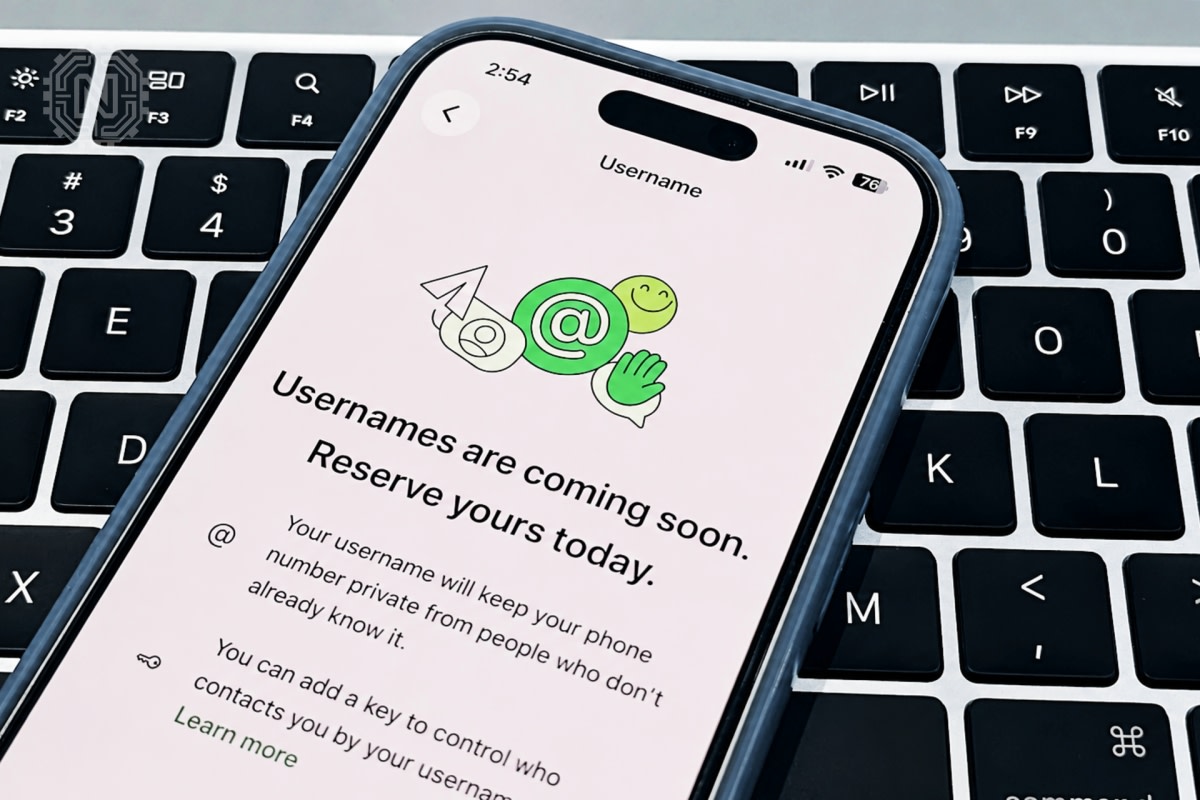
WhatsApp usernames are finally moving closer to a public launch. Meta's messaging platform began opening username reservations on June 29, 2026, allowing users to claim a unique handle before username-based contact becomes broadly available later in the year.
The change is important because WhatsApp has traditionally relied on phone numbers as the main identity and discovery layer. With usernames enabled, a new contact may be able to message you using an exact handle instead of seeing your mobile number. WhatsApp is pairing the privacy upgrade with anti-impersonation controls, an optional username key, outreach limits, automated abuse detection, and account penalties intended to reduce scams.
Important: Reservation Is Not the Full Launch
WhatsApp is currently rolling out the ability to reserve usernames. The complete experience—using a username to start a new chat without sharing a phone number—is scheduled to arrive gradually over the coming months. Your app will notify you when the relevant feature becomes available in your country.
What Is WhatsApp Rolling Out?
The first stage lets users reserve an optional username through the latest WhatsApp app. The handle can be different from a person's display name and does not have to match the username used on another social network.
Once username-based contact is enabled, people who message a new person or business for the first time can keep their phone number hidden when a username is active. Existing contacts who already know the number—and people in groups where the number was previously shared—may still be able to see it.
WhatsApp says the feature will remain optional. Users who prefer the existing phone-number system can continue using it, while creators, businesses, organizations, and privacy-conscious individuals can choose a handle.
How Will WhatsApp Usernames Work?
A WhatsApp username is a unique identifier attached to an account. Reported rules allow between three and 35 characters, using Latin letters, numbers, periods, and underscores. A username cannot consist entirely of numbers, and restricted terms may be blocked.
| Feature | How It Works | Why It Matters |
|---|---|---|
| Optional username | Choose a unique handle for new contacts. | Reduces the need to reveal a phone number. |
| No public directory | People must know the exact username. | Makes mass discovery and random browsing harder. |
| Username key | An optional extra code must be shared with the username. | Adds another barrier against unwanted messages. |
| Cross-app claim | Eligible users may claim an existing Facebook or Instagram handle. | Helps creators and businesses keep a consistent identity. |
| Gradual rollout | Reservations and messaging access arrive country by country. | Not every account will see the feature at the same time. |
What Is the Optional Username Key?
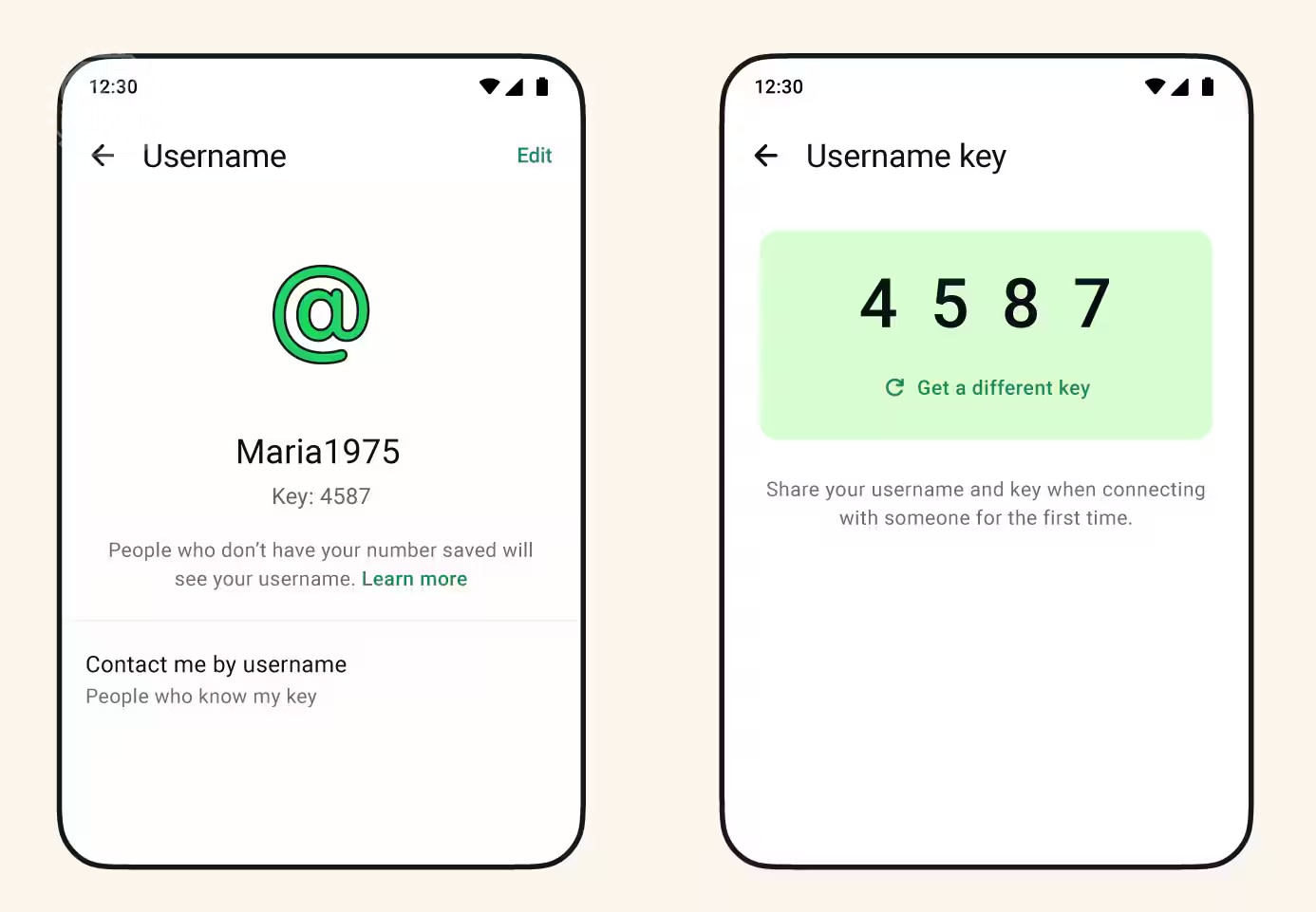
The WhatsApp username key is designed as an extra contact-control layer. A person may need both your exact username and the separate key before they can message you. That means publishing a username on a website, profile, or business page does not automatically have to open the account to everyone.
This feature can be especially useful for journalists, creators, community administrators, freelancers, and small businesses that need a public contact identity but want more control over unsolicited outreach.
How WhatsApp Plans to Prevent Impersonation
Usernames create a familiar risk: scammers may try to copy the name of a celebrity, company, government department, executive, or family member. WhatsApp says it is building several safeguards around the rollout.
- Reserved high-profile handles: Names associated with public figures, celebrities, government bodies, and verified Meta accounts may be held back for legitimate owners.
- Lookalike restrictions: Certain misleading variations of well-known names may also be blocked.
- Facebook and Instagram username claims: Eligible account holders can link through Meta Accounts Center to claim a matching handle.
- Automated impersonation detection: Systems will look for behavior commonly associated with fake identities and abuse.
- Username revocation: WhatsApp says it may remove a handle or ban an account when it finds impersonation or scam activity.
- Limits on frequent changes: Restricting how often a username can be changed can make rapid identity switching harder.
Why This Matters
A phone number is difficult to imitate exactly because it is tied to a registered account, but a username can be copied with small visual changes. Users should still inspect profile details, verify unusual requests through another channel, and never assume a familiar-looking handle is authentic.
What New Scam Protection Features Are Included?
WhatsApp's username safety strategy goes beyond reserving famous names. The company says it will limit how many new people an account can contact through usernames, helping reduce high-volume spam campaigns. Repeated attempts to guess another person's username key can also be blocked.
These controls are intended to identify behavior rather than read private conversations. WhatsApp says personal messages and calls remain protected by end-to-end encryption.
Key Anti-Scam Controls
- Limits on the number of new contacts reached through usernames.
- Blocking repeated attempts to guess a username key.
- Detection of common impersonation and abuse patterns.
- Restrictions on rapid or frequent username changes.
- Account bans and username removal for confirmed scams.
- No searchable public username list or auto-suggestions.
Privacy Gain vs. New Risk
- Benefit: People can connect without immediately exposing a personal phone number.
- Risk: A convincing lookalike handle may still mislead users who do not verify the account.
- Best defense: Use the username key, verify identity independently, and report suspicious profiles quickly.
How to Reserve a WhatsApp Username
Update WhatsApp to the newest available version, then check the username option. Because the rollout is gradual, the menu may not appear immediately.
On Android
- Open WhatsApp and tap the three-dot menu.
- Go to Settings.
- Open Account or tap your profile, depending on the app version.
- Select Username or Create username.
- Enter an available handle and complete the reservation.
On iPhone
- Open WhatsApp and tap You or Settings.
- Select your profile.
- Tap Create Username when the option appears.
- Choose an available handle and confirm it.
WhatsApp may also offer a username generator. A strong public handle should be memorable but should avoid revealing sensitive personal details such as a birth year, full address, employee ID, or banking information.
Will a WhatsApp Username Hide Your Phone Number Completely?
No. The protection mainly affects new conversations started through a username after the feature becomes available. A username does not erase phone-number exposure that already occurred.
- Existing contacts may still see a number they already saved.
- Members of existing groups may retain access to numbers previously visible there.
- Account registration still relies on a phone number.
- Lawful account and security processes may continue to use phone-number-based identifiers.
The practical benefit is selective sharing: users can provide a handle to a new customer, marketplace seller, event attendee, or community member without immediately giving out their personal mobile number.
What Is the WhatsApp Username Rollout Status in India?
India has raised concerns that usernames could increase phishing, fake-identity scams, digital-arrest fraud, and impersonation. Reports in July 2026 said authorities asked Meta to pause or hold the feature in India while its security design was reviewed.
For Indian users, this means availability may differ from the global schedule. Seeing reports about a worldwide reservation rollout does not guarantee that the option is active on every Indian account. Users should rely on an in-app notification and the official WhatsApp Help Center rather than third-party download links or messages claiming to activate the feature early.
Safety Checklist Before Using WhatsApp Usernames
- Reserve your preferred name only through the official WhatsApp app.
- Enable the optional username key when available.
- Do not pay anyone to reserve, verify, or unlock a username.
- Check spelling carefully before trusting a business or public figure.
- Confirm money requests through a known phone number or in person.
- Turn on two-step verification and review WhatsApp Privacy Checkup.
- Block and report accounts that imitate someone else.
What Should Users Do Now?
First, update WhatsApp and check whether username reservations are available. Claiming a consistent handle early may be useful for businesses, creators, organizations, and anyone whose name is likely to be taken.
Second, treat a username as a contact convenience—not proof of identity. Even with automated enforcement, scammers can use spelling tricks, urgent language, stolen profile photos, or compromised accounts. Never share one-time passwords, device-linking codes, bank PINs, or screen access because a username looks familiar.
Finally, use the strongest contact controls available. The combination of an exact username, an optional key, no public directory, two-step verification, and cautious identity checks provides much better protection than relying on a handle alone.
Conclusion
The WhatsApp usernames rollout represents one of the platform's biggest privacy changes in years. It can reduce unnecessary phone-number sharing and make professional or public communication easier. At the same time, usernames introduce new impersonation challenges, which is why WhatsApp is adding reserved handles, lookalike restrictions, outreach limits, automated abuse detection, and username revocation.
The safest approach is to use the feature as an additional privacy layer while continuing to verify identities and question unexpected requests. Reservation availability is expanding gradually, while the full username messaging experience is expected later in 2026.
Frequently Asked Questions
Has WhatsApp fully launched usernames?
Not everywhere. WhatsApp began rolling out username reservations on June 29, 2026. The ability to use usernames for new chats is expected to expand gradually over the coming months.
Can people search for my WhatsApp username?
WhatsApp says there will be no public directory, browsing tool, or username suggestions. A person must know your exact username to contact you.
What is a WhatsApp username key?
It is an optional extra code that a new contact may need in addition to your username before messaging you.
Will a username hide my phone number?
It can hide your number from people or businesses you contact for the first time through the username system. Existing contacts and groups that already had access may still see it.
How does WhatsApp prevent fake celebrity or business usernames?
WhatsApp says it reserves high-profile names, restricts some lookalike variants, detects impersonation patterns, and can revoke usernames or ban abusive accounts.
Can I use my Instagram or Facebook username?
Eligible users may be able to claim a matching Meta username by linking accounts through Meta Accounts Center, subject to availability and ownership checks.
Are WhatsApp messages still end-to-end encrypted?
Yes. WhatsApp says usernames do not change end-to-end encryption for personal messages and calls.
Is the username feature available in India?
Availability is uncertain and may be delayed because Indian authorities raised fraud and impersonation concerns. Check your official app for a country-specific notification.
Official and Supporting Sources
- Official WhatsApp announcement
- WhatsApp Help Center: username reservations
- WhatsApp Help Center: create and manage a username
- Reported impersonation and abuse safeguards
Related Topics
Stay Ahead of the Latest Tech Updates
Explore more practical technology news, privacy guides, and online safety updates from Newtechzy.
Explore Tech News


