


Quick Summary
- Skyroot Aerospace successfully launched Vikram-1 on July 18, 2026.
- This marks India's first private commercial rocket designed for orbit.
- The launch signifies a pivotal moment for the Indian space sector.
- Skyroot aims to offer affordable launch services for small satellites.
- Future missions are planned to enhance India's commercial space capabilities.
Skyroot Aerospace has achieved a remarkable milestone by successfully launching Vikram-1, India's first private commercial rocket designed for orbit, on July 18, 2026. This launch not only highlights the growing capabilities of private space ventures in India but also sets a new precedent for commercial space exploration. Explore more Tech News coverage on Newtechzy.
This historic event underscores the rapid advancements in India’s space sector, where private companies like Skyroot are beginning to play a significant role, complementing the efforts of ISRO, the Indian Space Research Organisation.
Skyroot Aerospace: A New Era in Indian Space Launches
Founded in 2018, Skyroot Aerospace has quickly positioned itself as a leader in India's private space industry. The company's mission is to provide reliable and cost-effective launch services for small satellites. Vikram-1, their flagship rocket, represents a culmination of years of innovation and hard work.
The Vikram-1 rocket, named after Dr. Vikram Sarabhai, the father of the Indian space program, is designed to carry payloads of up to 300 kg to low Earth orbit. This launch is a significant step for Skyroot as it demonstrates their technological capabilities and commitment to advancing India's position in the global space market.
As part of their long-term strategy, Skyroot aims to develop a series of rockets, including the Vikram-2 and Vikram-3, which will enhance payload capacity and expand their service offerings. This ambitious roadmap positions them well within the competitive landscape of commercial space launches.
What Happened During the Vikram-1 Launch?
The Vikram-1 lifted off from the Satish Dhawan Space Centre in Sriharikota, Andhra Pradesh, at precisely 10:00 AM IST. The launch was executed flawlessly, with the rocket achieving its intended orbit approximately 15 minutes after liftoff. Skyroot's team monitored the launch closely, celebrating as the rocket's payload was successfully deployed.
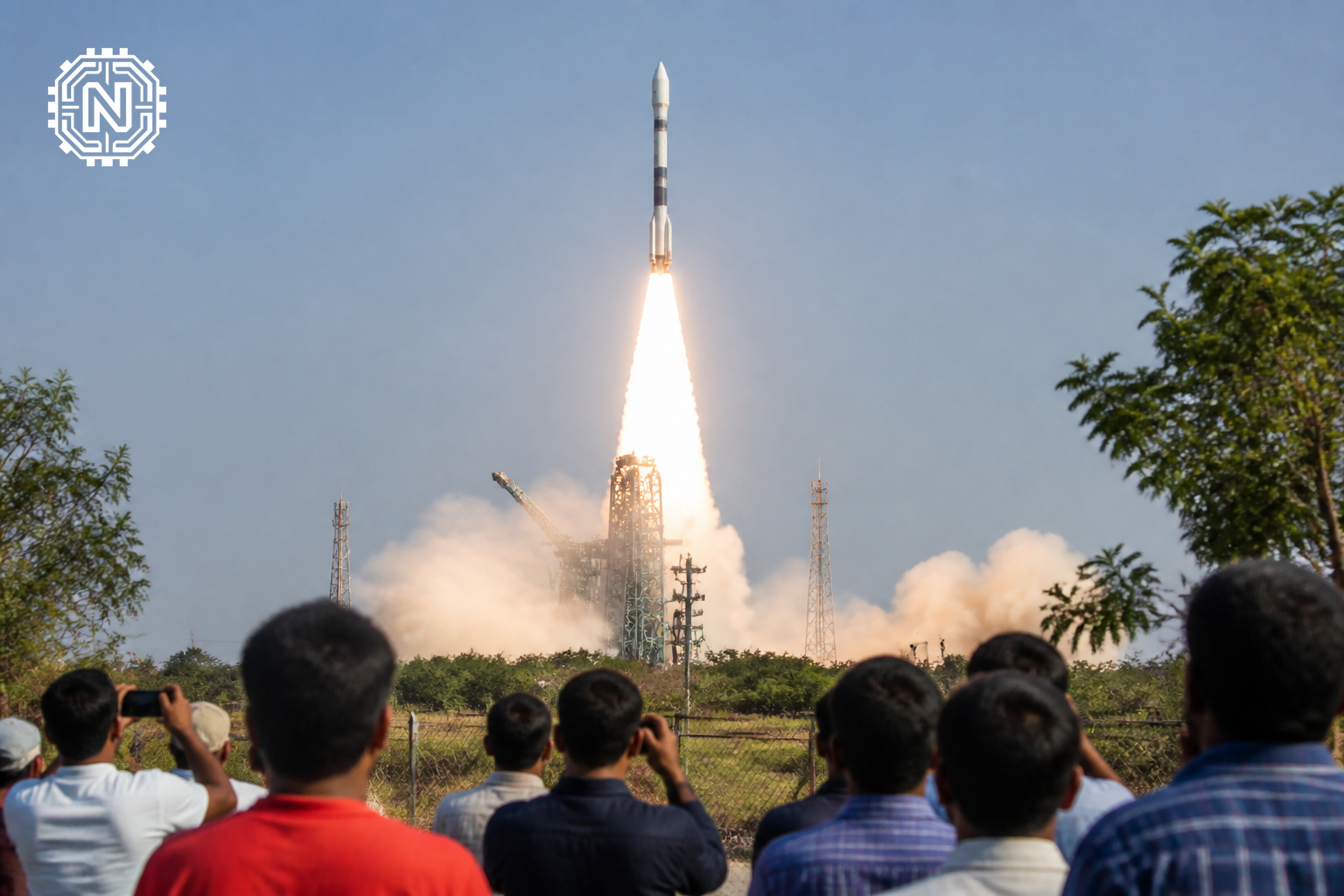
This launch marks a pivotal moment not only for Skyroot but also for India, showcasing the capabilities of the private sector in space exploration. The successful deployment of small satellites opens up numerous opportunities for commercial applications, including telecommunications, Earth observation, and scientific research.
Skyroot's achievement has garnered significant attention from investors and industry experts, with many recognizing the potential for growth in India's commercial space sector. The successful launch of Vikram-1 is expected to pave the way for future missions and collaborations within the industry.
How Does Vikram-1 Work?
The Vikram-1 is powered by a combination of solid and liquid propulsion systems, which provide the thrust necessary for reaching orbit. Its innovative design incorporates lightweight materials to maximize efficiency and reduce costs, making it an attractive option for satellite operators.
Equipped with advanced avionics and a state-of-the-art control system, Vikram-1 can execute precise maneuvers during its ascent. This capability is crucial for deploying payloads accurately into their intended orbits. The rocket also features reusable components that further enhance its cost-effectiveness.
Skyroot’s engineering team has focused on creating a reliable and repeatable launch process, which is essential for meeting the increasing demand for satellite launches. Their commitment to innovation and excellence in engineering is evident in the Vikram-1's design and performance.
Official Reactions and Future Implications
Following the successful launch, Skyroot's CEO, Pawan Kumar Chandana, expressed pride in the team's achievement, stating, 'This launch marks a significant milestone for us and for India’s private space sector. We are excited to pave the way for future missions.' Such sentiments reflect the optimism surrounding the potential of private companies in India's space ambitions.
The Indian government has also shown support for private space initiatives, recognizing their role in enhancing the country's technological capabilities. This launch aligns with India's broader goals of becoming a global leader in space technology, with plans for increased collaboration between public and private sectors.
As Skyroot prepares for its next missions, the company aims to leverage this momentum to attract international clients, positioning itself as a competitive player on the global stage. The implications of this launch extend beyond commercial interests; they symbolize India's evolving space narrative.
Why This Launch Matters for India
The successful launch of Vikram-1 is a landmark achievement for India's space industry, marking the transition from a government-led space program to a more diversified ecosystem that includes private enterprises. This shift is crucial for fostering innovation, reducing costs, and increasing the frequency of launches.

With a growing number of satellites in orbit, the demand for launch services is expected to rise. Skyroot's entry into this market provides a much-needed alternative to traditional launch providers, ensuring that India can meet its domestic and international satellite deployment needs.
Moreover, this launch sets a precedent for future collaborations between the Indian government and private companies, potentially leading to more ambitious projects such as crewed spaceflights and interplanetary missions. The future looks bright for India's private space sector.
What’s Next for Skyroot Aerospace?
Looking ahead, Skyroot has ambitious plans to build on the success of Vikram-1. They are currently developing the Vikram-2, which aims to carry larger payloads and operate more frequently. This next-generation rocket is expected to debut within the next few years.
In addition to expanding their launch capabilities, Skyroot is exploring partnerships with international space agencies and commercial satellite operators. Such collaborations could enhance their technological expertise and market reach.
As the company continues to innovate, they are also investing in research and development to create even more advanced launch vehicles. With the global space market projected to grow significantly, Skyroot is well-positioned to capitalize on emerging opportunities.
Conclusion
Skyroot Aerospace's successful launch of Vikram-1 marks a pivotal moment for India's space industry, signaling the rise of private players in a field traditionally dominated by government entities. As the company looks to the future, it aims to solidify its position as a leader in commercial space launches.
Frequently Asked Questions
What is Skyroot Aerospace?
Skyroot Aerospace is an Indian space start-up focused on developing private launch vehicles for commercial satellite deployment.
When did Skyroot Aerospace launch Vikram-1?
Skyroot Aerospace successfully launched Vikram-1 on November 18, 2023, marking a significant milestone in India's private space sector.
What is Vikram-1?
Vikram-1 is India's first private commercial rocket designed by Skyroot Aerospace for orbital missions.
What payload capacity does Vikram-1 have?
Vikram-1 can carry payloads of up to 300 kilograms to low Earth orbit.
Why is the Vikram-1 launch significant?
The Vikram-1 launch is significant as it demonstrates India's growing private space capabilities and enhances competition in the global space market.
What are the future plans for Skyroot Aerospace?
Skyroot Aerospace aims to develop more advanced launch vehicles and expand its services for satellite deployment and space exploration.
Who founded Skyroot Aerospace?
Skyroot Aerospace was founded by former ISRO engineers Pawan Kumar Chandana and A.S. Kiran Kumar in 2018.
How does Vikram-1 compare to ISRO's rockets?
Vikram-1 is designed for smaller payloads compared to ISRO's larger rockets, focusing on providing cost-effective launch solutions for small satellites. For more on Tech News, explore Newtechzy. You can also review our Privacy Policy and Cookie Policy, or learn more About us.
Related Topics
Curious about India's evolving space industry? Explore more about Skyroot Aerospace and their upcoming projects. Stay informed and engaged with our latest updates.
Start Your Journey Today!


