


Quick Summary
- Apple Vision Pro first became available in the United States on February 2, 2024; it is not an upcoming 2026 product.
- The current model uses Apple’s M5 chip alongside the R1 chip and includes the Dual Knit Band.
- Its micro-OLED display system contains 23 million pixels and supports refresh rates up to 120Hz.
- U.S. pricing starts at $3,499, with 256GB, 512GB, and 1TB storage options.
- visionOS 26 is the current listed operating system, while visionOS 27 is scheduled for fall 2026.
Apple Vision Pro is already an established spatial-computing product rather than a headset awaiting a 2026 launch. Apple introduced the original model in 2023 and began selling it in the United States in February 2024. Apple later released an upgraded version with the M5 chip and Dual Knit Band in October 2025.
This fact-checked guide explains the current Apple Vision Pro hardware, software, pricing, availability, strengths, and limitations as of July 2026. It is based on Apple’s published specifications and announcements, not a hands-on laboratory review.
Apple Vision Pro Release Timeline
Apple unveiled Vision Pro on June 5, 2023, describing it as its first spatial computer. Pre-orders for the original model opened in the United States on January 19, 2024, and retail availability began on February 2, 2024. Apple expanded availability to additional countries and regions later in 2024.
On October 15, 2025, Apple announced an upgraded Vision Pro powered by the M5 chip. That model became available on October 22, 2025, and added the Dual Knit Band, faster performance, improved display rendering, and longer rated battery life. Therefore, claims that Vision Pro is scheduled to debut in 2026 are incorrect.
Important Facts
- Original U.S. release: February 2, 2024
- Current M5 model release: October 22, 2025
- Starting U.S. price: $3,499
- Storage choices: 256GB, 512GB, and 1TB
- Current listed operating system: visionOS 26
What Is Apple Vision Pro?
Apple Vision Pro is a wearable spatial computer that places apps, windows, photos, video, and three-dimensional experiences within the user’s physical environment. It can also increase immersion through virtual Environments controlled with the Digital Crown.
Users interact with visionOS primarily through their eyes, hands, and voice. Looking at an interface element highlights it, while a finger tap or pinch can select, scroll, move, or resize content. The system also supports compatible keyboards, pointing devices, and game controllers.
Unlike a conventional monitor, Vision Pro can create a private workspace through Mac Virtual Display, present large virtual screens for entertainment, capture spatial photos and videos, and run apps designed specifically for visionOS.
M5 Hardware and Display Specifications
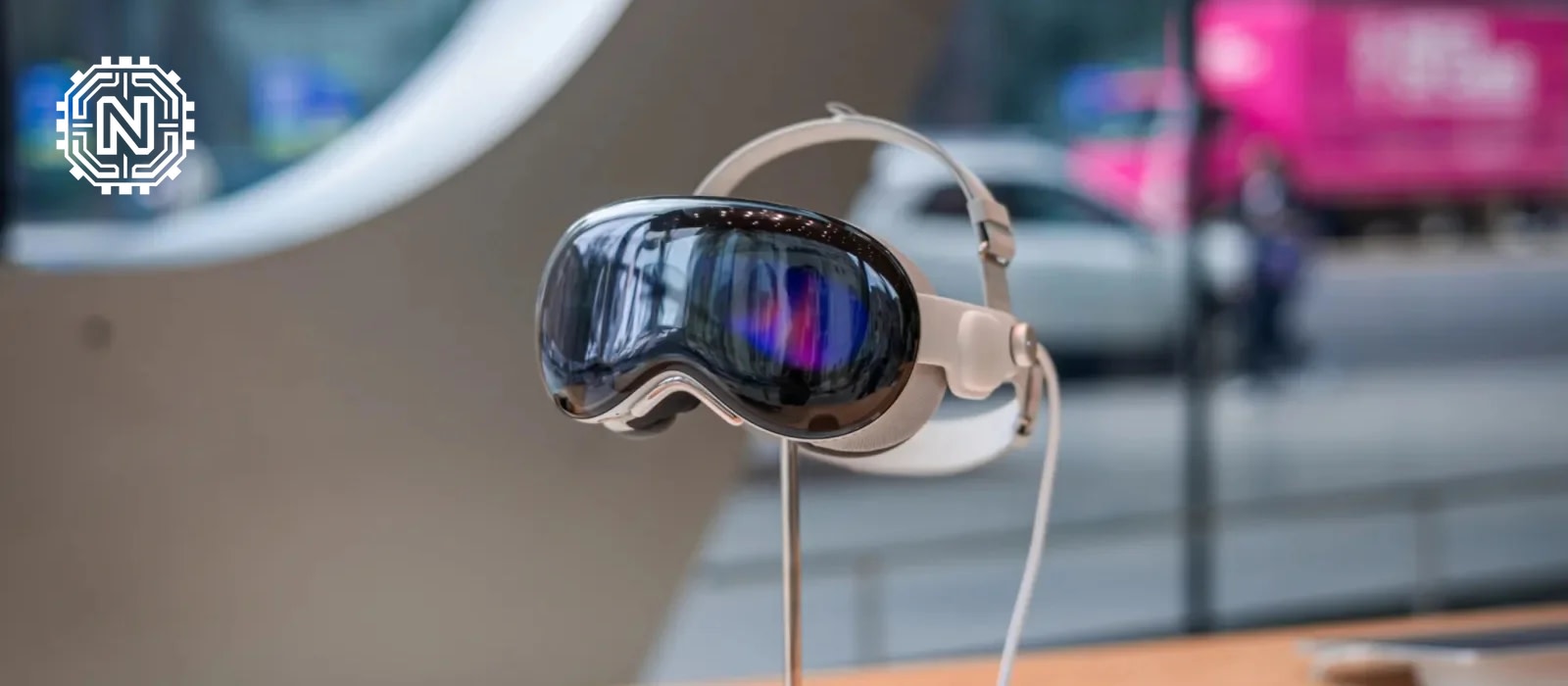
The current Apple Vision Pro combines two Apple-designed chips. The M5 handles the operating system, graphics, applications, and computational workloads, while the R1 chip processes input from cameras, sensors, and microphones with a stated 12-millisecond photon-to-photon latency.
| Component | Official specification |
|---|---|
| Main processor | Apple M5 with a 10-core CPU, 10-core GPU, 16-core Neural Engine, and 16GB unified memory |
| Sensor-processing chip | Apple R1 |
| Display system | Micro-OLED, 23 million pixels across the system |
| Refresh rates | 90Hz, 96Hz, 100Hz, and 120Hz |
| Storage | 256GB, 512GB, or 1TB |
| Wireless | Wi-Fi 6 and Bluetooth 5.3 |
Apple says the M5 version renders 10 percent more pixels on its custom displays than the earlier model and can reach 120Hz, helping produce sharper text and smoother views of the surrounding environment. These improvements do not change the physical display resolution listed by Apple, which remains 23 million pixels across the display system.
Controls, Cameras, and Audio
Vision Pro uses two high-resolution main cameras, six world-facing tracking cameras, four eye-tracking cameras, a TrueDepth camera, a LiDAR Scanner, inertial measurement units, and additional light and motion sensors. This sensor array supports positional tracking, hand tracking, eye tracking, spatial mapping, and passthrough views of the user’s surroundings.
The device includes a stereoscopic 3D camera system for spatial photo and video capture. Optic ID uses iris recognition for authentication and can authorize purchases and access to protected information.
For sound, Vision Pro provides Spatial Audio with dynamic head tracking and personalized audio processing. Its speakers sit close to the ears rather than sealing them completely, allowing users to hear digital audio while retaining some awareness of the room.
Battery, Comfort, and Everyday Use
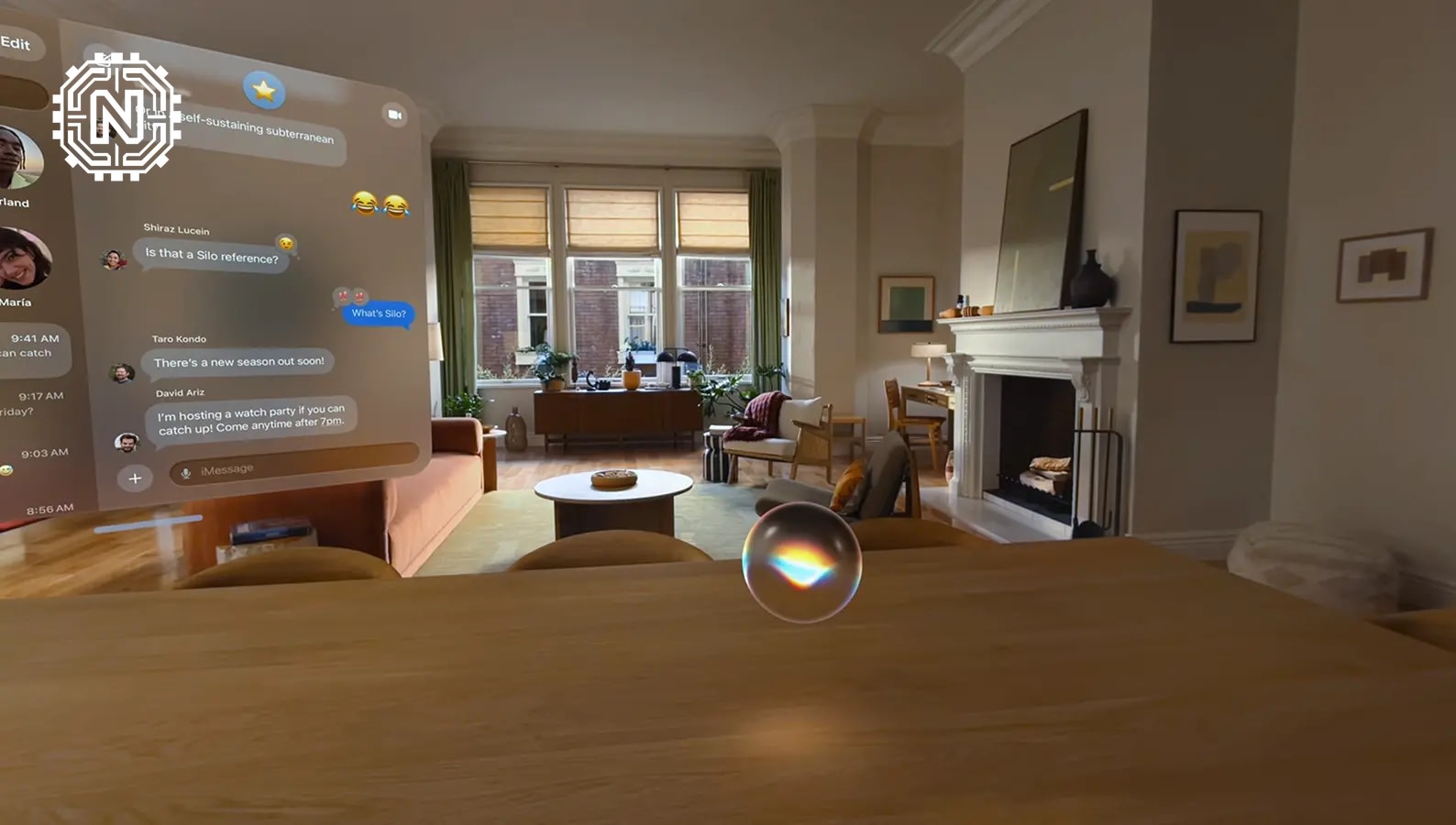
The M5 Vision Pro uses a separate battery connected by cable. Apple rates it for up to 2.5 hours of general use or up to 3 hours of video playback. The headset can continue operating while its battery is connected to power.
The current package includes the Dual Knit Band, which uses upper and lower adjustable straps to distribute weight more evenly. Even with that design, Apple lists the headset at approximately 750 to 800 grams depending on configuration, while the separate battery weighs 353 grams. Comfort can therefore vary significantly by face shape, fit, activity, and session length.
Practical Strengths and Limitations
- Strengths: sharp displays, precise eye-and-hand input, strong Apple ecosystem integration, immersive video, and a flexible virtual workspace.
- Limitations: premium price, substantial headset weight, external battery cable, limited battery duration, and selective regional availability.
visionOS Features and 2026 Updates
Apple’s current technical-specifications page lists visionOS 26. It supports spatial apps, Mac Virtual Display, immersive Environments, Personas, widgets, entertainment experiences, and Apple Intelligence features where available.
Apple has also previewed visionOS 27 for release in fall 2026. Announced features include a new Siri AI experience, expanded Apple Intelligence capabilities, a dedicated Siri app, and the ability to turn panoramic photos into spatial scenes. Because visionOS 27 has not yet reached its general fall release at the time of this update, buyers should treat those functions as announced upcoming software rather than current shipping features.
Feature availability can differ by language, region, device configuration, and software version. Users should confirm individual features on Apple’s official visionOS pages before purchasing for a specific workflow.
Price, Storage, and Availability
Apple Vision Pro with M5 starts at $3,499 in the United States and is offered with 256GB, 512GB, or 1TB of storage. ZEISS Optical Inserts, accessories, taxes, and AppleCare can add to the total purchase cost.
Apple sells Vision Pro only in selected countries and regions. Apple’s M5 launch announcement listed Australia, Canada, China mainland, France, Germany, Hong Kong, Japan, Singapore, South Korea, Taiwan, the United Arab Emirates, the United Kingdom, and the United States, with timing varying by market. Buyers should check their regional Apple Store because pricing, language support, apps, services, optical-insert requirements, and official support can differ.
For vision correction, Apple advises eligible users to use compatible ZEISS Optical Inserts rather than wearing ordinary glasses inside the headset. Prescription acceptance and shipping rules depend on the market in which the inserts are purchased.
Is Apple Vision Pro Worth Buying in 2026?
Vision Pro is most compelling for developers, creative professionals, businesses building spatial experiences, Apple ecosystem users who value a large private Mac workspace, and enthusiasts seeking premium immersive entertainment. Its display quality, input system, spatial video, and integration with Apple hardware remain its clearest advantages.
For a typical consumer, the $3,499 starting price, weight, external battery, limited unplugged runtime, and regional restrictions make it a specialized purchase rather than a mainstream replacement for a laptop, television, or gaming headset.
Buying Verdict
Apple Vision Pro with M5 is an advanced spatial-computing device with a distinctive interface and strong hardware. In 2026, it makes the most sense when a buyer has a specific professional, development, productivity, or immersive-media use case that justifies its price and form factor.
Conclusion
Apple Vision Pro did not launch in 2026: the original device arrived in 2024, and the current M5 model became available in October 2025. As of July 2026, the product combines the M5 and R1 chips, a 23-million-pixel micro-OLED display system, eye-and-hand input, visionOS 26, and a starting U.S. price of $3,499. visionOS 27 is scheduled to extend the platform later in 2026, but announced features should not be described as already available until Apple releases the update.
Editorial Sources
Frequently Asked Questions
When was Apple Vision Pro released?
The original Apple Vision Pro became available in the United States on February 2, 2024. The upgraded M5 version became available on October 22, 2025.
What chip does the current Apple Vision Pro use?
The current model uses an Apple M5 chip for computing and graphics together with an R1 chip for processing camera and sensor input.
How much does Apple Vision Pro cost?
Apple Vision Pro with M5 starts at $3,499 in the United States. Prices, taxes, accessories, and availability vary by country or region.
What storage options are available?
Apple offers the M5 Vision Pro with 256GB, 512GB, or 1TB of storage.
How long does the Apple Vision Pro battery last?
Apple rates the M5 model for up to 2.5 hours of general use and up to 3 hours of video playback. It can also be used while charging.
How do users control Apple Vision Pro?
The primary input methods are eyes, hands, and voice. Compatible keyboards, pointing devices, game controllers, and selected spatial accessories are also supported.
Which operating system does Apple Vision Pro run?
Apple’s current specifications list visionOS 26. Apple has announced visionOS 27 for fall 2026.
Is Apple Vision Pro available in every country?
No. Apple Vision Pro is sold only in selected countries and regions. Buyers should confirm availability, price, supported languages, and service options through their regional Apple Store.
Related Topics
Explore more verified technology news, product guides, and analysis from Newtechzy.
Explore Tech News


