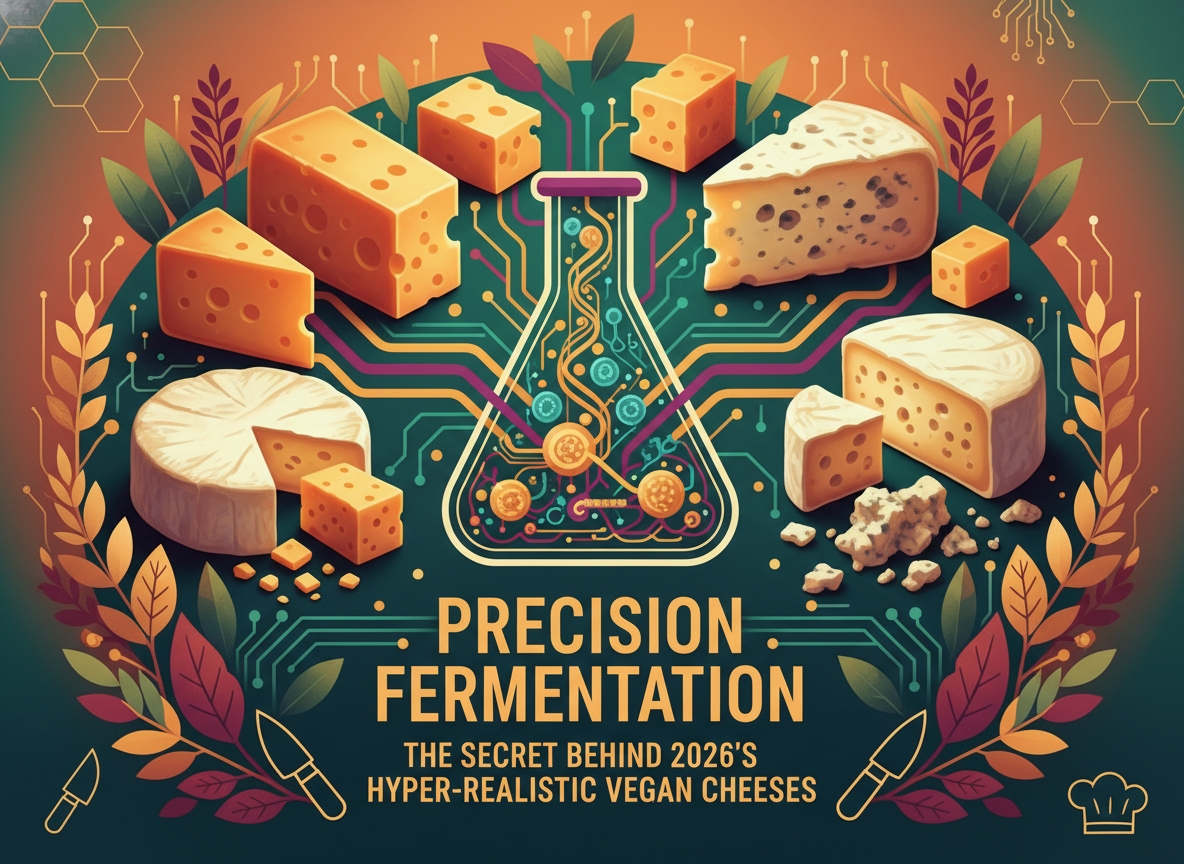
For years, the 'holy grail' of the plant-based food world was a vegan cheese that actually melted, stretched, and tasted like traditional dairy. As of March 31, 2026, that goal has finally been achieved through the widespread adoption of precision fermentation. This technology uses programmed microorganisms—typically yeast or fungi—to produce actual dairy proteins like casein and whey without the need for a single cow. The result is a 'molecularly identical' dairy product that is lactose-free, cholesterol-free, and indistinguishable from animal-derived cheese in every culinary application.
The impact on the 'food-and-recipes' sector has been instantaneous. Recipe developers who previously struggled with the oily or grainy textures of nut-based cheeses are now releasing cookbooks dedicated entirely to 'Fermentation-Derived Dairy.' These new cheeses, ranging from sharp cheddars to gooey camemberts, behave exactly like their traditional counterparts under heat. This means that vegan pizza now features the iconic 'cheese pull,' and vegan fondues have the perfect emulsified consistency that was once thought impossible without animal fats.
One of the biggest breakthroughs this year is the 'Designer Brie' trend. By using precision fermentation to produce specific ratios of casein proteins, artisanal vegan cheesemakers are creating wheels of brie with complex, bloomy rinds and creamy interiors that age just like traditional French varieties. In March 2026, these cheeses are winning blind taste tests against high-end dairy brands, signaling a major shift in the luxury food market where 'animal-free' is no longer a compromise, but a superior choice for both health and ethics.
Environmental statistics released this month show that precision-fermented dairy uses 97% less water and 99% less land than traditional cattle farming. This has led to a massive influx of government subsidies for fermentation hubs, which are being built in former industrial zones across the country. These 'micro-dairies' are producing fresh, local cheese for urban populations, drastically reducing the carbon footprint associated with transporting dairy products from rural farms to city centers.
For home cooks, the most exciting part of this trend is the availability of 'Fermentation Starter Kits.' Similar to the sourdough craze of 2020, 2026 has seen a surge in people making their own animal-free dairy proteins at home using small-scale fermentation tanks. These 'Kitchen Bio-Labs' allow enthusiasts to experiment with different microbial strains to create unique flavor profiles, such as a goat-style tang or a smoky provolone finish, all from a base of simple plant sugars and minerals.
The nutritional profile of these products is also a major talking point. Unlike many early vegan cheeses that were primarily starch and oil, fermentation-derived cheeses are packed with high-quality protein and can be fortified with essential vitamins like B12 and D. This makes them a viable staple for families looking to reduce their meat and dairy consumption without sacrificing their nutritional intake. The 'clean label' movement has also embraced these products, as they require far fewer additives and stabilizers than previous generations of plant-based cheese.
March 2026 has also seen the first 'Hybrid Dairy' products hitting the market—blends of precision-fermented proteins and traditional plant milks like oat or almond. These products offer the best of both worlds: the familiar taste and function of dairy proteins combined with the sustainable and diverse fats found in plants. This category is quickly becoming the top choice for baristas, as the fermented proteins provide the structural integrity needed for perfect latte art, which has been a long-standing challenge for alternative milks.
As we look ahead, the 'Fermentation Revolution' is set to tackle more complex dairy items like Greek yogurt and high-protein butter. The ability to 'program' flavor and texture at a molecular level is opening up a world of culinary possibilities that we are only beginning to explore. In 2026, the definition of 'real cheese' is being rewritten, and the recipes we use to enjoy it are becoming more inclusive, sustainable, and delicious than ever before.