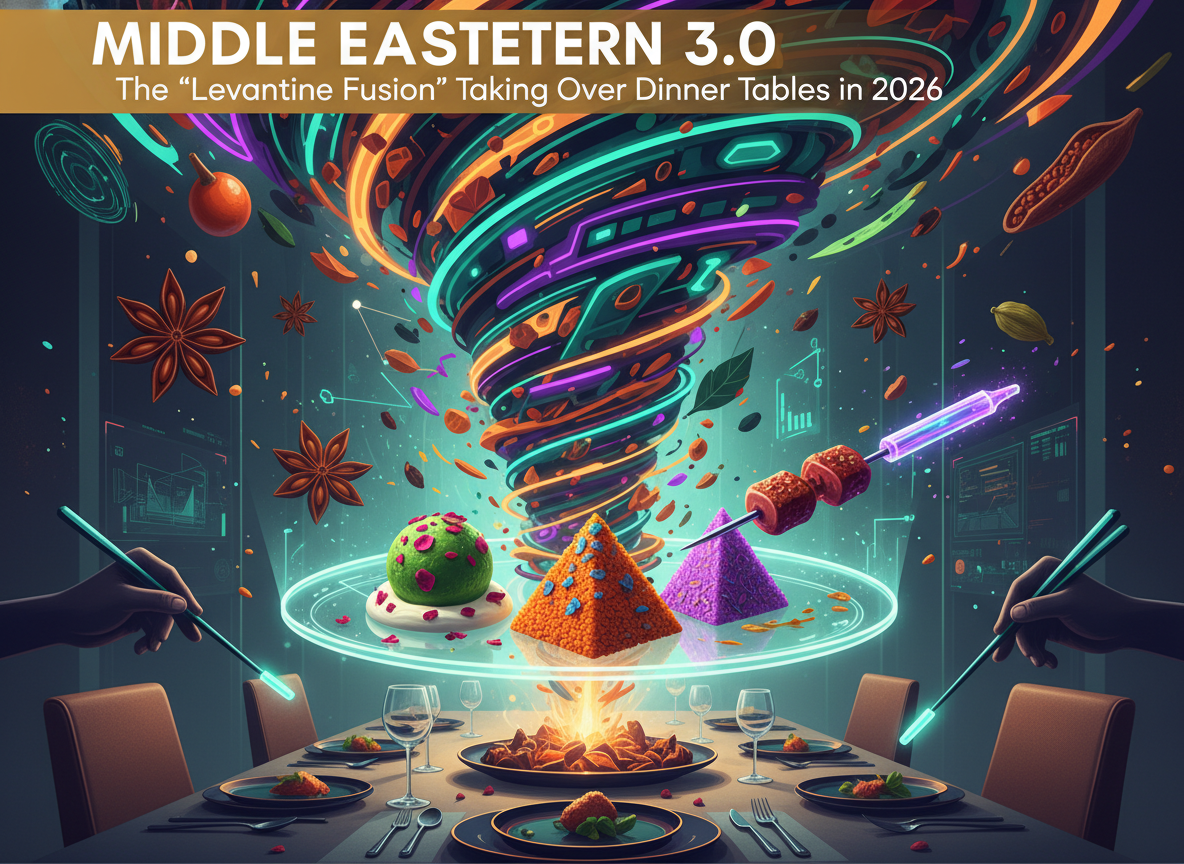
While Middle Eastern food has been a global favorite for decades, 2026 has brought about a significant evolution in how these flavors are presented and combined. We are currently in the era of 'Middle Eastern 3.0' or 'Levantine Fusion.' This trend moves beyond the standard mezze platter, diving deep into the specific sub-regional cuisines of Palestine, Jordan, Syria, and Lebanon, while blending them with modern culinary techniques and global influences. Think 'Muhammara-Glazed Salmon' or 'Za'atar-Infused Sourdough,' dishes that honor tradition while embracing the 2026 palate.
A key driver of this trend is the 'Spice Discovery' movement. In March 2026, home cooks are moving past generic 'curry powder' or 'taco seasoning' and stocking their pantries with specific Levantine blends like Dukkah, Advieh, and various grades of Sumac. The search for 'authentic urfa biber' and 'preserved lemon paste' has reached an all-time high this month, as social media influencers showcase the incredible depth of flavor these single-origin spices bring to even the simplest roasted vegetables.
The rise of 'Technological Tradition' is also playing a role. Chefs are using modern tools like ultrasonic homogenizers to create the smoothest tahini ever seen, or using liquid nitrogen to create 'frozen hummus pearls' that melt on the tongue. This blend of ancient flavors and futuristic textures is captivating diners and inspiring a new wave of 'Modern Middle Eastern' cookbooks that focus as much on the science of flavor as they do on the heritage of the dishes.
Sustainability is baked into this cuisine's DNA. The Levantine diet has always been heavily plant-forward, focusing on pulses, grains, and seasonal vegetables. In 2026, as the world moves toward more 'climatarian' eating habits, the Middle Eastern focus on lentils, chickpeas, and eggplants makes it the perfect template for sustainable deliciousness. Recipes like 'Climate-Friendly Mujadara' are trending this spring, highlighting how ancient peasant dishes are the ultimate solution for modern environmental challenges.
Street food in 2026 is also being redefined by this trend. We are seeing a surge in 'Gourmet Mana'eesh' stands—flatbreads topped with everything from traditional za'atar to modern combinations like labneh with fermented chili honey and pickled radishes. These portable, customizable, and relatively affordable meals are perfect for the fast-paced urban lifestyle of the mid-2020s, offering a more flavorful and nutritious alternative to traditional fast food.
The 'Brunch' scene has also been conquered by the Levant. In March 2026, 'Shakshuka Variations' are the most ordered items at weekend hotspots, with versions featuring everything from green tomatillo bases to 'nduja-infused tomato sauces. The communal nature of Middle Eastern dining—sharing small plates and breaking bread together—perfectly aligns with the post-digital desire for authentic, human connection over a meal.
We are also seeing a fascinatng 'Diaspora Fusion' emerge. Chefs from the Middle Eastern diaspora are combining their heritage with the local ingredients of their new homes. In London, this looks like 'Sumac-Spiced Fish and Chips'; in Los Angeles, it's 'Al Pastor Shawarma.' These 'Third Culture' recipes are some of the most exciting and high-traffic content in the 2026 'food-and-recipes' landscape, representing a beautiful synthesis of cultures and identities.
As the spring of 2026 unfolds, the influence of the Levant shows no signs of waning. Its emphasis on bold spices, healthy fats, and communal eating makes it perfectly suited for the modern world. Whether it's a home cook experimenting with a new jar of Aleppo pepper or a chef reinventing the kebab, the flavors of the Middle East are providing a vibrant, hopeful, and delicious soundtrack to our lives in 2026.