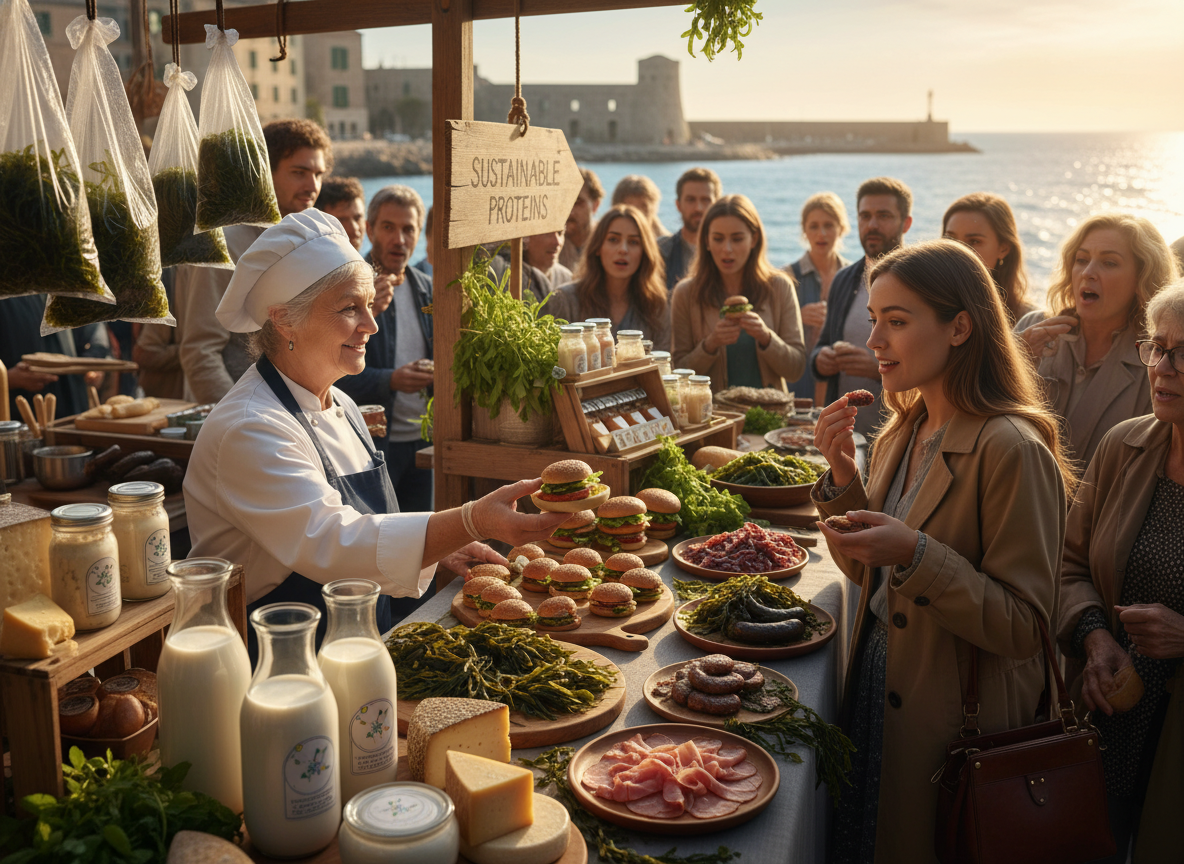
The global food industry reached a historic milestone today, April 8, 2026, as the first large-scale shipments of 'molecularly farmed' dairy proteins arrived in major retail centers across North America and Europe. This technology, which involves programming common plants like soybeans and peas to produce animal-identical proteins like casein and whey, effectively eliminates the need for industrial livestock. Unlike previous plant-based alternatives that struggled with texture and melting properties, these new bio-identical proteins offer the exact same culinary performance as traditional dairy, marking a significant pivot in the alternative protein market.
While molecular farming dominates the headlines, the concurrent rise of 'Vertical Seaweed Forests' is providing a complementary revolution in the world of savory ingredients. Today's unveiling of the Pacific Blue Initiative's latest harvest reveals a new species of kelp that has been naturally selected for its high protein content and bacon-like flavor profile when pan-fried. This 'Sea-Bacon' is not just a meat substitute; it is a nutritional powerhouse, packed with iodine, omega-3 fatty acids, and essential minerals that are often lacking in land-based diets. The scalability of these underwater farms is proving to be a game-changer for food security in 2026.
Chefs in major culinary hubs are already embracing these ingredients to create what is being called 'Regenerative Gastronomy.' By utilizing sea-based proteins and molecularly farmed dairy, restaurants can now achieve a negative carbon footprint for their most popular dishes. A new menu launched today at a three-star Michelin restaurant in Copenhagen features a 'Carbon-Negative Carbonara,' utilizing kelp-based pasta and lab-grown egg yolk proteins. The reception from food critics has been overwhelmingly positive, emphasizing that flavor and luxury no longer need to be sacrificed for the sake of the planet.
The economic impact of these developments is also becoming clear. With the 2026 Farm Bill updates emphasizing carbon credits for regenerative ocean farming, many traditional coastal communities are transitioning from commercial fishing to kelp cultivation. This shift is restoring marine ecosystems while providing a stable, weather-resistant source of income for thousands. The synergy between high-tech molecular biology and low-tech ocean stewardship is creating a robust new blue economy that is resilient to the climate challenges of the mid-2020s.
Nutritionists are particularly excited about the bio-availability of the nutrients found in these 2026 food innovations. Molecularly farmed proteins are designed to be easier to digest than their traditional counterparts, as the specific amino acid sequences can be optimized during the plant's growth phase. This means that athletes and the elderly can consume smaller portions of food while receiving higher levels of muscle-repairing proteins. The 'Precision Nutrition' movement is utilizing these custom-grown crops to treat specific deficiencies in the population, turning the supermarket into a proactive healthcare center.
The cultural shift toward these foods is also being driven by transparency in the supply chain. New blockchain-enabled 'Flavor Passports' launched today allow consumers to scan any package of seaweed-based protein and see the exact GPS coordinates of the farm, the date of harvest, and the precise carbon offset generated by their purchase. This level of radical transparency is building trust with Gen Z and Alpha consumers, who demand ethical accountability from the brands they support. In 2026, the story of the food is just as important as the taste itself.
Technological hurdles that once plagued the seaweed industry, such as the removal of heavy metals and microplastics, have been solved by 2026 through advanced bio-filtration systems. These systems use natural mussels and oysters to clean the water surrounding the kelp forests, creating a self-sustaining ecosystem that produces clean, high-quality food. This circular approach to food production is being hailed by environmentalists as the 'Gold Standard' for the future, proving that human consumption can actually improve the health of the natural world if managed correctly.
As we conclude this update on April 8, 2026, it is clear that the culinary world is in the midst of its most significant transformation since the Green Revolution. The marriage of molecular biology and marine permaculture is not just a trend but a fundamental restructuring of how we define 'food.' With the ability to grow animal proteins in plants and harvest high-protein crops from the sea, we are entering an era of abundance that respects the limits of our planet. The recipes of tomorrow will be defined by their ability to nourish both the body and the earth simultaneously.