The announcement today, May 16, 2026, of the new Neural Processing Units (NPUs) specifically designed for Agentic AI has sent shockwaves through the tech industry. These chips, featured in the latest flagship devices from Apple and Qualcomm, enable 100% offline agentic logic. This means that complex, goal-oriented agents can now operate with total privacy and zero latency, removing the dependency on cloud-based LLMs that dominated the early 2020s.
Edge-native agents are transforming the field of personal robotics. In the smart homes of 2026, domestic robots are no longer just vacuuming floors; they are running local agentic swarms that manage security, energy consumption, and elderly care. Because the decision-making happens on-device, sensitive data never leaves the home, addressing the privacy concerns that previously hindered the adoption of autonomous home assistants.
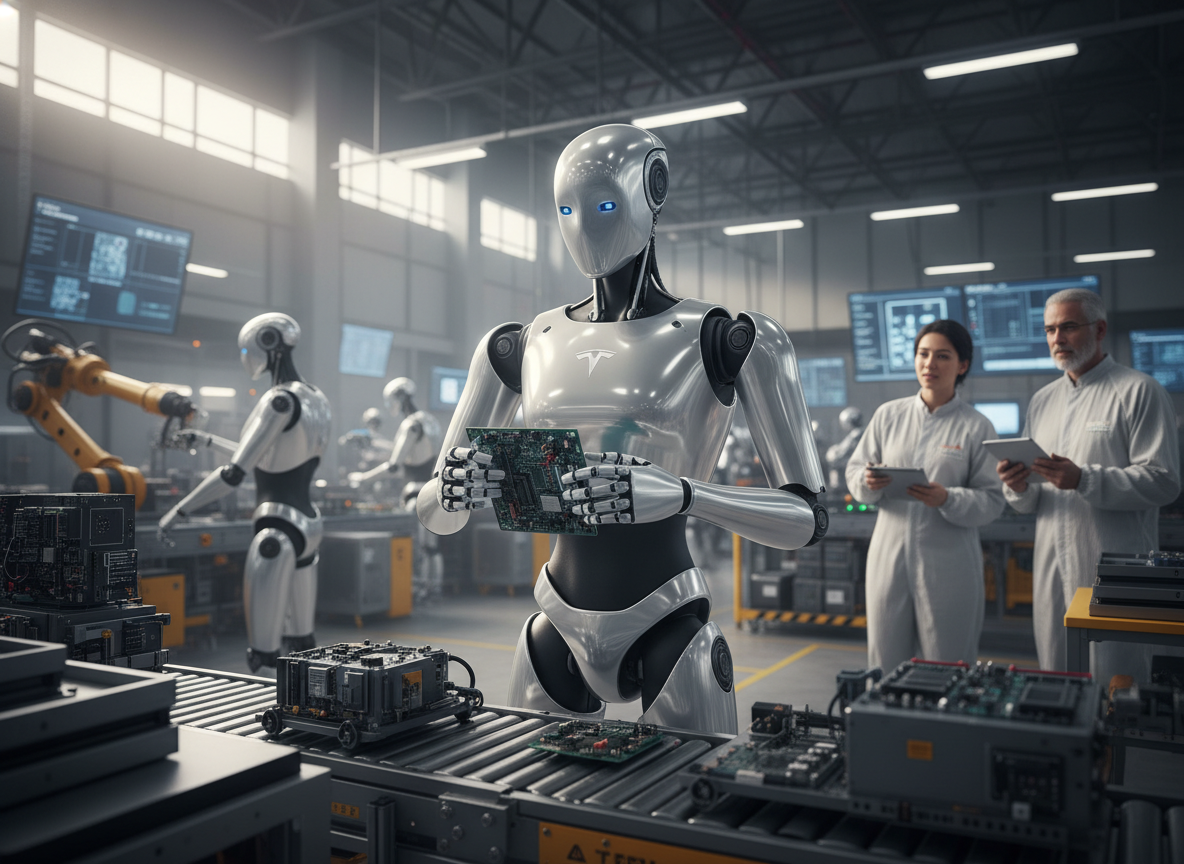
In the industrial sector, Edge Agentic AI is powering a new generation of self-healing manufacturing lines. Machines equipped with local agents can now sense mechanical wear through ultrasonic sensors and autonomously order replacement parts or schedule maintenance. This level of Robotic Sovereignty allows factories to operate with minimal human intervention, dramatically reducing downtime and increasing production efficiency.
The technical breakthrough that made this possible is the development of Sparse Agent Architectures. By optimizing models to only activate the necessary parameters for a specific task, hardware manufacturers have achieved a 50x increase in performance-per-watt. This efficiency allows sophisticated agents to run on wearable devices like AR glasses, providing real-time, context-aware assistance without draining the battery.
Latency-critical applications, such as autonomous drone delivery and self-driving vehicles, are the biggest beneficiaries of this hardware evolution. An agentic drone can now perform complex obstacle avoidance and route optimization in microseconds, responding to environmental changes faster than any cloud-tethered system could. This has led to the first successful 24-hour autonomous logistics window in several major cities this week.
The concept of Personal Agentic Clouds is also gaining traction. Users can now link their edge devices—phone, laptop, and car—into a private agentic mesh. These devices share processing power and context to provide a unified agentic experience. If you ask your phone to plan a trip, your car's agent can autonomously check its fuel level and your laptop's agent can sync the itinerary with your work schedule, all locally and securely.
We are also seeing the emergence of Bio-Agentic hardware, where AI agents are integrated with biological sensors to monitor health in real-time. These agents can detect subtle changes in biomarkers and autonomously adjust medication dosages or alert medical professionals. This represents a massive leap forward in preventative medicine, shifting the focus from treating illness to maintaining optimal health through continuous, agentic monitoring.
Concluding the latest developments of May 2026, the move to the edge marks the end of the cloud-monopoly over artificial intelligence. As agents become more embedded in our physical environment, the line between digital intelligence and physical reality continues to blur. The era of the ubiquitous, offline agent is here, and it is more powerful and private than we ever imagined.