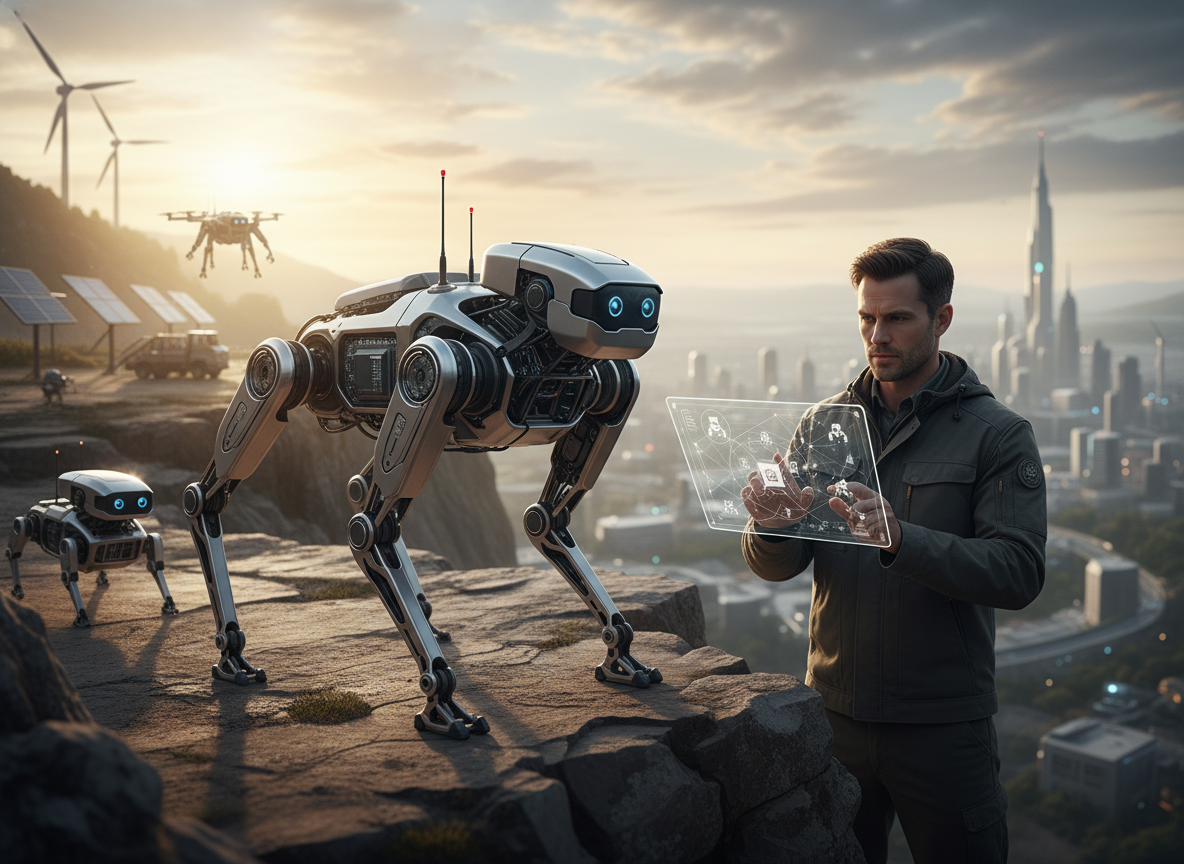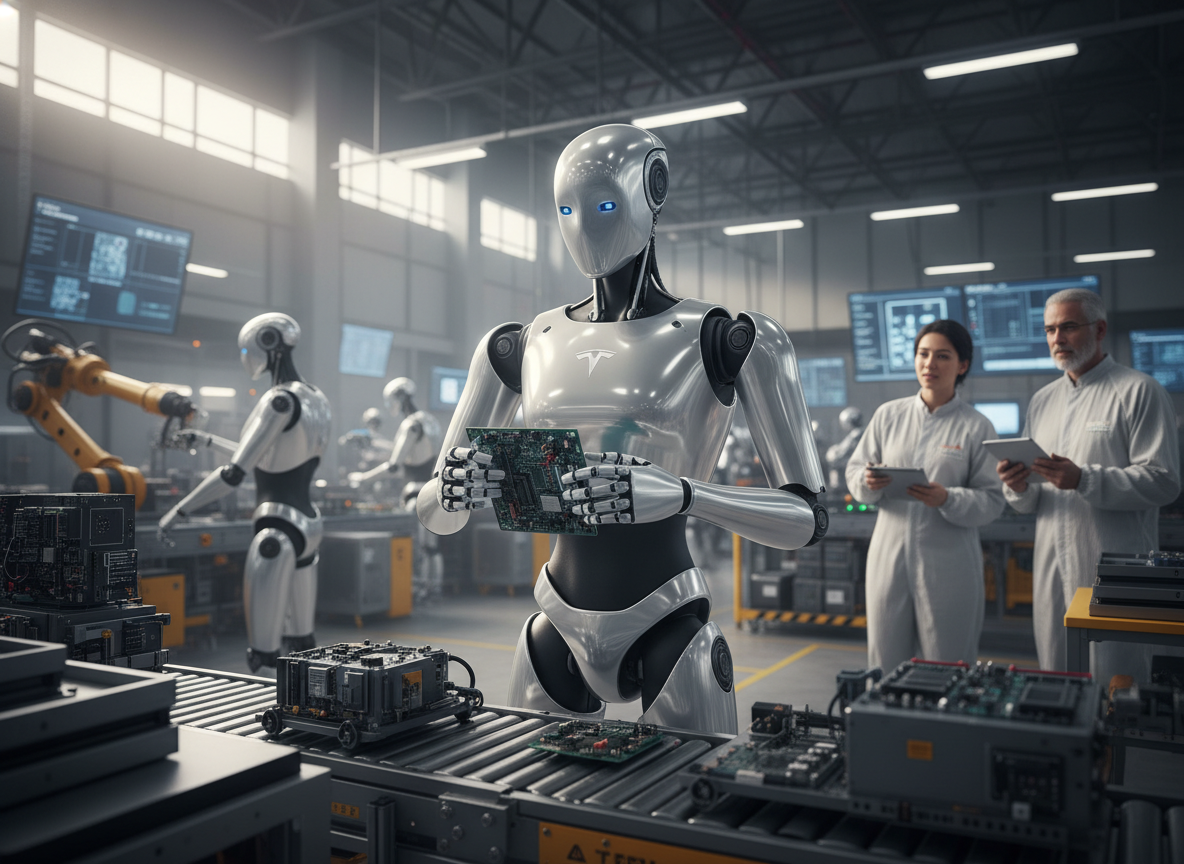
Today, April 10, 2026, marks a historic milestone in the field of robotics as the first batch of Tesla Optimus Gen 4 units officially rolled off the Giga-Texas assembly line for commercial deployment. While previous versions were largely confined to controlled factory settings and research labs, the Gen 4 model represents the first truly versatile humanoid robot capable of navigating and performing tasks in complex, unstructured human environments. This release is expected to revolutionize labor-intensive industries, from logistics and construction to elder care and hospitality.
The standout feature of the Optimus Gen 4 is the 'Spatial Engine 3.0,' a proprietary AI model trained on billions of hours of real-world video data. This engine allows the robot to understand 3D physics in real-time, enabling it to predict how objects will react to its touch. Whether it is handling fragile glassware or navigating a crowded hospital corridor, the Gen 4 demonstrates a level of grace and situational awareness that was previously thought to be decades away. This advancement is powered by the Dojo 2 supercomputer architecture, which has been optimized for low-latency spatial reasoning.
Physical dexterity has seen a massive upgrade with the introduction of 'Synthetic Muscle Fibers' (SMF). These actuators replace traditional motors in several key joints, providing a 10x increase in precision and a 30% reduction in weight. The robot’s hands now feature 22 degrees of freedom, mirroring the human hand's ability to manipulate small tools and perform delicate assembly tasks. Tesla engineers claim that the Gen 4 can now tie a pair of shoelaces and perform intricate circuit board soldering with a success rate exceeding that of a trained human technician.
Energy management is another critical area where the Gen 4 excels. Utilizing the latest Solid-State 4680 cells, the robot can operate for a full 16-hour shift on a single charge. This breakthrough in battery density allows the Optimus to work a standard double-shift in many industrial applications with only a short 30-minute 'hyper-charging' session in between. Furthermore, the robot's thermal management system has been redesigned to allow for operation in extreme temperatures, ranging from -20°C to 50°C, opening up use cases in outdoor construction and cold storage facilities.
The integration of 'Neural-Voice 2.0' provides the Optimus Gen 4 with the ability to communicate fluently in over 50 languages with emotional resonance. This is not just a text-to-speech feature; it is an integrated Large Action Model (LAM) that allows the robot to understand verbal instructions and ask clarifying questions if a task is ambiguous. For example, if a supervisor tells the robot to 'organize the warehouse based on priority,' the robot can analyze shipping manifests and determine the most efficient layout without further input, explaining its reasoning if asked.
From a societal perspective, the mass production of Optimus Gen 4 is sparking intense debate regarding the future of the workforce. Tesla has addressed these concerns by launching the 'Optimus Collaborative Platform,' a program designed to help companies integrate robots as assistants rather than replacements. In the elder care sector, for instance, the robots are being deployed to handle heavy lifting and basic monitoring, allowing human nurses to focus on emotional support and complex medical care. This hybrid model is being touted as a solution to the global labor shortage in the healthcare industry.
The security protocols for the Gen 4 have also been significantly hardened. Given the robot's physical capabilities, Tesla has implemented a 'Zero-Trust' hardware architecture. Every action the robot takes is cross-referenced against a localized 'Safety Vault' that prevents any movement that could potentially harm a human or violate pre-defined ethical constraints. This 'Air-Gapped' safety layer operates independently of the main AI brain, ensuring that even if the robot’s primary systems are compromised, its physical safety guardrails remain intact.
As the first 10,000 units begin shipping to early enterprise customers this week, the world is watching to see how the Optimus Gen 4 will handle the unpredictability of the real world. Elon Musk has predicted that by the end of 2026, there will be over 500,000 Optimus units in operation globally. If today’s successful launch is any indication, we are entering a new era of human-robot collaboration that will fundamentally alter the economic and social fabric of the 21st century. The 'Robotics Renaissance' has officially arrived.