The digital world reached a definitive turning point today, April 11, 2026, as the final satellite-ground relay for the Quantum Web 2.0 was successfully activated over the Pacific. This 'Q-Mesh' network utilizes entanglement-based key distribution (EKD) to facilitate communications that are theoretically and practically impossible to intercept. The global transition from fiber-optic-based SSL/TLS protocols to quantum entanglement marks the end of the 'Great Decryption' era, where data was constantly at risk from evolving quantum-computing threats.
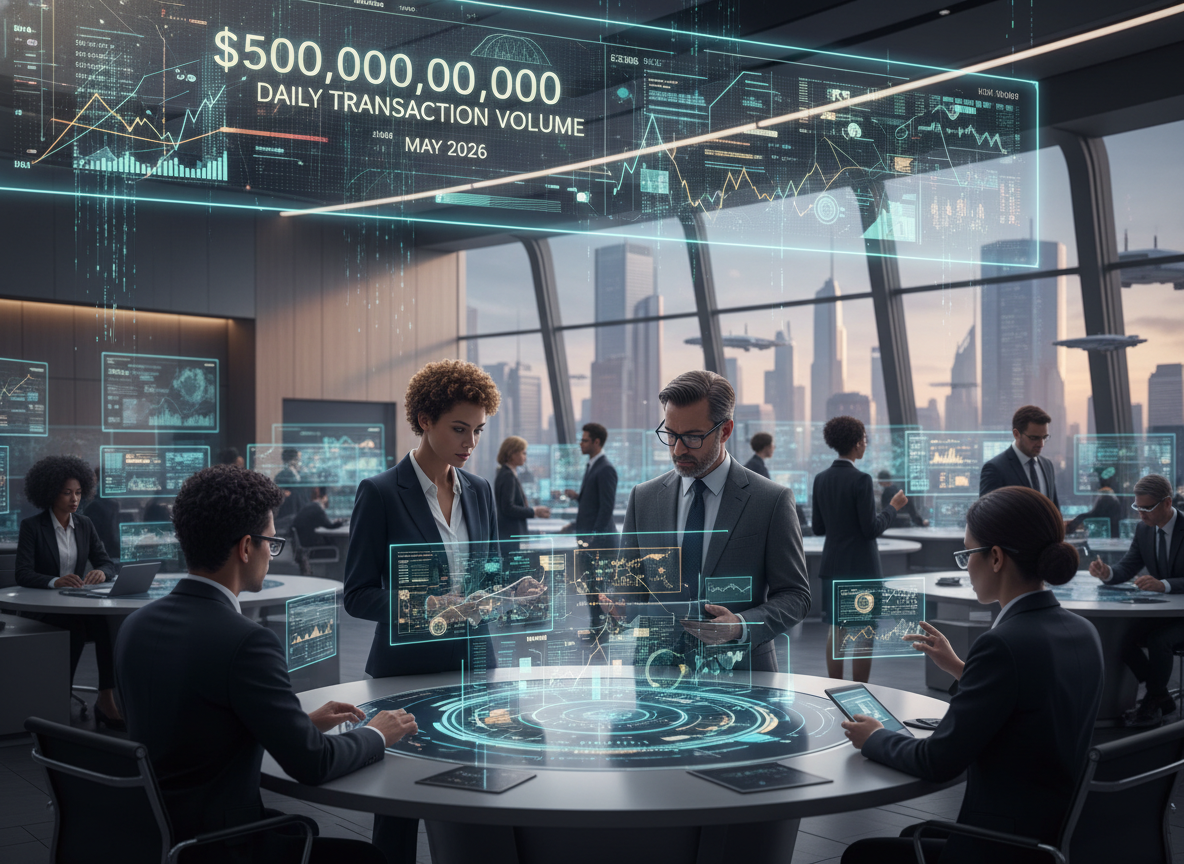
Infrastructure leaders announced this morning that over 60% of global financial traffic has already migrated to the Q-Mesh. Major banking institutions in London, New York, and Tokyo reported a zero-latency transition to the new protocol, which ensures that any attempt to observe or intercept data packets immediately collapses the quantum state of the information, alerting both the sender and the receiver of the breach. This physical law-based security provides a level of trust that has been missing since the inception of the internet.
Parallel to the network activation, the consumer electronics market saw the debut of the Q-Phone 3, the first commercial mobile device equipped with a miniaturized cold-atom sensor. This sensor allows individual users to connect to the Q-Mesh directly without relying on traditional cellular towers, which have long been a point of vulnerability. This decentralization of connectivity empowers individuals with unprecedented data sovereignty, as their digital footprint is now anchored in quantum states rather than vulnerable cloud servers.
Government agencies worldwide are responding to the rollout with a mixture of relief and strategic recalibration. While the Q-Mesh protects national secrets from foreign adversaries, it also creates 'dark zones' that traditional intelligence-gathering methods cannot penetrate. The United Nations Telecommunications Union convened a session today to discuss the 'Transparency Accord,' a proposal to ensure that while data remains private, the Quantum Web 2.0 remains a tool for global progress rather than a shield for illicit activities.
The technical achievement of the Q-Mesh cannot be overstated. It relies on a series of 'Quantum Repeaters' that maintain the entanglement of photons over thousands of miles. Prior to the breakthroughs of early 2026, quantum signals were limited by environmental noise and signal degradation. However, the implementation of 'topological qubit stabilization'—a method perfected only last month—has allowed for a robust, weather-resistant network that operates with 99.9% reliability across all continents.
In the corporate sector, the impact of Quantum Web 2.0 is already being felt in the supply chain industry. Real-time, quantum-secured logistics tracking allows for the movement of high-value goods without the risk of digital 'hijacking.' Shipping conglomerates have integrated Q-Mesh sensors into every cargo container, creating a transparent and immutable ledger of transit that is far superior to the blockchain technology of the early 2020s, which lacked the physical-layer security of quantum mechanics.
Environmentalists have also lauded the new network for its efficiency. The Q-Mesh requires significantly less cooling and power than the massive data centers used to maintain traditional encrypted databases. By utilizing the inherent properties of light and atomic spin, the energy footprint of global communication is expected to drop by 30% over the next two years. This efficiency is a vital component of the 2030 Global Carbon Neutrality goals that many nations are racing to meet.
As the sun sets on April 11, 2026, the internet as we once knew it has been replaced by a faster, safer, and more resilient successor. The Quantum Web 2.0 is not merely an incremental update but a complete reimagining of connectivity. By anchoring our digital lives in the immutable laws of physics, we have moved beyond the cat-and-mouse game of hackers and defenders, entering a new era where privacy is a fundamental constant of the universe rather than a luxury of the few.