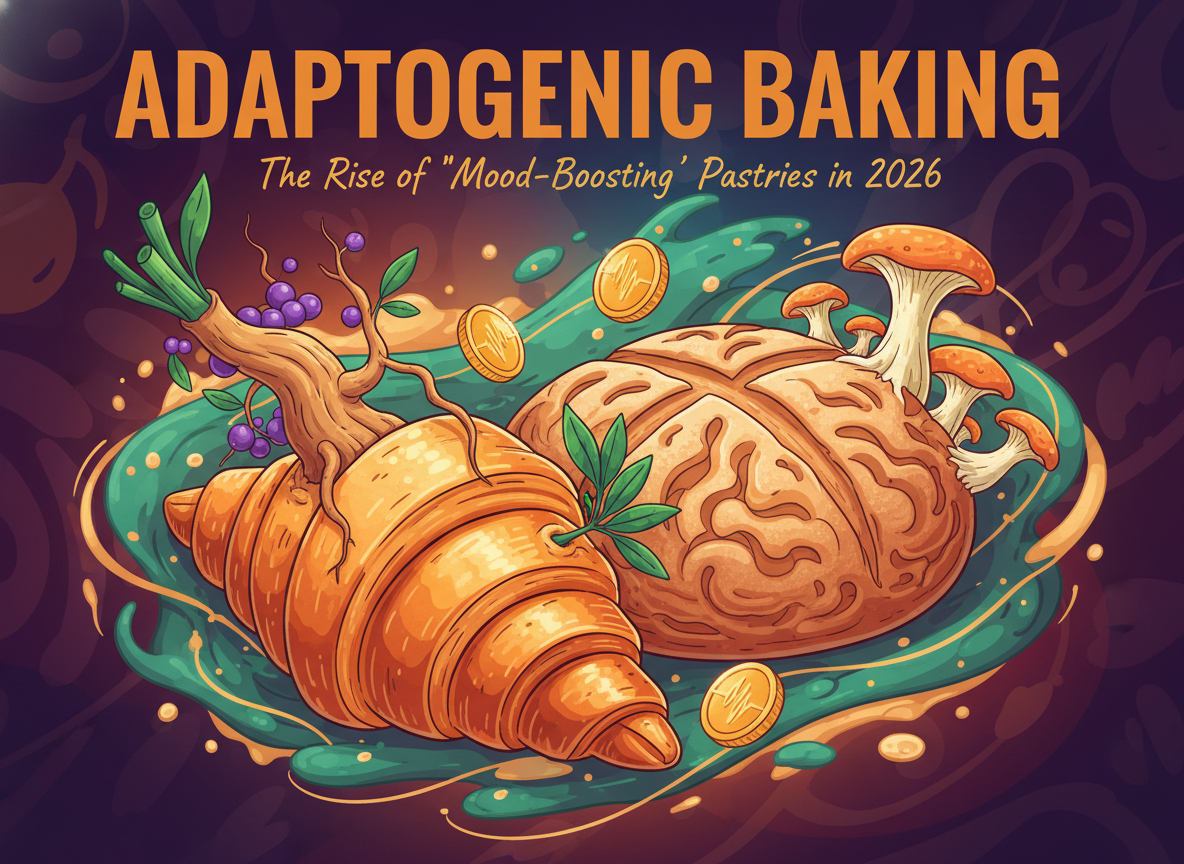
The concept of 'comfort food' has taken on a literal new meaning in 2026. No longer just about emotional satisfaction, the latest trend in the 'food-and-recipes' world is 'Adaptogenic Baking'—the practice of infusing traditional baked goods with powerful herbs and fungi known to help the body manage stress. This movement, which has gained massive traction this spring, sees everyday items like morning muffins and afternoon cookies transformed into functional tools for mental clarity, relaxation, and sustained energy.
Leading the charge are ingredients like Ashwagandha, Reishi, and Lion's Mane. While these were once found only in bitter tinctures or supplement capsules, 2026's culinary innovators have found ways to mask their earthy tones and integrate them into delicious recipes. For instance, the 'Serenity Sourdough'—a loaf infused with magnesium-rich seeds and a precise dose of Ashwagandha—has become a viral sensation, with home bakers claiming it provides a 'calm focus' that lasts throughout the workday without the jitters associated with caffeine.
The science of 'bioavailability' in baking is a major focus this March. Culinary scientists have discovered that the fats and fibers in bread and pastries can actually help the body absorb certain adaptogens more effectively. By pairing these herbs with specific ingredients—like black pepper to activate turmeric or healthy fats to assist with fat-soluble mushroom compounds—bakers are creating 'synergistic snacks' that are as scientifically sound as they are tasty. This precision is what separates the 2026 trend from the more casual 'wellness' fads of the past.
High-end patisseries in cities like New York, London, and Tokyo are now featuring 'Mood Menus.' Customers can choose a 'Focus Croissant' infused with Lion's Mane and dark cocoa for a pre-meeting brain boost, or a 'Wind-Down Tart' featuring lavender and L-theanine for an evening treat. These establishments are employing 'Functional Pastry Chefs' who are trained in both classical French techniques and modern herbalism, reflecting a broader shift toward holistic health in the hospitality industry.
The 'home-baker' version of this trend is being fueled by the arrival of 'Functional Flour Blends' on grocery shelves. These pre-mixed flours come with adaptogens already balanced for flavor, making it easy for anyone to whip up a batch of 'Stress-Less Brownies.' Online recipe communities are currently flooded with variations on these themes, with 'Mood-Boosting' being one of the highest-ranking search terms in the food category for Q1 2026.
Education is a critical component of the adaptogenic baking wave. Consumers are more informed than ever about the specific benefits of different plants. There is a strong emphasis on sourcing 'active' ingredients that have been tested for potency, ensuring that the 'functional' part of the food isn't just a marketing gimmick. This has led to a new certification standard for 'Verified Functional Ingredients,' giving buyers confidence that their morning muffin is actually doing what it claims to do.
Critics initially questioned whether heating these delicate compounds would destroy their benefits. However, research published in early 2026 has shown that many adaptogens, particularly mushroom extracts, are remarkably heat-stable. In fact, for some ingredients, the baking process can actually help break down tough cell walls (like the chitin in mushrooms), making the beneficial compounds more accessible to the human digestive system. This scientific backing has silenced skeptics and propelled the trend into the mainstream.
As we move further into the year, expect to see adaptogenic baking expand into savory territories, with functional focaccias and 'Brain-Boosting' bagel seasonings. The intersection of mental health and nutrition is no longer a niche interest; it's a fundamental part of how we eat. In 2026, the recipe for a perfect loaf of bread isn't just about flour, water, and salt—it's about how that bread makes you feel long after the last crumb is gone.