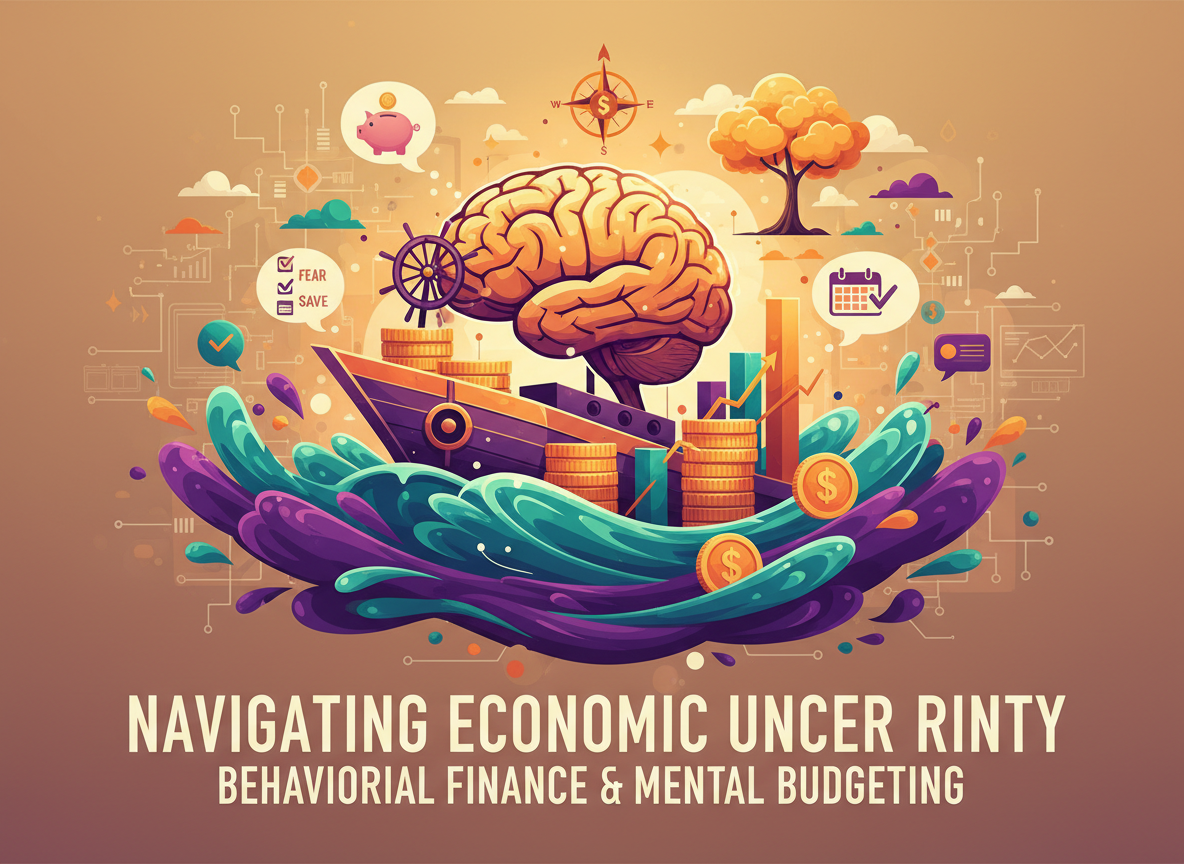
In an era of persistent inflation and fluctuating markets, the most critical asset in personal finance is no longer just a high-yield savings account; it is the mastery of behavioral finance. This discipline examines why we make irrational decisions with our money and how we can hack our own psychology to build better habits. As the cost of living continues to rise, traditional budgeting often fails because it ignores the emotional triggers that drive spending. By understanding 'mental accounting' and the 'scarcity mindset,' individuals can develop more robust financial strategies that withstand the pressures of a volatile economy while maintaining mental well-being.
Recent trends show a significant move toward 'loud budgeting' and transparent financial communication within social circles. This cultural shift encourages people to be vocal about their financial boundaries, reducing the social pressure to overspend on lifestyle inflation. By publicly prioritizing financial goals over social conformity, consumers are finding it easier to stick to their long-term plans. This psychological shift is proving to be a powerful tool in curbing the 'lifestyle creep' that often accompanies income growth, ensuring that every dollar earned is purposefully directed toward wealth accumulation or essential needs.
The concept of 'financial wellness' has evolved from a niche corporate perk into a central pillar of personal money management. It involves more than just having a high net worth; it is about the absence of financial stress and the presence of a clear roadmap. Modern financial planners are increasingly incorporating psychological check-ins into their sessions, recognizing that a client's fear or greed can sabotage even the most scientifically constructed portfolio. By addressing the root causes of financial anxiety, individuals can make more rational choices during market downturns, avoiding the panic-selling that often erodes long-term capital.
Inflation hedging has also taken on a more behavioral tone, with consumers moving away from purely speculative assets and toward 'value-based' consumption and durable investments. People are becoming more cognizant of the 'sunk cost fallacy' and are more willing to pivot their spending when circumstances change. This flexibility is key to economic resilience. Whether it is moving to a more tax-efficient jurisdiction or investing in high-quality items that reduce long-term replacement costs, the modern savvy investor is looking at the 'total cost of ownership' and 'utility per dollar' rather than just the initial price tag.
Mental budgeting, or the practice of categorizing money based on its intended use rather than its source, is being leveraged by new fintech apps to help users save more effectively. By creating 'buckets' or 'vaults' for specific goals like a house down payment or an emergency fund, users develop an emotional attachment to those savings, making them less likely to 'borrow' from them for impulsive purchases. This psychological barrier acts as a safeguard against the erosion of long-term goals by short-term desires, creating a structural discipline that mimics the behavior of the most successful institutional investors.
Another breakthrough in behavioral finance is the focus on 'choice architecture' within our digital banking environments. By setting up 'nudges'—such as rounding up transactions to the nearest dollar or auto-enrolling in retirement plan increases—consumers can automate good behavior. These small, low-friction actions compound over time, leading to significant wealth creation without requiring constant willpower. This 'set it and forget it' mentality is particularly effective in a world where attention is a scarce resource and decision fatigue often leads to poor financial choices.
The role of community and peer-to-peer accountability is also gaining traction in the personal finance space. From online forums to local investment clubs, the sharing of 'money wins' and 'money fails' provides a support system that normalizes financial struggle and celebrates discipline. This collective wisdom helps individuals avoid common pitfalls, such as falling for 'get rich quick' schemes or over-leveraging themselves in risky assets. In a high-inflation environment, these communities provide both the moral support and the practical tips needed to stretch a dollar further and find creative ways to generate side income.
Ultimately, the future of personal finance lies at the intersection of data-driven technology and deep psychological insight. As we navigate the complexities of the mid-2020s, the ability to remain calm, disciplined, and focused on long-term values will be the true differentiator between those who merely survive and those who thrive. By adopting the principles of behavioral finance, individuals can turn their cognitive biases into strengths, creating a financial life that is not only prosperous but also sustainable and fulfilling, regardless of the broader economic climate.