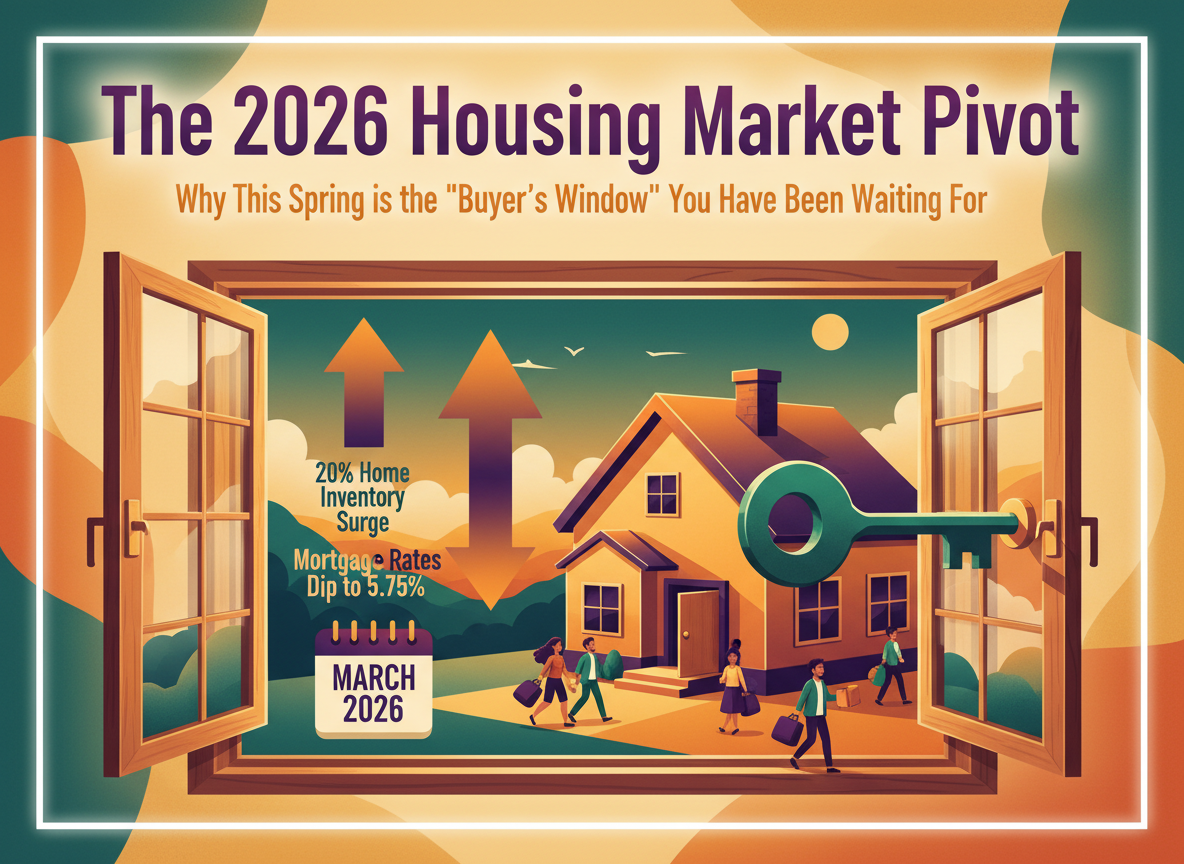
The housing market of March 31, 2026, looks vastly different from the stagnant and expensive landscape of the previous three years. For the first time since the post-pandemic surge, we are witnessing a genuine 'rebalance' where the leverage is shifting away from sellers toward prepared buyers. Leading housing economists from the National Association of REALTORS (NAR) and major financial institutions are identifying this spring as a unique 'buyer's window,' characterized by falling mortgage rates and a significant increase in available inventory. This shift is not just a seasonal fluke but a structural change in the market's dna, driven by cooling inflation and a more flexible Federal Reserve.
Mortgage rates are the primary engine behind this 2026 recovery, with the average 30-year fixed rate finally dipping below the psychological 6% barrier to land around 5.75%. This decline, though modest compared to the pre-2020 era, has a massive impact on affordability; for a typical $450,000 home, the monthly savings compared to 2024 rates are nearly $400. Financial analysts at Morgan Stanley predict that while rates may fluctuate, the current downward trend is likely to persist through the first half of the year. This 'mortgage unlock' is finally encouraging homeowners who were previously 'locked-in' by low pandemic rates to list their properties, further fueling the supply.
Inventory levels are the most encouraging metric for buyers this March, currently sitting at roughly 20% higher than at this same time last year. This influx of listings is putting an end to the era of desperate bidding wars and 'as-is' offers. Sellers are now finding they must be more flexible, often offering concessions such as rate buydowns or repair credits to finalize deals. While we are not yet at the pre-COVID 'normal' for housing supply, the market is the most balanced it has been in nearly a decade, giving first-time buyers a fighting chance to perform due diligence without the fear of being outbid in hours.
Home price growth has finally stalled, with national averages projected to show 0% to 2% growth for the entirety of 2026. This stagnation in pricing is a welcoming development for those whose wages have finally begun to outpace the cost of shelter. In major metros where prices previously doubled in a five-year span, we are even seeing slight corrections. Economists at J.P. Morgan suggest that this 'price plateau' combined with rising household incomes is the most effective medicine for the affordability crisis that has plagued the nation's personal finances for years.
A new regulatory landscape is also shaping the 2026 market, specifically the recent measures aimed at limiting institutional investors from purchasing single-family homes. While the actual percentage of homes owned by these large firms remains small, the policy shift has signaled a prioritization of individual homeownership. This has led many institutional giants to pivot toward building their own 'build-to-rent' communities rather than competing with families for existing inventory. For the retail buyer, this means one less deep-pocketed competitor in the suburban cul-de-sac.
Technological integration is also streamlining the buying process in 2026, with AI-driven appraisal systems and blockchain-based title registries reducing closing times to as little as seven days. These efficiency gains are not just about speed; they are reducing the thousands of dollars in hidden 'friction costs' traditionally associated with real estate transactions. Buyers should look for lenders and title companies that utilize these 2026-standard digital rails to save on closing fees. It is no longer just about the interest rate; it is about the total cost of the transaction from search to keys.
For those sitting on the sidelines, the advice for Q2 2026 is clear: get pre-approved now but remain disciplined. The current window of opportunity exists because many prospective buyers are still waiting for 'bottom-barrel' 3% rates that may never return. By moving now while inventory is high and competition is moderate, you can secure a home at a stable price and look to refinance if rates continue to descend in 2027. Waiting too long risks being caught in the next wave of demand once the Fed potentially accelerates its easing cycle later this year.
In conclusion, the personal finance strategy for real estate in 2026 should be one of 'cautious optimism.' The market has successfully avoided a crash, opting instead for a healthy cooling period that favors the long-term wealth builder over the short-term flipper. By focusing on the fundamentals—affordability, location, and the new 2026 tax benefits for homeowners—you can navigate this transition and finally achieve the dream of homeownership without sacrificing your broader financial health.