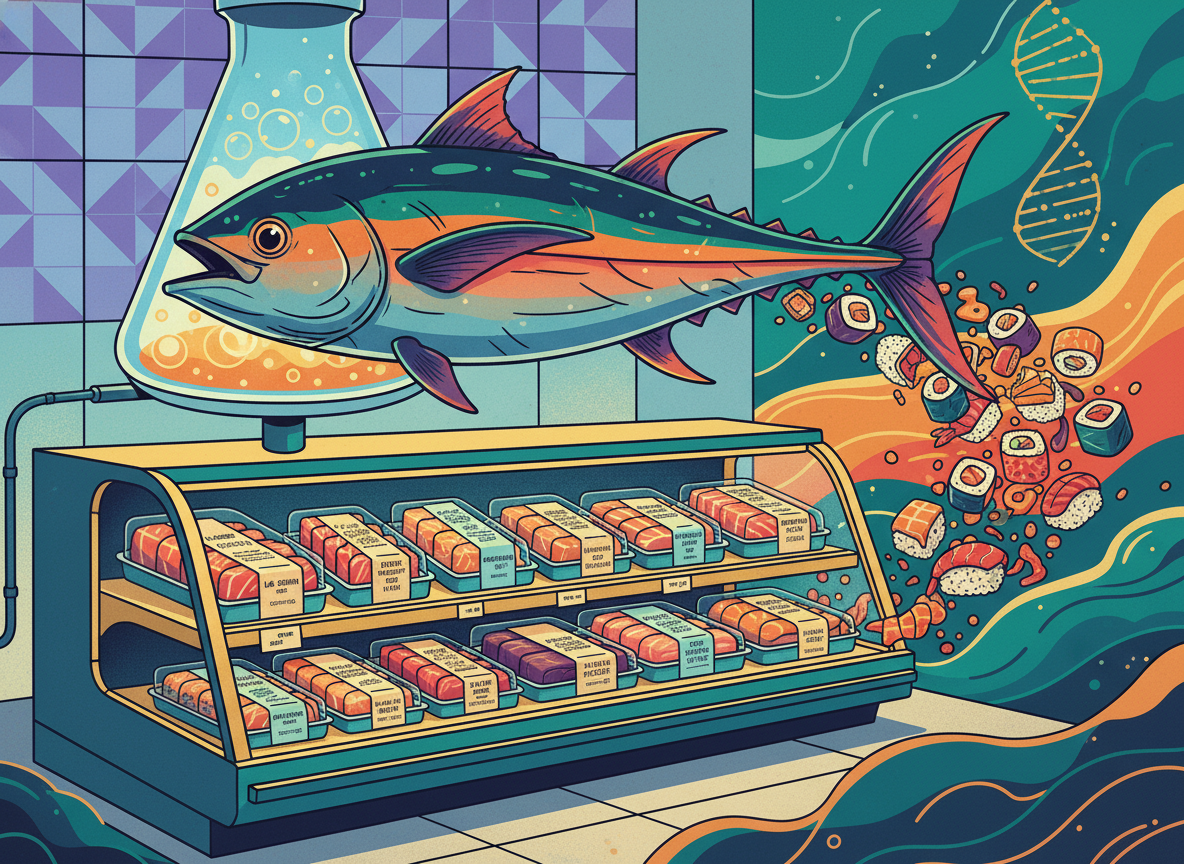
The global seafood industry reached a pivotal turning point this week as the first commercial batches of lab-grown, or 'cultivated,' bluefin tuna debuted in major grocery chains across North America and Europe. This breakthrough, spearheaded by biotechnology leaders in the cellular agriculture space, offers a solution to the overfishing crisis that has plagued the majestic bluefin for decades. For the first time, consumers can purchase high-grade otoro and akami cuts that are biologically identical to wild-caught fish but produced entirely in a controlled, sterile environment without harming a single marine life-form.
Technological advancements in 2026 have allowed scientists to master the 'marbling' of fish fat, a feat that was previously the biggest hurdle in lab-grown seafood. By utilizing plant-based scaffolds and precision-fed cells, producers can now replicate the rich, buttery texture and deep umami flavor that make bluefin tuna the most sought-after fish in the world. This isn't just a meat alternative; it is real fish muscle and fat tissue, offering the same omega-3 profile and high protein content without the risks of microplastics or heavy metal contamination.
The economic implications of this launch are staggering. Historically, bluefin tuna has been a luxury item, with single fish sometimes selling for millions of dollars at Tokyo's Toyosu Market. By scaling up bioreactor production, these tech firms have brought the price point down to parity with premium wild-caught tuna. In March 2026, a 200g tray of cultivated bluefin sashimi is retailing for approximately $25, making it an accessible indulgence for the middle-class consumer who is increasingly conscious of their environmental footprint.
Culinary experts and sushi masters are praising the consistency of the lab-grown product. In traditional fishing, the quality of a tuna can vary wildly depending on its diet, migration patterns, and the stress it underwent during capture. Cultivated tuna, however, provides a uniform level of quality that allows chefs to execute their dishes with surgical precision. Some of the world's most renowned sushi chefs have already swapped their wild-caught supply for cultivated alternatives, citing the ethical imperative to preserve the ocean's remaining wild populations.
Environmental groups like Greenpeace and the Blue Marine Foundation have hailed this development as a 'win for the oceans.' The reduction in demand for wild bluefin could allow populations in the Atlantic and Pacific to recover to levels not seen in over a century. Furthermore, the carbon footprint of cultivated seafood is estimated to be 70% lower than traditional industrial fishing, which requires massive amounts of fuel for long-distance trawling and refrigerated transport across the globe.
However, the transition hasn't been without controversy. Traditional fishing communities in Japan and the Mediterranean have expressed concerns about the loss of their heritage and livelihoods. In response, several tech companies have launched 'Transition Partnerships,' hiring former fishermen to consult on flavor profiles and investing in coastal communities to develop sustainable kelp and bivalve farming. This holistic approach aims to ensure that the seafood revolution doesn't leave the traditional guardians of the sea behind.
Public perception of lab-grown meat has shifted dramatically in the last twelve months. In early 2025, skepticism was high, but a series of transparent 'bioreactor-to-table' tours and rigorous safety certifications from the FDA and EFSA have built consumer confidence. Today, 'Cultivated' labels are seen as a mark of purity and sophistication. Families are choosing these products specifically for their children to avoid the mercury levels found in many large predatory fish, marking a significant shift in the 'food-and-recipes' health discourse.
As we move further into 2026, the 'seafood without the sea' trend is expected to expand into other endangered species, including eel (unagi) and Chilean sea bass. The success of bluefin tuna serves as a proof of concept that high-end, complex animal proteins can be recreated sustainably. For the home cook, this means a new era of recipes where luxury ingredients are no longer synonymous with ecological destruction, allowing for a more guilt-free and innovative exploration of global cuisines.