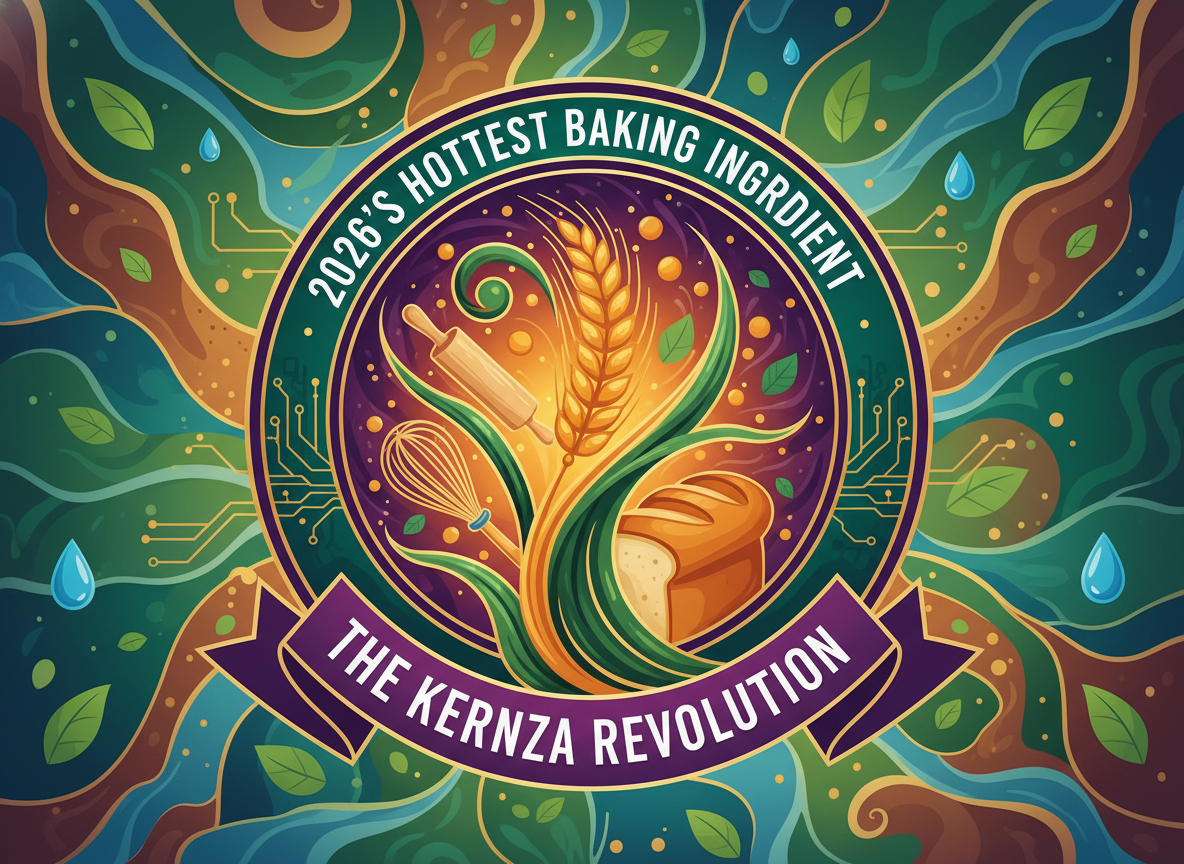
In the world of professional baking and artisan bread-making, 2026 is officially the year of Kernza. This perennial grain, developed by The Land Institute, has finally reached the critical mass necessary to move from niche health stores to the aisles of every major supermarket. Unlike traditional wheat, which must be replanted every year, Kernza stays in the ground for several years, developing massive root systems that reach up to 10 feet deep. This unique biology makes it a powerhouse for carbon sequestration and soil health, making it the ultimate ingredient for the climate-conscious baker.
The flavor profile of Kernza is what truly sets it apart from modern wheat varieties. It possesses a distinctively nutty, slightly sweet, and almost spicy aroma that adds a complex layer of flavor to sourdough, pastries, and even pasta. Home bakers are discovering that Kernza flour behaves differently than all-purpose flour; it has a lower gluten content but a higher concentration of bran and germ, resulting in a heartier, more nutrient-dense loaf. Recipes specifically formulated for 'Kernza-blend' breads are currently the most searched items in the food-and-recipes category this spring.
March 2026 has seen a surge in 'Regenerative Baking' workshops across urban centers, where participants learn how to use Kernza in everything from morning muffins to sophisticated tarts. Because Kernza roots are so deep, they absorb more minerals from the soil than shallow-rooted annuals, resulting in a grain that is significantly higher in protein, fiber, and antioxidants. This nutritional density is a major selling point for the 'functional food' movement, which seeks to maximize the health benefits of everyday staples.
Commercial bakeries are also making the switch. Several global bread brands have announced that by the end of 2026, at least 20% of their grain supply will be sourced from perennial crops. This shift is being driven by both consumer demand and the inherent resilience of Kernza. In an era where extreme weather events can devastate annual wheat crops, the deep-rooted Kernza is far more drought-tolerant and resistant to soil erosion, providing a more stable supply chain for the baking industry in a changing climate.
From a technical standpoint, working with Kernza requires a slight adjustment in hydration and fermentation times. Professional bakers recommend a 'long and slow' fermentation process to fully unlock the grain's flavor and improve its structural integrity in bread. Many are finding that Kernza works best when blended with high-protein bread flour at a ratio of 30:70, which provides the necessary lift while infusing the loaf with that signature Kernza earthiness. These technical nuances are fueling a new wave of 'baking science' content online.
The rise of Kernza is also revitalizing rural economies. Farmers who have transitioned to perennial grains report lower overhead costs since they don't need to till or replant every season. This 'slow farming' movement aligns perfectly with the 'slow food' philosophy that has regained popularity in 2026. Consumers are increasingly willing to pay a premium for Kernza products, knowing that their purchase supports a farming system that actually restores the Earth's ecosystems rather than depleting them.
Chefs are even finding uses for the grain beyond the oven. Toasted Kernza is being used as a base for savory porridges, a crunchy topper for salads, and even as a substitute for rice in 'Kernzotto.' Its versatility makes it a darling of the zero-waste kitchen, as the entire grain can be utilized in various stages of the cooking process. The 'whole-crop' movement, which encourages using every part of the plant, has found its perfect mascot in this hardy, deep-rooted perennial.
As we look toward the harvest season of 2026, the momentum for Kernza and other perennial grains like mountain rye and perennial rice is only growing. The 'food-and-recipes' niche is currently dominated by this return to ancestral-style grains that are boosted by modern ecological science. For the home cook, it represents a chance to be part of a global solution, one delicious, nutty-flavored loaf of bread at a time. The Kernza revolution isn't just a trend; it's a fundamental shift in how we grow and consume our daily bread.