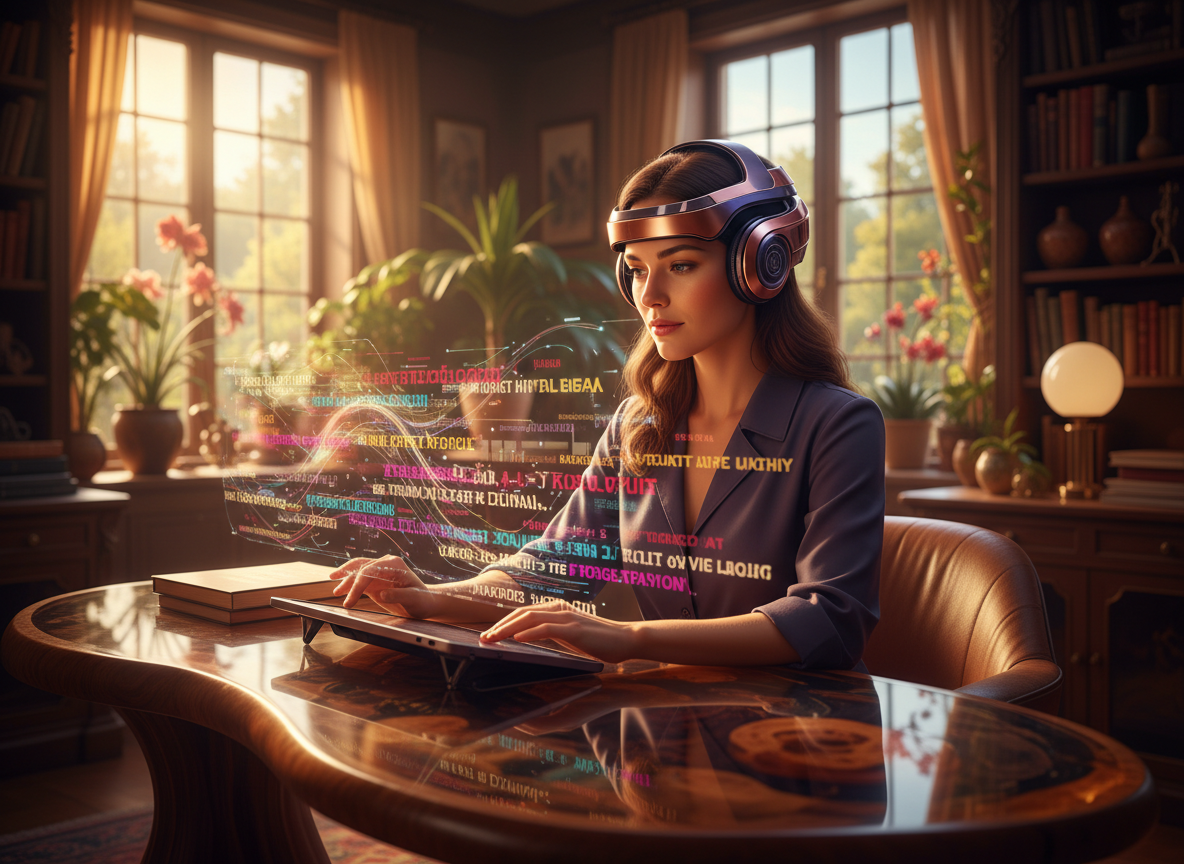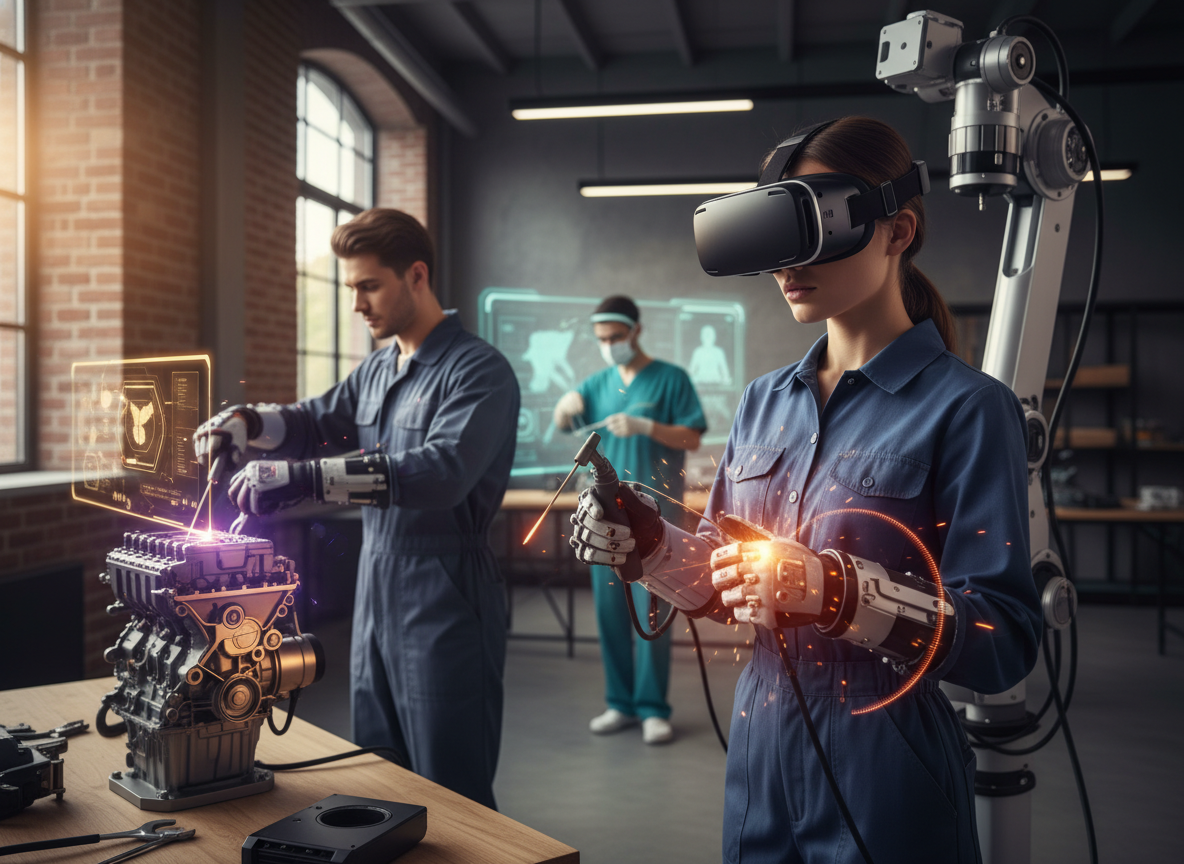
The vocational training landscape has seen a seismic shift this year with the widespread adoption of 'Full-Fidelity Haptic VR.' Gone are the days when trade students had to rely solely on expensive, physical materials for their initial training phases. As of April 2026, students in plumbing, welding, and even cardiovascular surgery are using advanced VR suits that simulate the exact resistance, weight, and texture of real-world tools and tissues, allowing for thousands of hours of 'hands-on' practice at a fraction of the cost.
One of the standout features of the 2026 VR apprenticeship modules is the 'Expert Shadowing' mode. Using 360-degree haptic capture, a master welder can record their exact movements, including the subtle pressure and angle of the torch. A student can then 'step into' the master's movements, with the VR suit physically guiding their hands to match the expert's technique. This muscle-memory-first approach has reduced the time to achieve basic proficiency in manual trades by nearly 50%.
Safety is another major driver for this transition. In industries like electrical engineering or underwater welding, the 'danger zone' for trainees is traditionally very high. VR tutorials allow students to fail spectacularly—and safely. When a student makes a mistake that would lead to a simulated arc flash or a pipe burst, the haptic suit provides a firm but safe vibration, and the system immediately pauses for a 'Correction Tutorial,' explaining exactly what went wrong and how to avoid it in the real world.
The 2026 'Global Trade Certification' standards now accept VR-simulated hours as valid apprenticeship time. This regulatory change, enacted in February, has opened doors for students in remote or rural areas who previously had no access to specialized trade schools. They can now complete 70% of their training at home using a subsidized VR kit, traveling to a physical center only for their final practical exams and high-level certifications.
Economic impact reports released today show a significant decrease in material waste in vocational colleges. By moving the 'trial and error' phase to the digital realm, schools have saved millions on raw materials like steel, copper, and medical supplies. These savings are being reinvested into upgrading the VR hardware and expanding the range of tutorials offered, including niche fields like green energy turbine maintenance and quantum computer hardware cooling systems.
The integration of AI into these VR environments provides an 'Intelligent Supervisor' that monitors every movement. If the AI detects a student is developing a bad habit—like poor posture while using a lathe—it intervenes with a customized ergonomic tutorial. This proactive approach to physical health in the trades is expected to reduce long-term workplace injuries for the next generation of workers, making manual labor more sustainable as a lifelong career.
Collaboration is also a key component. The 2026 platforms allow for 'Multi-User Tutorials' where a team of students located in different cities can work together on a single virtual project, such as assembling a complex aircraft engine. This teaches the essential soft skills of communication and teamwork within a technical context, preparing them for the increasingly globalized and collaborative nature of modern industrial engineering.
As we look at the results from the first quarter of 2026, the success of VR apprenticeships is undeniable. The graduation rates for vocational programs have hit an all-time high, and the quality of work produced by these VR-trained 'New-Collars' is on par with, or better than, traditional trainees. By bridging the gap between digital convenience and physical mastery, haptic VR is ensuring that the skilled trades remain a vibrant and accessible path for the workforce of tomorrow.