The integration of high-fidelity haptic feedback into vocational training has reached a critical tipping point as of April 1, 2026. While visual and auditory VR has been common for years, the ability to replicate the sense of touch with precision has remained the 'holy grail' of digital education. Today, new 'Neuro-Haptic Suits' and gloves allow students to feel resistance, texture, and temperature in virtual environments. This breakthrough is revolutionizing fields where muscle memory and tactile sensitivity are paramount, such as surgery, precision engineering, and hazardous material handling.
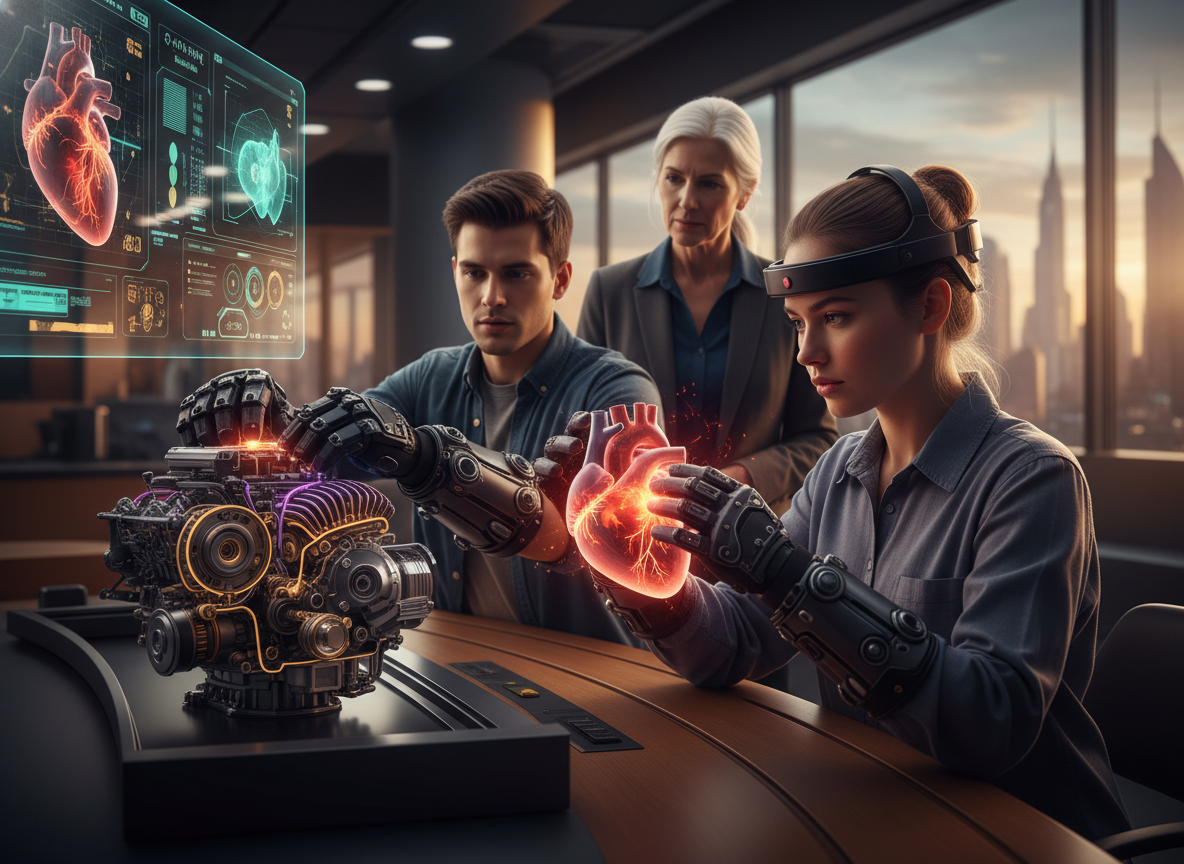
In medical schools, the 'Tactile Anatomy' curriculum has replaced traditional cadaver labs in several prestigious institutions. Students can now perform simulated surgeries where they feel the exact tension of a scalpel cutting through different types of tissue or the subtle pulse of an artery. These simulations can be repeated thousands of times at no cost and without ethical concerns, allowing residents to achieve a level of manual dexterity that previously took years of clinical practice. The haptic systems in 2026 are so sensitive they can even simulate the microscopic vibrations of robotic surgical tools.
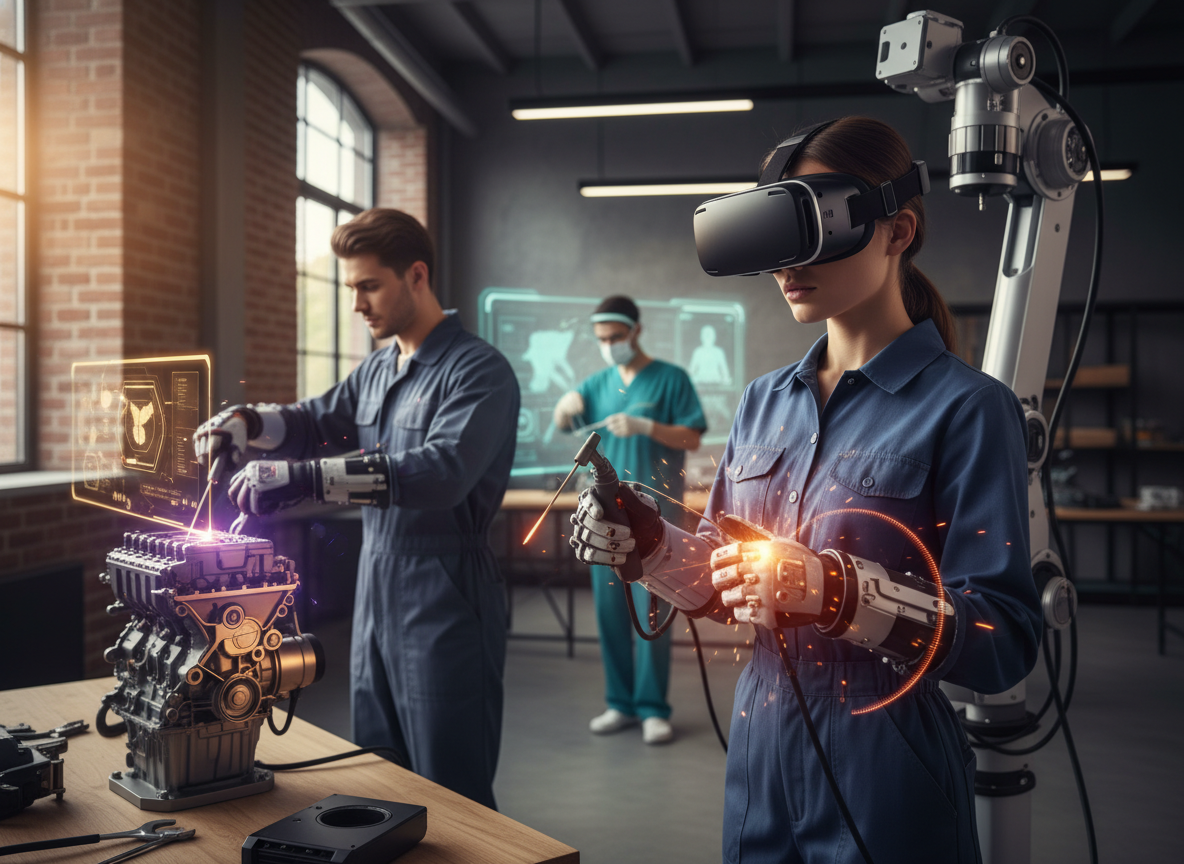
The vocational sector is seeing similar transformations. For example, apprentice mechanics are now using haptic gloves to learn the intricacies of electric vehicle (EV) battery repair. Since working with high-voltage systems is inherently dangerous, the virtual environment provides a safe space to fail. A student might feel a 'virtual shock'—a harmless but startling vibration—if they touch a component in the wrong sequence. This immediate physical feedback is far more effective at reinforcing safety protocols than reading a manual or watching a video tutorial.
Beyond technical skills, haptic learning is being used to develop empathy in social work and nursing. New 'Empathy Tutorials' allow students to wear haptic vests that simulate the physical sensations of certain conditions, such as the chest tightness of an anxiety attack or the tremors associated with Parkinson's disease. By experiencing these physical symptoms firsthand in a controlled environment, future healthcare providers are developing a deeper, more visceral understanding of their patients' lived experiences, leading to better bedside manners and more compassionate care.
The hardware powering these experiences has become remarkably lightweight and affordable in 2026. Early haptic gear was bulky and required tethering to powerful workstations, but the latest 'Skin-Phonics' patches are thin, wireless, and use ultrasonic waves to create the sensation of touch directly on the skin. This portability means that a plumber's apprentice can practice complex joint soldering in their own living room, receiving real-time haptic guidance from a master technician located halfway across the globe.
Tutorials have evolved to include 'Haptic Record and Playback' features. A master craftsman can record their hand movements and the exact pressure they apply during a delicate task, such as watchmaking or violin restoration. Students then play back this recording while wearing haptic gloves, effectively 'ghosting' the master's hands. This 'shadow-learning' technique significantly shortens the time required to acquire complex manual skills, as the student's nervous system is directly 'taught' the correct movements by the recorded data.
There are, however, challenges regarding the standardization of haptic data. As of April 2026, different manufacturers use proprietary haptic languages, making it difficult for schools to mix and match hardware and software. The 'Open-Haptics Initiative' was launched earlier this year to create a universal standard for tactile data, similar to how MIDI revolutionized digital music. Educators are hopeful that a unified standard will lead to a surge in high-quality, cross-platform haptic tutorials, making this technology as ubiquitous as the mouse and keyboard.
As we look toward the end of 2026, the implications of haptic learning extend into remote education for the visually impaired. Haptic tablets that can create braille, raised diagrams, and even 3D textures on a flat screen are becoming standard in inclusive classrooms. This technology is finally bridging the gap for students who rely on touch to navigate the world, ensuring that the digital education revolution is inclusive of all sensory needs. The 'feeling' of knowledge is no longer a metaphor—it is a tangible reality in the modern classroom.