


Quick Summary
- AI app stores are now central to app discovery in 2026.
- Smarter recommendations improve user experience significantly.
- Major platforms are integrating AI for personalized app suggestions.
- Developers see faster, more targeted app distribution.
- AI-driven app stores are influencing app monetization strategies.
- Future trends point to even deeper AI integration in app ecosystems.
The AI app store 2026 has emerged as a game-changer in how users find and install apps. Powered by advanced machine learning algorithms, these stores are now delivering highly personalized recommendations, making app discovery faster and more intuitive than ever before.
With the rise of AI-driven app marketplaces, both consumers and developers are experiencing a shift in how apps are marketed and consumed. This article explores the core mechanics of these platforms, their impact on the app ecosystem, and what the future holds for app discovery in 2026.
H2: AI App Store 2026: The Future of App Discovery and Distribution
As traditional app stores face increasing competition from AI-powered platforms, the AI app store 2026 is reshaping app discovery by leveraging deep learning to analyze user behavior, preferences, and context. This approach enables highly accurate app recommendations, reducing the time users spend searching and increasing engagement.
Leading platforms like Google Play and Apple's App Store have integrated AI features that not only suggest apps based on past downloads but also adapt dynamically to changing user needs. This shift is supported by advances in natural language processing, allowing users to describe what they need in plain language and receive tailored suggestions.
For developers, this means new opportunities for targeted marketing and better visibility among relevant audiences. The evolution of AI app stores is also affecting app monetization, with personalized recommendations leading to higher conversion rates and in-app purchases.
Learn more about how AI is changing app discovery in our AI App Marketplace 2026 report, which details the latest trends and platform strategies.
Key Facts About AI App Stores 2026
- Major platforms now use AI to personalize app recommendations.
- Smarter algorithms reduce app discovery time by up to 50%.
- Developers benefit from targeted visibility and increased downloads.
- AI features include voice search, natural language queries, and predictive suggestions.
"AI is making app discovery more intuitive, helping users find relevant apps faster and boosting developer visibility."
Tech Industry Analyst
H2: How AI Enhances User Experience in App Stores
AI integration in app stores goes beyond recommendations; it personalizes the entire browsing experience. Features like contextual search, voice commands, and adaptive interfaces are now standard, making navigation smoother and more engaging.
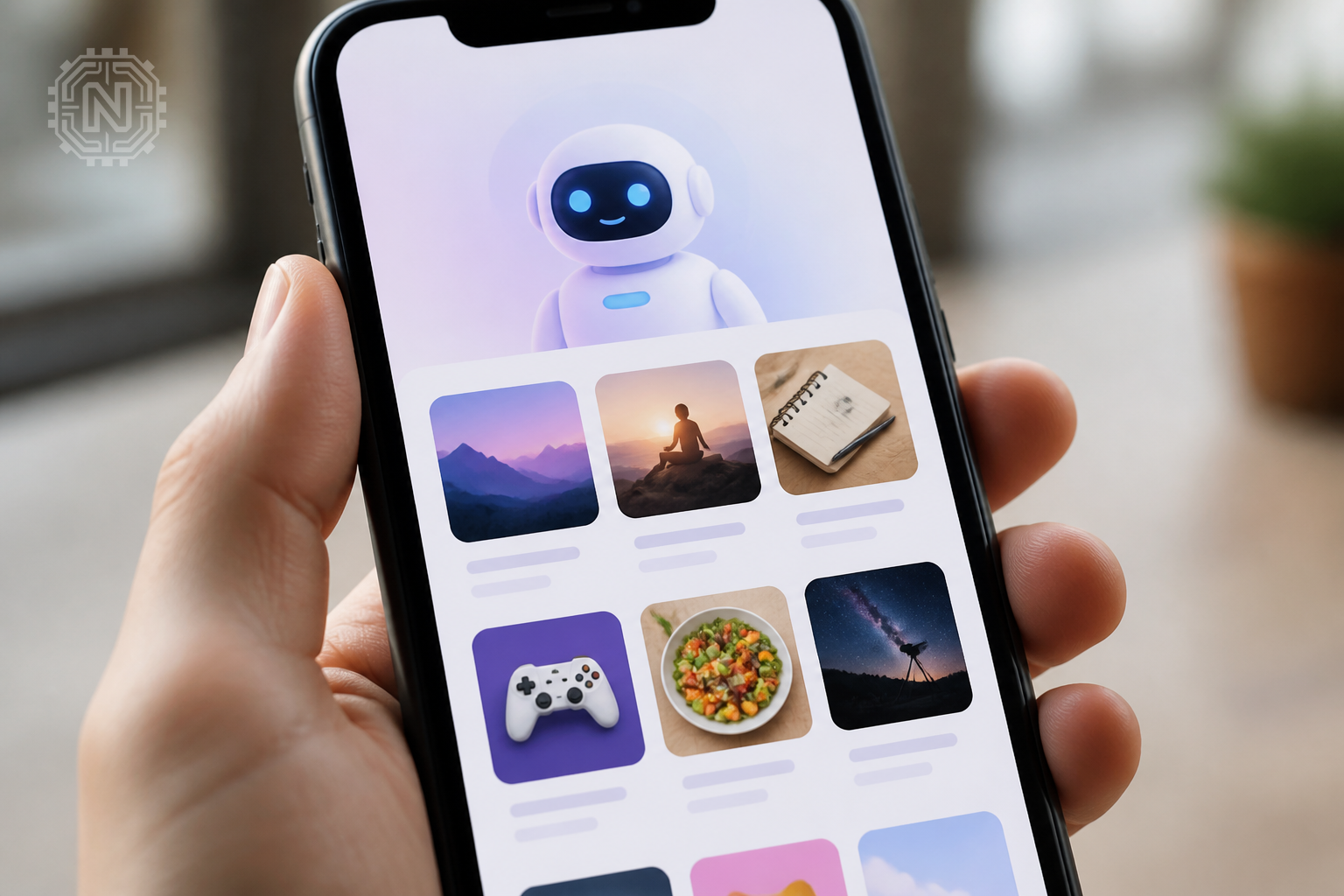
For example, AI can analyze a user's app usage patterns and suggest new apps that fit their lifestyle, whether they're fitness enthusiasts or casual gamers. This personalization increases user satisfaction and retention.
Platforms like Apple and Google are investing heavily in these AI features, which are also improving app search accuracy and reducing irrelevant suggestions.
For developers, understanding these AI-driven personalization trends is crucial for optimizing app descriptions, keywords, and onboarding flows to match user preferences.
Pros and Cons of AI Personalization in App Stores
- Pros: Higher user engagement, better app visibility, increased downloads.
- Cons: Potential privacy concerns, over-reliance on AI recommendations.
"Personalized app experiences are boosting user satisfaction and retention in 2026."
Mobile UX Expert
H2: The Mechanics Behind AI-Powered App Recommendations
At the core of AI app stores are sophisticated machine learning models trained on vast datasets of user interactions, app metadata, and contextual signals. These models continuously learn and adapt, providing real-time recommendations tailored to individual users.
Natural language processing enables voice search and conversational queries, making app discovery accessible for all users. Reinforcement learning algorithms further refine suggestions based on user feedback and engagement metrics.
Platform-specific AI engines, like Google’s TensorFlow and Apple’s Core ML, power these recommendation systems, ensuring they are scalable and effective across millions of devices.
Developers can optimize their apps for these AI recommendation systems by focusing on rich metadata, user reviews, and engagement signals, ensuring their apps are surfaced effectively.
Did You Know?
- AI models analyze billions of app interactions daily.
- Recommendations improve with user engagement over time.
- Natural language processing is key for voice-based discovery.
H2: Official Statements and Industry Reactions
Major platform providers like Google and Apple have publicly emphasized their commitment to AI-driven app discovery. Google’s recent blog highlights how their AI algorithms now personalize over 80% of user interactions on the Play Store.
Apple’s App Store team announced new AI features in late 2025 aimed at enhancing discovery and reducing app clutter, aligning with user privacy standards. Industry analysts see these moves as a sign that AI will dominate app distribution strategies in the coming years.
Experts warn about the potential for bias and recommend transparency in AI recommendation algorithms. Ongoing regulatory discussions focus on ensuring AI-driven app stores do not unfairly favor certain developers or apps.
"AI-driven app stores are setting new standards for personalized, efficient app discovery."
Tech Industry Commentator
H2: Practical Implications for Developers and Users
Developers should optimize their app metadata, including keywords, descriptions, and user reviews, to align with AI recommendation criteria. Investing in app quality and engagement metrics can significantly improve visibility in AI-powered stores.
Users benefit from faster, more relevant app suggestions that match their preferences and context, reducing frustration and enhancing overall experience. Privacy settings and controls remain essential to maintain trust.
For app stores, balancing personalization with privacy is critical. Transparent data policies and user control options are becoming standard expectations.
Why AI App Stores Matter in 2026
- They improve app discovery speed and relevance.
- They influence app monetization and marketing strategies.
- They shape user privacy and data handling standards.
H2: Comparing Traditional and AI-Driven App Stores
Traditional app stores rely heavily on manual curation, user reviews, and basic search algorithms. In contrast, AI-driven stores use machine learning to dynamically personalize recommendations and surface relevant apps more effectively.

For example, while a traditional store might rank apps based on downloads and ratings, an AI-powered store considers user behavior, preferences, and contextual signals to order app listings.
This shift leads to more efficient app discovery but also raises questions about fairness and discoverability for new or less popular apps.
H2: Future Outlook: What’s Next for AI App Stores?
Expect deeper integration of AI in app stores, with features like augmented reality previews, more sophisticated voice search, and predictive analytics for developers. Privacy-preserving AI techniques will also become standard to address data concerns.
Emerging trends include cross-platform AI recommendations, blockchain-backed app verification, and greater transparency in algorithmic decision-making.
Overall, AI app stores will continue to evolve, making app discovery more efficient, personalized, and aligned with user needs.
Future Trends in AI App Stores
- Deeper AI integration with AR and voice.
- Cross-platform, personalized app suggestions.
- Enhanced privacy and transparency measures.
Editorial Sources
Conclusion
AI app stores in 2026 are fundamentally changing how users discover and interact with apps. With smarter algorithms and personalized experiences, they offer benefits for both consumers and developers, setting the stage for a more efficient and user-centric app ecosystem.
Frequently Asked Questions
How are AI app stores different from traditional app stores?
AI app stores personalize recommendations using machine learning, making app discovery faster and more relevant.
Will AI app stores favor popular apps over new ones?
Yes, AI algorithms often favor apps with higher engagement, but transparency efforts aim to balance discoverability for new apps.
Are AI app stores secure and privacy-conscious?
Major platforms implement privacy controls and transparency measures, but users should review data sharing settings.
How can developers optimize for AI app stores?
Focus on rich metadata, engaging user reviews, and app quality to improve visibility in AI-driven recommendations.
What future features are expected in AI app stores?
Expect deeper personalization, AR previews, cross-platform suggestions, and enhanced privacy features.
Are AI app stores accessible on all devices?
Most major platforms support AI features across smartphones, tablets, and desktops, ensuring broad accessibility.
How does AI improve app search in 2026?
AI enhances search by understanding natural language queries and user context for more accurate results.
Is there a risk of bias in AI app recommendations?
Yes, bias can occur, but transparency and regulation are working to ensure fair app surface. For more on Apps & Software, explore Newtechzy. You can also review our Privacy Policy and Cookie Policy, or learn more About us.
Related Topics
Explore how AI is shaping the future of app discovery and stay ahead in the evolving app landscape. Learn more about AI app marketplaces today.
Start Your Journey Today!


