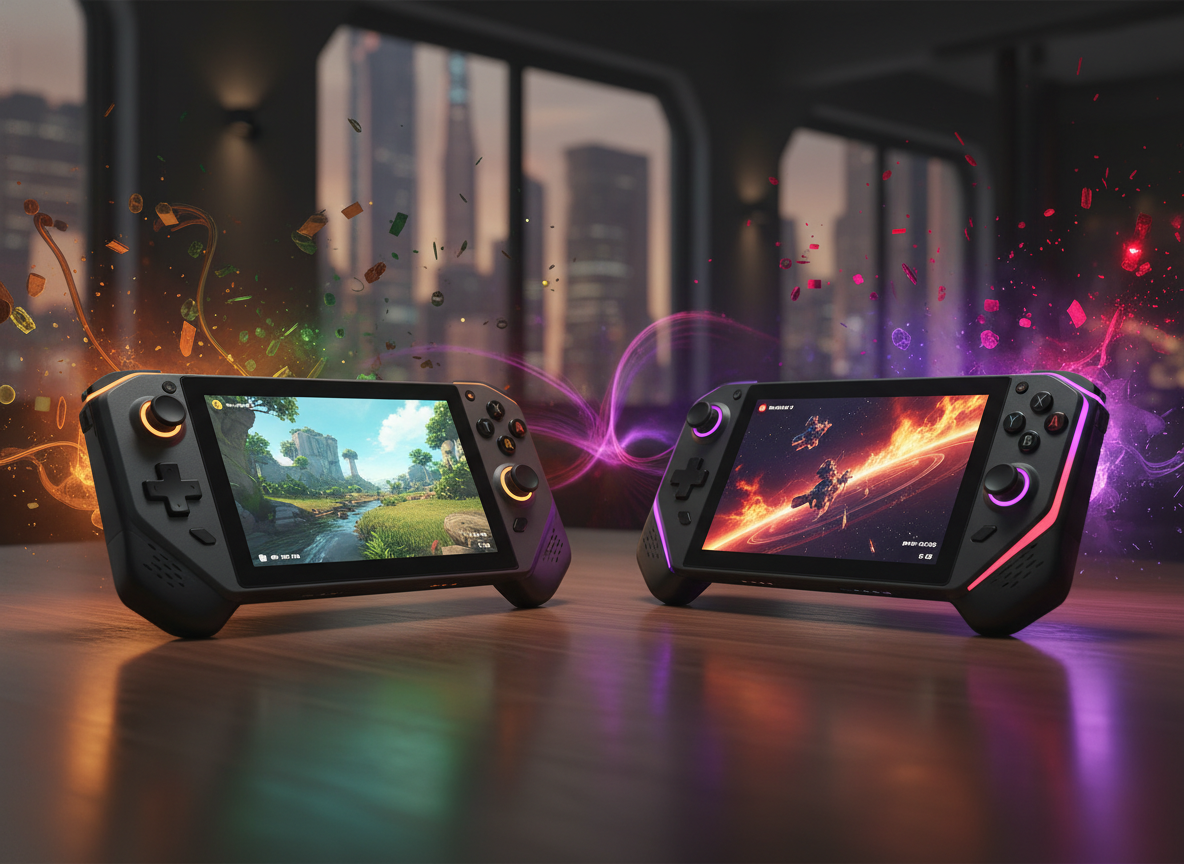
The PC handheld market has reached a fever pitch in early 2026, with the simultaneous release of Valve's Steam Deck 3 and ASUS's ROG Ally 4. Both devices represent the pinnacle of mobile computing, yet they take drastically different approaches to the user experience. Valve continues to focus on the 'Console-Like' optimization of SteamOS, while ASUS has leaned into the raw, unbridled power of Windows 12 for Gaming, creating a fascinating showdown for consumers.
Under the hood, the Steam Deck 3 features a custom AMD 'Galileo' APU, which prioritizes performance-per-watt. Valve's goal was not to have the highest benchmarks, but the most consistent ones. The result is a device that can run the 2026 'Cyberpunk: Phantom Liberty 2' at a locked 60 FPS on medium-high settings while drawing only 12 watts of power. This efficiency allows the Deck 3 to maintain a 4-hour battery life even under heavy loads, a significant improvement over its predecessor.
The ROG Ally 4, on the other hand, is a beast of a machine. Equipped with the latest Ryzen Z2 Extreme processor and 32GB of LPDDR6 RAM, it is the first handheld to truly rival mid-range gaming laptops. In 'Turbo Mode,' it can hit over 100 FPS in most modern titles at 1080p. However, this power comes at a cost; the battery life in this high-performance state is barely 90 minutes, making it more of a 'portable desktop' than a true travel companion.
Screen technology has seen a major upgrade for both. The Steam Deck 3 sports a 7.5-inch HDR2000 OLED display with a 120Hz refresh rate, offering some of the deepest blacks and most vibrant colors in the industry. The ROG Ally 4 counters with a slightly larger 8-inch Mini-LED panel that reaches an incredible 2500 nits of peak brightness, making it the superior choice for outdoor gaming, even in direct sunlight.
Ergonomics have also evolved. Valve has integrated 'Touch-Sensitive Haptic Pads' that are more responsive than ever, making strategy games and shooters significantly more playable without a mouse. ASUS has stuck to a more traditional controller layout but has introduced 'Adaptive Tension Joysticks' that allow players to physically adjust the resistance of the sticks, a feature highly sought after by the competitive fighting game and racing communities.
Software remains the biggest point of contention. SteamOS on the Deck 3 is now so polished that it feels indistinguishable from a dedicated console experience. The new 'Instant Resume 2.0' allows players to swap between three different games simultaneously without losing progress. Meanwhile, the ROG Ally 4 benefits from the broad compatibility of Windows 12, allowing for easy access to Game Pass, Epic Games Store, and various modding tools that remain slightly more cumbersome on Linux-based systems.
Cooling solutions have reached new heights in 2026. The Steam Deck 3 utilizes a 'Phase-Change' cooling system that is virtually silent, even when the APU is pushed to its limits. ASUS has implemented a 'Dual-Fan Vapor Chamber' that is highly effective at preventing thermal throttling, though the fan noise is noticeably louder than the Deck's. For many, the choice between these two will come down to whether they prioritize a quiet, integrated experience or raw, loud performance.
As of March 31, 2026, the market is split. Casual gamers and those who value battery life are flocking to the Steam Deck 3, while enthusiasts and 'power users' are opting for the ROG Ally 4. Both devices demonstrate how far we have come from the early days of the original Steam Deck, proving that the handheld PC is no longer a niche hobby but a mainstream pillar of the gaming industry.