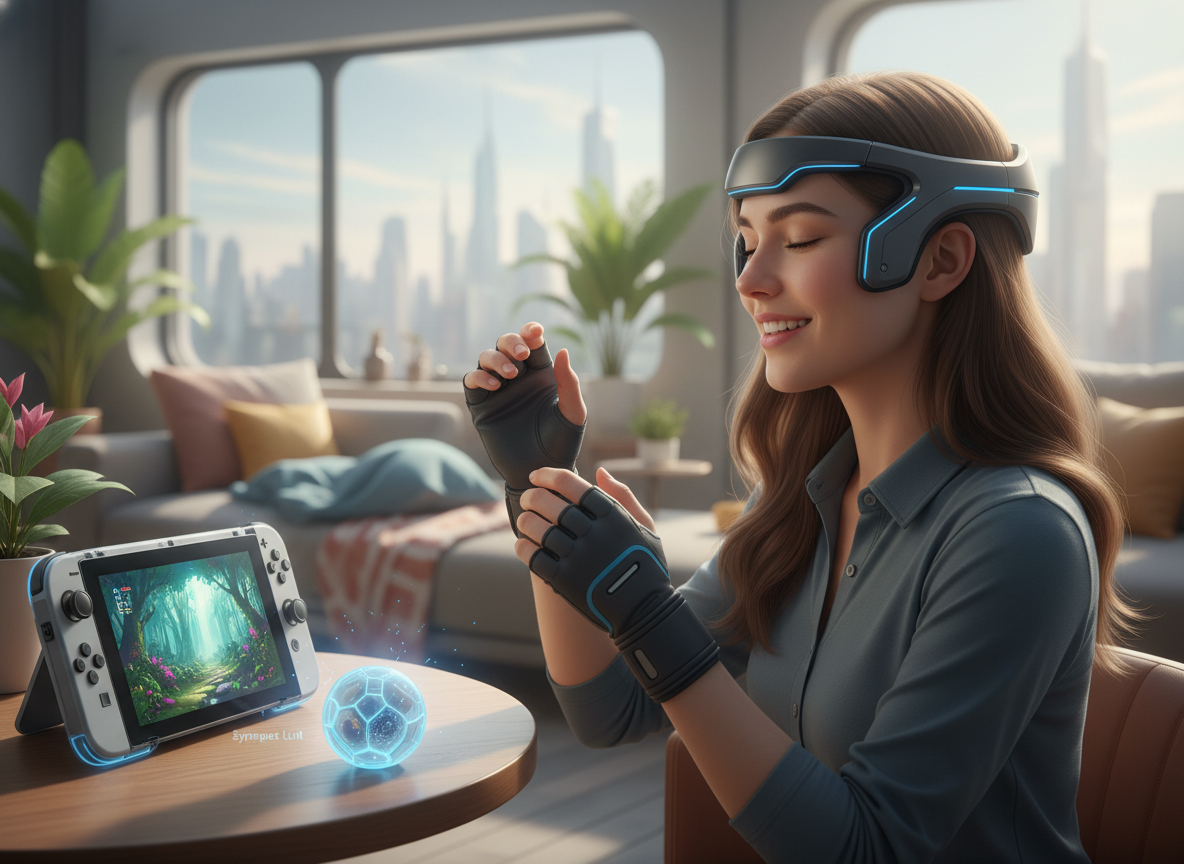
Today, April 7, 2026, marks a historic milestone in the interactive entertainment industry as Nintendo officially releases the first global firmware update for the Switch 3. Since its debut last month, the console has shattered sales records, moving over 15 million units worldwide within its first thirty days. The primary driver behind this unprecedented success is the implementation of 'Neural Haptic' technology, which allows players to experience tactile sensations directly through localized neurological pulses. This breakthrough has effectively bridged the gap between physical reality and digital simulation, positioning Nintendo once again as the vanguard of hardware innovation in the mid-2020s.
The core of this technological leap lies in the 'Synapse Link' peripheral, a lightweight wristband that syncs with the console’s proprietary AI chip via a dedicated ultra-low latency band. Unlike traditional vibration motors found in previous generations, this system uses low-frequency electromagnetic resonance to simulate textures, weight, and environmental resistance. During today's live showcase in Tokyo, developers demonstrated how players can feel the subtle difference between walking on wet moss versus jagged volcanic rock in high-fidelity environments. This level of sensory detail has completely transformed the gaming landscape, making traditional controllers feel archaic by comparison.
Beyond tactile feedback, the Switch 3's architecture leverages the latest 'Lumen-Next' processing unit, which allows for real-time ray tracing even in handheld mode. This is made possible by a new AI-driven upscaling algorithm that predicts frame rendering with 99% accuracy, drastically reducing the thermal footprint of the device. As of this morning, industry analysts are reporting that the Switch 3 is outperforming its predecessors in power efficiency by nearly 40%, a crucial factor in an era where energy-conscious gaming has become a primary consumer demand and a strict regulatory requirement in several European markets.
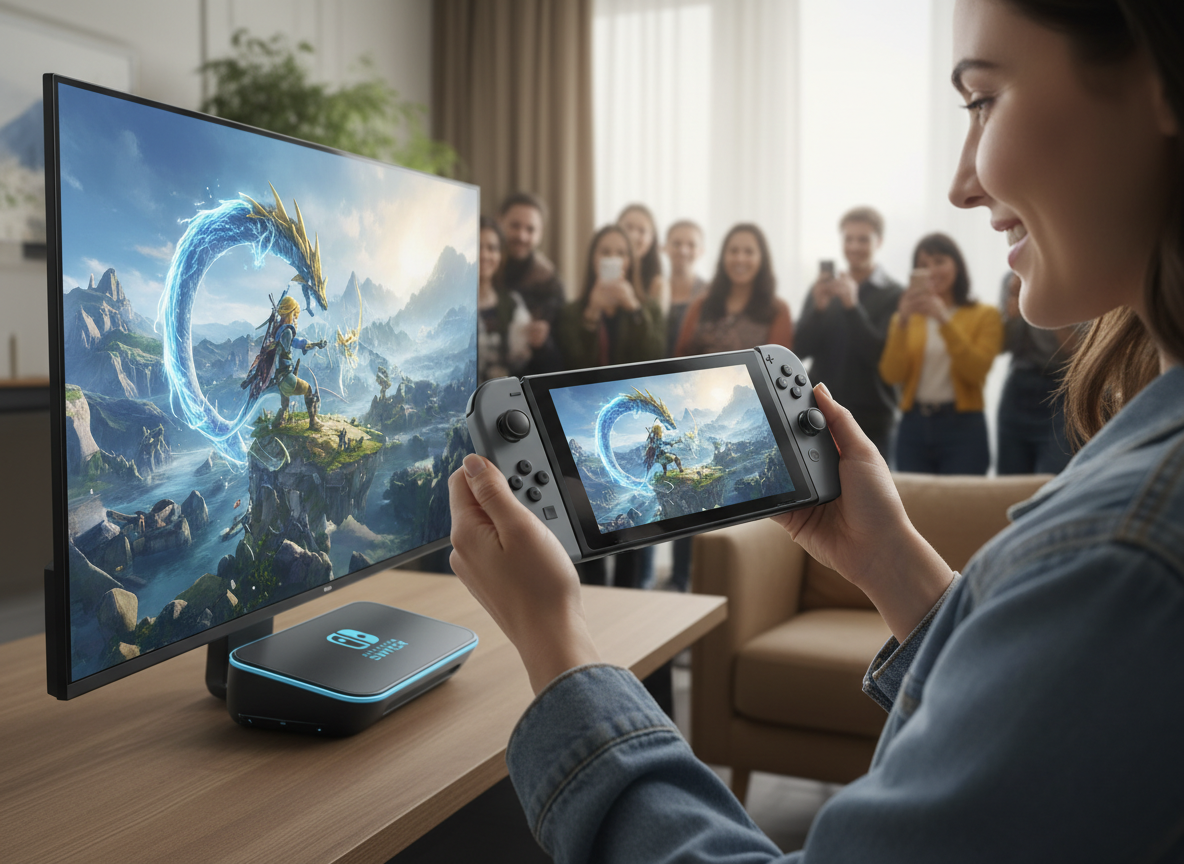
The software lineup for the Switch 3 is equally impressive, headlined by 'The Legend of Zelda: Echoes of the Void,' which saw its first major content patch go live today. This title utilizes the console's AI-integration to create NPCs that possess unique 'digital memories' and evolving personalities. Characters no longer follow scripted dialogue paths; instead, they react to player choices based on a complex behavioral matrix that evolves over hundreds of hours of gameplay. On April 7, 2026, social media platforms are buzzing with players sharing unique encounters that suggest no two playthroughs of the game are identical, signaling the end of the traditional 'static' open-world design.
Third-party support has seen a massive surge as well, with industry giants like Ubisoft and Capcom announcing today that their entire back catalogs are being remastered for 'Neural Haptic' compatibility. The most notable announcement comes from Rockstar Games, confirming that the 'Grand Theft Auto VI: Definitive Neural Edition' will launch exclusively on the Switch 3 later this summer. This move indicates a major shift in the industry, where power-heavy titles are being optimized for Nintendo's unique interface, proving that immersion is now valued more than raw graphical throughput by the global gaming community.
Environmental sustainability has also taken center stage in the production of the Switch 3, reflecting the broader global trends of 2026. Nintendo revealed in their latest quarterly report, released just hours ago, that 85% of the console's chassis is constructed from recycled ocean plastics and biodegradable polymers. This commitment to 'Green Gaming' has not only improved the brand's public image but has also set a new standard for competitors Sony and Microsoft. As we observe the market trends of April 2026, it is clear that the longevity of a console is now tied as much to its ecological footprint as it is to its processing speed and game library.
The competitive landscape is reacting swiftly to Nintendo's dominance in the neural space. Rumors circulating today suggest that Sony is fast-tracking the 'PlayStation 6' announcement, focusing on a Direct-to-Brain interface to compete with the Synapse Link. Meanwhile, Microsoft is reportedly shifting its focus entirely to the 'Azure Sphere 2.0,' a cloud-only ecosystem that aims to eliminate local hardware limitations through massive edge computing networks. The tension between local neural processing and cloud-based hyper-realism is defining the 'Great Console War of 2026,' creating a vibrant and rapidly evolving market for consumers who are eager for the next step in digital evolution.
As we look toward the remainder of 2026, the convergence of AI, neural haptics, and sustainable manufacturing is setting an incredibly high bar for the future of the medium. The gaming industry is no longer just about entertainment; it is becoming a sophisticated platform for multisensory experiences that were once the stuff of science fiction. Today’s developments prove that the boundary between the virtual and the physical is thinning at an exponential rate. As players dive deeper into the worlds offered by the Switch 3, the very definition of 'playing a game' is being rewritten for a new generation of digital explorers who demand total immersion.