The technological landscape of April 2026 is unrecognizable compared to just a few years ago. We have officially entered the era of 'AI-Native Computing,' where the distinction between software and intelligence has effectively dissolved. This week, major updates to both Windows and macOS have moved beyond simple assistants like Copilot and Siri to fully autonomous, context-aware operating systems. These systems no longer wait for user commands; they anticipate needs, manage complex workflows across multiple applications, and provide real-time reasoning that makes traditional computing feel antiquated.
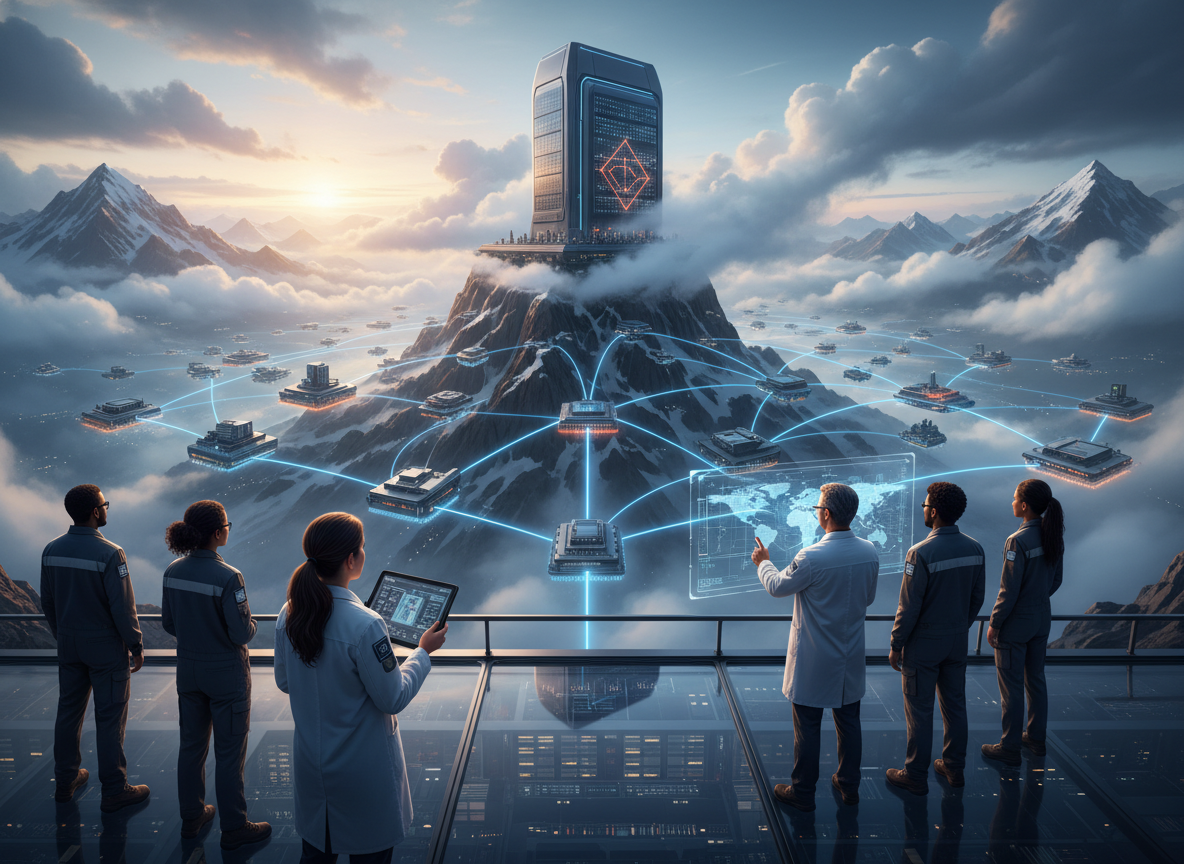
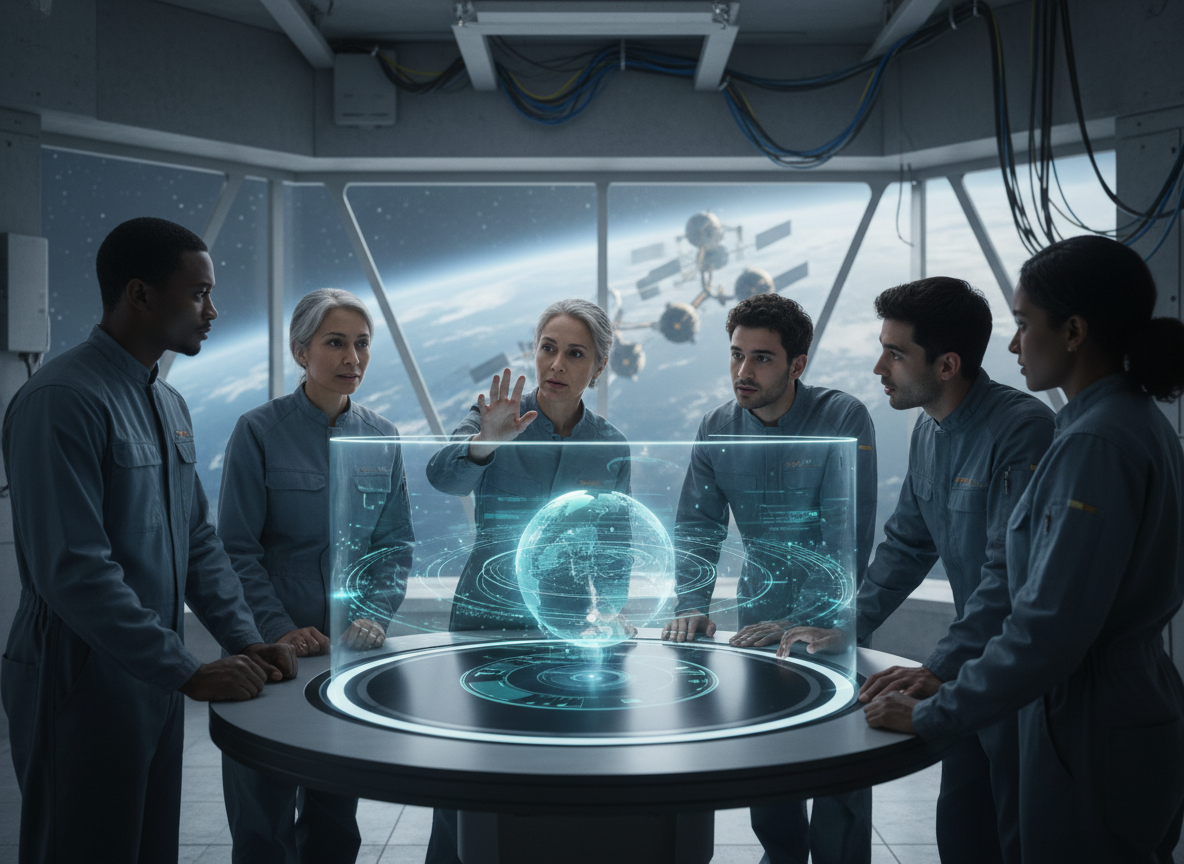
A breakthrough in orbital computing has also made headlines this month. A collaboration between Nvidia and StarCloud has resulted in the first large-scale AI model trained entirely in orbit. By utilizing the superior thermal and energy conditions of space, these 'orbital data centers' have drastically reduced the carbon footprint associated with high-intensity machine learning. This milestone suggests that the future of heavy computational tasks may lie beyond Earth's atmosphere, turning space into a new frontier for data processing and AI infrastructure.
In our cities, the impact of 'Smart Infrastructure' and IoT 2.0 is becoming a daily reality. With over 30 billion connected devices worldwide, urban environments are behaving like living organisms. In cities like Singapore and Seoul, smart poles now monitor air quality, manage traffic flow in real-time to eliminate congestion, and provide hyper-local environmental data. This interconnectedness is powered by Low Earth Orbit (LEO) satellite constellations, ensuring that even the most remote parts of these metropolises remain integrated into the city’s digital nervous system.
Language barriers are also crumbling at an unprecedented rate. Simultaneous translation is now a standard feature in high-end consumer electronics, with Apple and Google offering systems that provide near-instantaneous translation through wireless earbuds. This technology has transformed international business and travel, making the ability to communicate across cultures a universal human capability rather than a specialized skill. For the global workforce, this means that talent can now be sourced from anywhere, regardless of native tongue.
The rise of 'agentic' software is perhaps the most significant shift for individual productivity. These are not just chatbots but digital agents capable of executing multi-step tasks independently, such as planning a cross-continent business trip, managing personal finances, or conducting complex market research. As these agents become more sophisticated, they are beginning to handle up to 70% of daily administrative tasks for the average office worker, allowing for a renewed focus on creative and strategic endeavors.
Cybersecurity has had to evolve just as rapidly to keep pace with AI-driven threats. Organizations are now almost exclusively adopting Zero-Trust Models (ZTM) as their foundational security architecture. In 2026, the traditional perimeter defense is dead; instead, continuous verification and unique micro-segmentation are used to protect sensitive data. AI-driven threat detection systems are now capable of identifying and neutralizing polymorphic malware in milliseconds, turning the tide in the ongoing battle against state-sponsored hacking and cybercrime.
The democratization of application development has also reached a tipping point. Low-code and no-code platforms, enhanced by generative AI, now account for over 75% of all new applications built this year. This has empowered entrepreneurs and small business owners to build custom solutions without needing a formal engineering background. By simply describing a business need to an AI architect, users can generate fully functional, secure, and scalable applications, effectively leveling the playing field in the digital economy.
As we look toward the second half of 2026, the focus is shifting toward the ethics of this new digital ecosystem. International summits are currently debating frameworks for 'Trustworthy AI' to ensure that these autonomous systems remain transparent and accountable. While the convenience of AI-native computing is undeniable, the challenges of data privacy and the potential for algorithmic bias remain critical issues. Nevertheless, the innovations of 2026 have set a course for a more efficient, connected, and intelligent future that was once the stuff of science fiction.