As of April 11, 2026, a significant shift in luxury travel is occurring in the heart of rural Japan. While Tokyo and Osaka remain vibrant hubs, the most discerning travelers are heading to the 'hidden' prefectures of Shimane, Akita, and Tokushima. This movement, dubbed 'Deep Serenity,' focuses on long-stay residencies in traditional Ryokans that have been thoughtfully modernized to cater to a global audience seeking mental clarity and cultural immersion. These are not just hotels; they are gateways to a slower, more intentional way of living that many feel has been lost in the digital age.
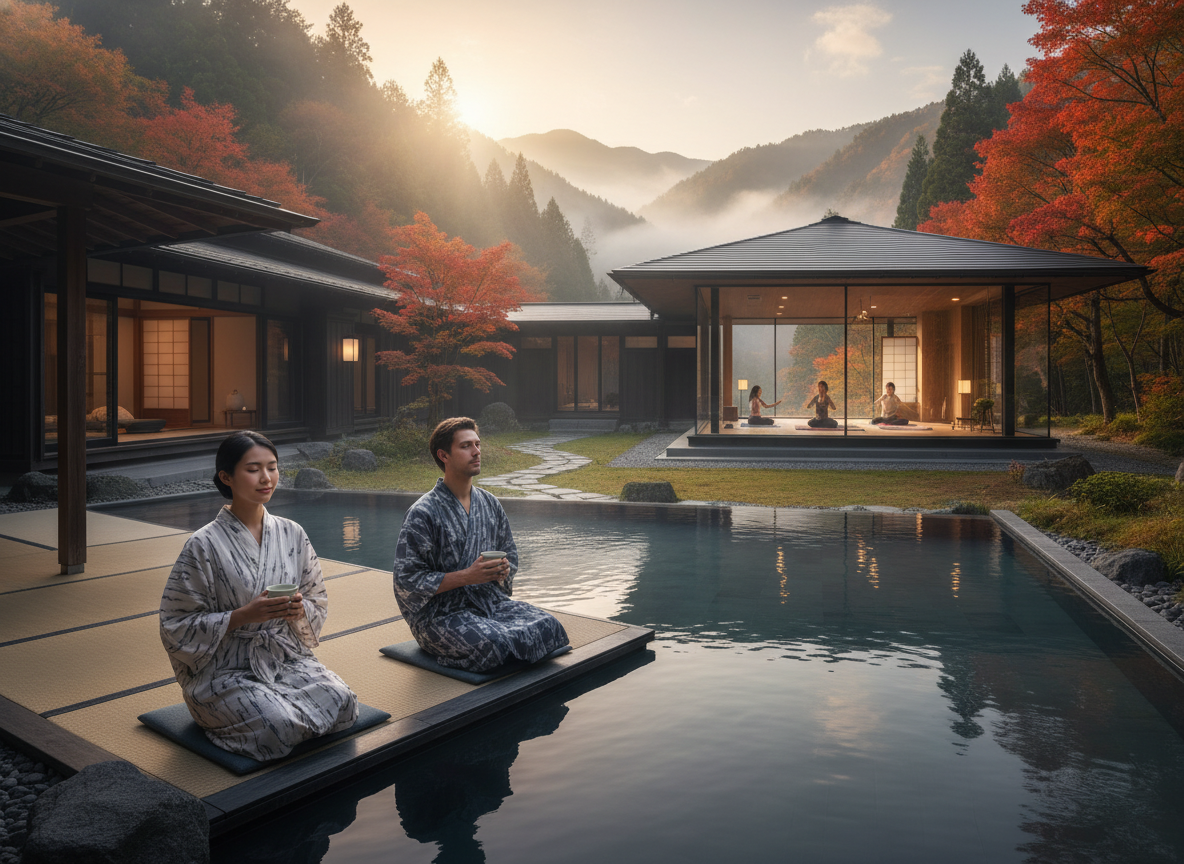
The modernization of these Ryokans is subtle yet profound. While the architecture maintains the iconic tatami mats, paper screens, and cedar-scented baths, the back-end infrastructure has been overhauled. Today's Ryokans often feature 'Digital Detox Zones' where electromagnetic interference is intentionally minimized, allowing guests to truly disconnect. However, when connection is needed, it is provided via high-speed satellite links, making these remote spots ideal for the high-end 'workcation' demographic that emerged as a dominant force this year.
One of the key draws of the 2026 Ryokan experience is the 'Kaiseki 2.0' dining philosophy. Chefs are moving beyond fixed menus to create hyper-seasonal, personalized dining experiences based on the guest's nutritional needs and local foraging results of that very morning. This morning in the Iya Valley, guests were treated to a breakfast featuring rare mountain vegetables and river trout, harvested only hours prior. This connection to the land provides a sensory grounding that is central to the 'Deep Serenity' appeal.
Thermal wellness, or Onsen culture, has also seen a resurgence with a scientific twist. Many rural Ryokans have partnered with health institutes to offer 'Mineral Therapy' programs. Guests receive a personalized bathing schedule based on the specific mineral composition of the local springs, aimed at treating everything from chronic inflammation to sleep disorders. This evidence-based approach to traditional bathing is attracting a younger, health-conscious generation that values tradition when it is backed by modern wellness data.
Accessibility to these remote regions has been greatly improved by the expansion of the 'Green Shinkansen' lines and autonomous electric shuttle networks. Traveling to a remote mountain village in 2026 no longer requires a complex logistical plan. Today, a traveler can depart from Tokyo and arrive at a secluded Ryokan in the San'in region in under four hours, with their luggage seamlessly forwarded by a nationwide automated logistics system that has become the gold standard of travel convenience.
Community engagement is another cornerstone of this trend. Unlike the insular luxury of the past, 2026 Ryokans are deeply integrated with their local villages. Guests are encouraged to participate in 'Satoyama' conservation efforts, such as maintaining rice terraces or learning traditional crafts from local masters. These 'Impact Activities' allow travelers to leave a positive footprint on the destination, fostering a sense of stewardship and connection that goes far beyond a typical tourist interaction.
The aesthetic of these retreats has also influenced global design trends this spring. The 'Japandi' style of 2024 has evolved into 'Organic Traditionalism,' which emphasizes raw materials, irregular shapes, and a profound respect for the passage of time—a concept known as Wabi-sabi. Staying in a Ryokan today is a lesson in finding beauty in imperfection and transience, a message that resonates deeply with a world that is increasingly focused on sustainability and mindful consumption.
As we look at the booking data for the remainder of the 2026 spring season, it is clear that the desire for depth over breadth is the defining characteristic of modern travel. People are no longer interested in checking boxes on a list of famous landmarks. Instead, they are looking for places that offer a change of pace and a change of perspective. The rural Ryokans of Japan provide exactly that—a profound sense of peace and a reminder that the most meaningful journeys are often the ones that lead us inward.