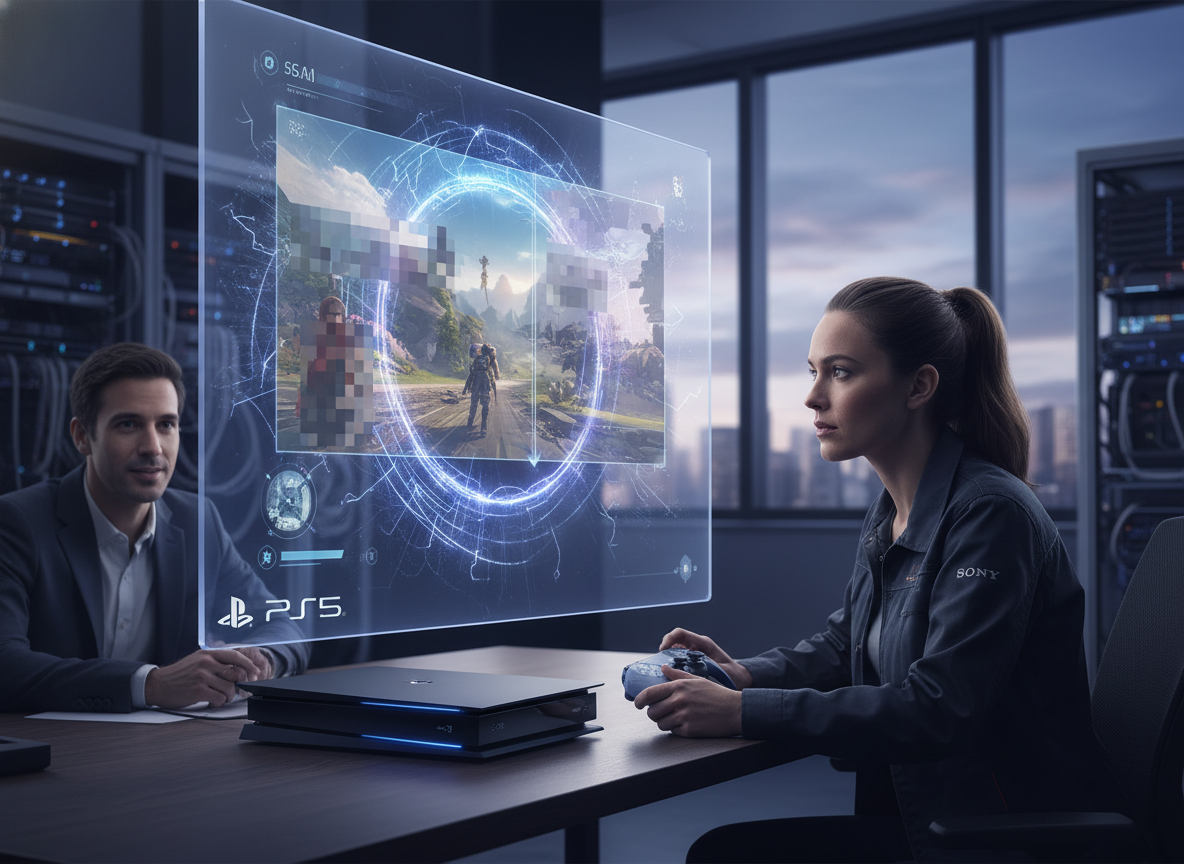
Sony Interactive Entertainment has officially rolled out 'Project Cronos' today, a revolutionary system-level update for the PlayStation 5 Pro and the upcoming PlayStation 6 ecosystem. The core promise of Cronos is the absolute elimination of loading screens, not just within games, but between them. By utilizing a hybrid system of localized NVMe Gen 6 storage and high-speed edge computing, Sony has achieved what they call 'Contextual Pre-Caching,' which predicts player behavior to load assets before they are even needed.
The technology works by analyzing your playstyle and 'hoop-jumping' habits. If you frequently switch between 'Grand Theft Auto VI' and 'Gran Turismo 8,' Project Cronos keeps the core engines of both games active in a low-power state within the system's massive 64GB of unified memory. Switching between these massive open-world titles now takes less than two seconds, a feat that felt like science fiction just a few years ago. This 'Instant-On' capability is set to redefine how players consume media.
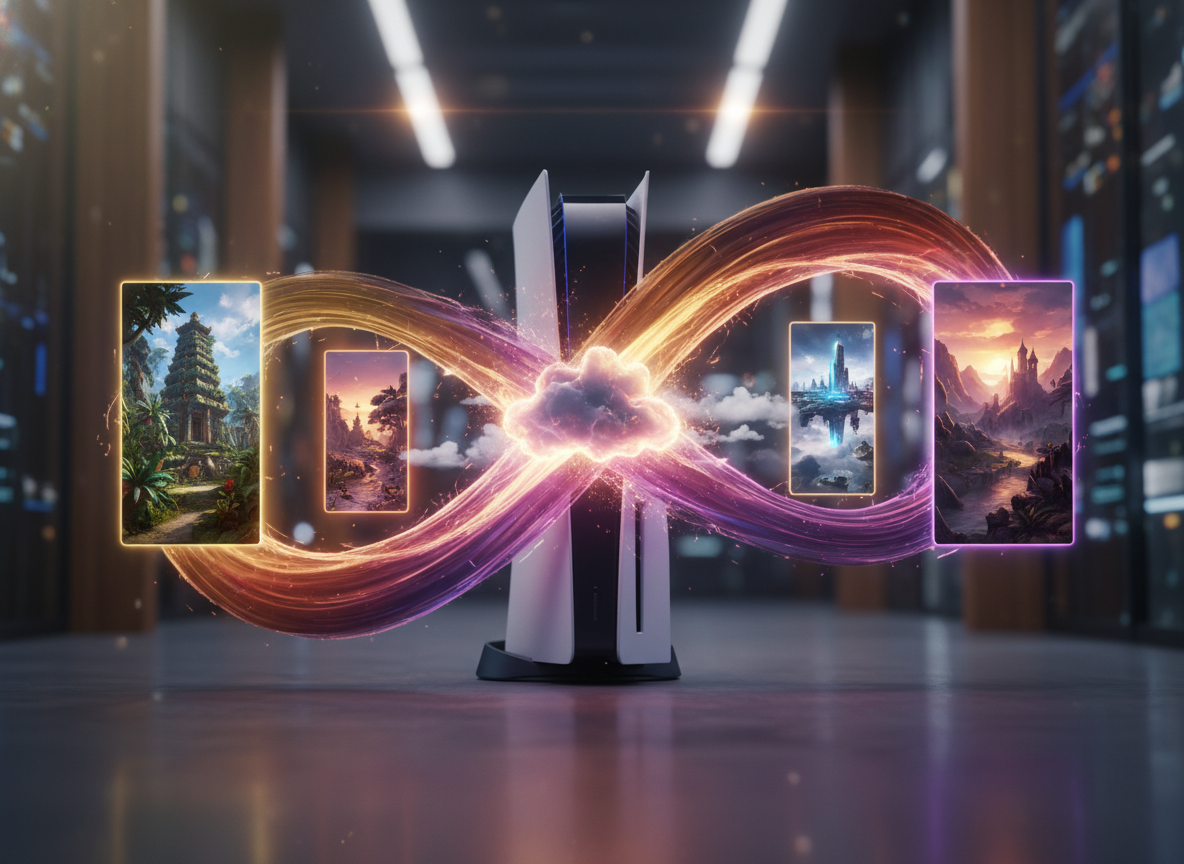
Furthermore, Project Cronos introduces 'Seamless World Streaming' for developers. This API allows for the creation of game worlds that are effectively infinite. As a player travels, the system dynamically streams in high-resolution assets from Sony's global network of 'Cronos Hubs.' This reduces the local storage footprint required for games; a title that would normally take 300GB now only requires 50GB of 'core files,' with the rest being pulled from the cloud in real-time with zero latency.
Critics were initially concerned about the internet requirements for such a system, but Sony has addressed this with 'Predictive Offline Buffering.' The console downloads probable future game paths during idle time, ensuring that even if your connection drops, the game continues uninterrupted for hours. This intelligent data management ensures that the 'Cronos' experience remains consistent regardless of the player's network stability, provided they have a basic broadband connection.
The user interface has also been reimagined under Project Cronos. The traditional dashboard is gone, replaced by the 'Flow State' UI. This is a 3D environment where your games are represented as interactive portals. Stepping into a portal immediately puts you back into the exact moment you left off, with the system maintaining the exact state of the game world, including the position of every NPC and physics object, even weeks after you last played.
For developers, the 'Cronos SDK' simplifies the most difficult parts of game optimization. The system automatically handles LOD (Level of Detail) scaling and texture streaming, allowing creators to focus on narrative and gameplay rather than technical constraints. This has already led to a surge in 'Hyper-Detailed' indie titles that punch far above their weight class, utilizing the Cronos backbone to deliver AAA-level visuals with a fraction of the traditional development budget.
Sony's move is seen as a direct response to the increasing competition from cloud-only platforms. By combining the power of local hardware with the flexibility of the cloud, PlayStation is carving out a middle ground that satisfies both the hardcore 'zero-latency' purists and the 'play-anywhere' casual crowd. 'Project Cronos' is not just a feature; it's a statement of intent for the future of the brand as it transitions toward the 2027 launch of the PS6.
As of this afternoon, millions of PlayStation users are downloading the update. Early reports indicate that the performance gains are real, with even older PS5 titles seeing a 30% reduction in asset-streaming stutters. The death of the loading screen is no longer a marketing slogan; it is a reality. As we move further into 2026, the 'waiting' part of gaming is officially becoming a relic of the past.