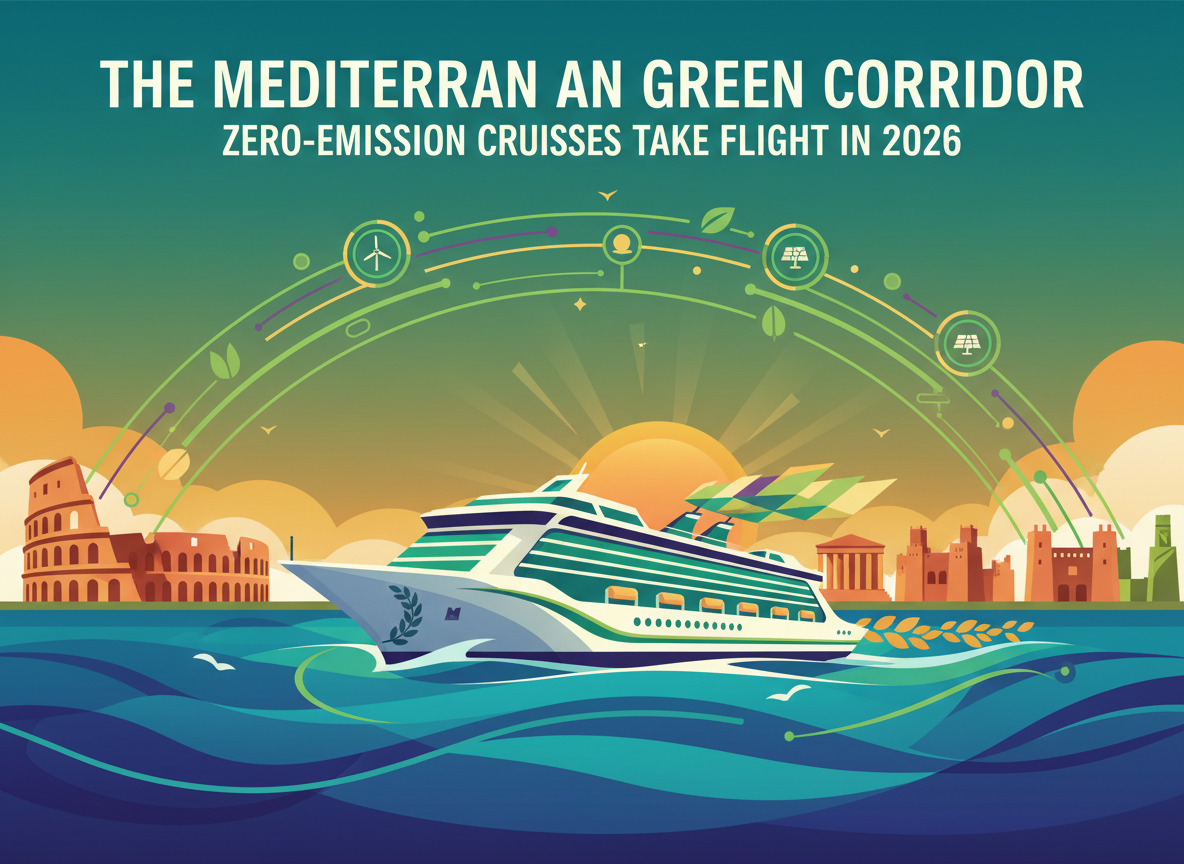
The Mediterranean cruise industry is undergoing its most radical transformation in a century. As of March 2026, the newly ratified 'Mediterranean Green Corridor' (MGC) has officially gone into effect, requiring all cruise ships operating in the coastal waters of France, Italy, Greece, and Spain to meet stringent zero-emission standards. This initiative has sparked a wave of innovation, with major cruise lines launching their first hydrogen-powered and battery-electric vessels this season, promising a cleaner, quieter, and more ethical way to explore the cradle of civilization.
Leading the charge is the 'MS Aurora Borealis,' the world’s first large-capacity cruise ship powered entirely by green hydrogen fuel cells. Launched earlier this month in Marseille, the ship emits only water vapor and operates in near-silence. This lack of engine vibration has a profound impact on the guest experience, allowing for a more serene atmosphere and enabling the ship to enter sensitive marine sanctuaries that were previously off-limits to heavy maritime traffic. The 2026 season marks the first time travelers can enjoy luxury cruising with a net-zero carbon footprint.
Port cities across the Mediterranean have also undergone massive upgrades to support this green shift. From Barcelona to Piraeus, 'cold ironing'—the process of providing shoreside electrical power to ships at berth—has become the standard. This eliminates the need for ships to run diesel generators while docked, significantly improving the air quality in historic harbor towns. For the 2026 traveler, this means the air in Venice or Dubrovnik is noticeably fresher, enhancing the appeal of outdoor dining and coastal walks near the cruise terminals.
The MGC initiative also focuses on 'Slow Travel' principles. In 2026, itineraries are being redesigned to include longer stays in fewer ports, reducing the energy expended on high-speed transits. This shift allows for deeper cultural immersion, with cruise lines partnering with local communities to offer 'farm-to-table' excursions and heritage preservation workshops. This new model of tourism aims to mitigate the negative impacts of overtourism by distributing economic benefits more evenly across local businesses rather than concentrating them in a few hours of frantic sightseeing.
Technology plays a crucial role in the 2026 cruise experience. New 'Ocean Awareness' centers on board these green ships use real-time data from underwater drones to show passengers the health of the Mediterranean’s seagrass meadows and coral reefs. These educational hubs are designed to turn tourists into ambassadors for ocean conservation. Many 2026 cruises now include 'citizen science' components, where guests can participate in water sampling or plastic tracking as part of their vacation, adding a layer of purpose to their travel.
The culinary offerings on these zero-emission ships have also evolved. With a focus on the 'Blue Economy,' menus are now dominated by sustainably sourced seafood and plant-based alternatives that reflect the traditional Mediterranean diet. In 2026, the 'sustainable luxury' trend means that fine dining is defined by the provenance and ecological impact of the ingredients. Many ships have replaced plastic-intensive buffets with made-to-order gourmet stations that significantly reduce food waste, a major pain point for the industry in previous decades.
While the cost of these green cruises is currently higher than traditional voyages, the demand in 2026 is skyrocketing. Travelers are increasingly willing to pay a premium for vacations that align with their personal values. To encourage this, several European governments have introduced 'Green Travel Credits' that provide tax incentives or rebates for citizens booking eco-certified cruises. This has made 2026 the year that sustainable cruising moved from a niche market into the mainstream, setting a precedent for other regions like the Caribbean and Southeast Asia.
As the first MGC season progresses, the results are already visible. Marine life sightings near popular routes have increased, and the tension between port cities and cruise lines is beginning to ease. The 2026 Mediterranean Green Corridor is a blueprint for the future of global tourism, proving that the desire to explore the world can be balanced with the urgent need to protect it. For travelers booking their summer getaways, the choice is clear: the future of cruising is green, and it has finally arrived.