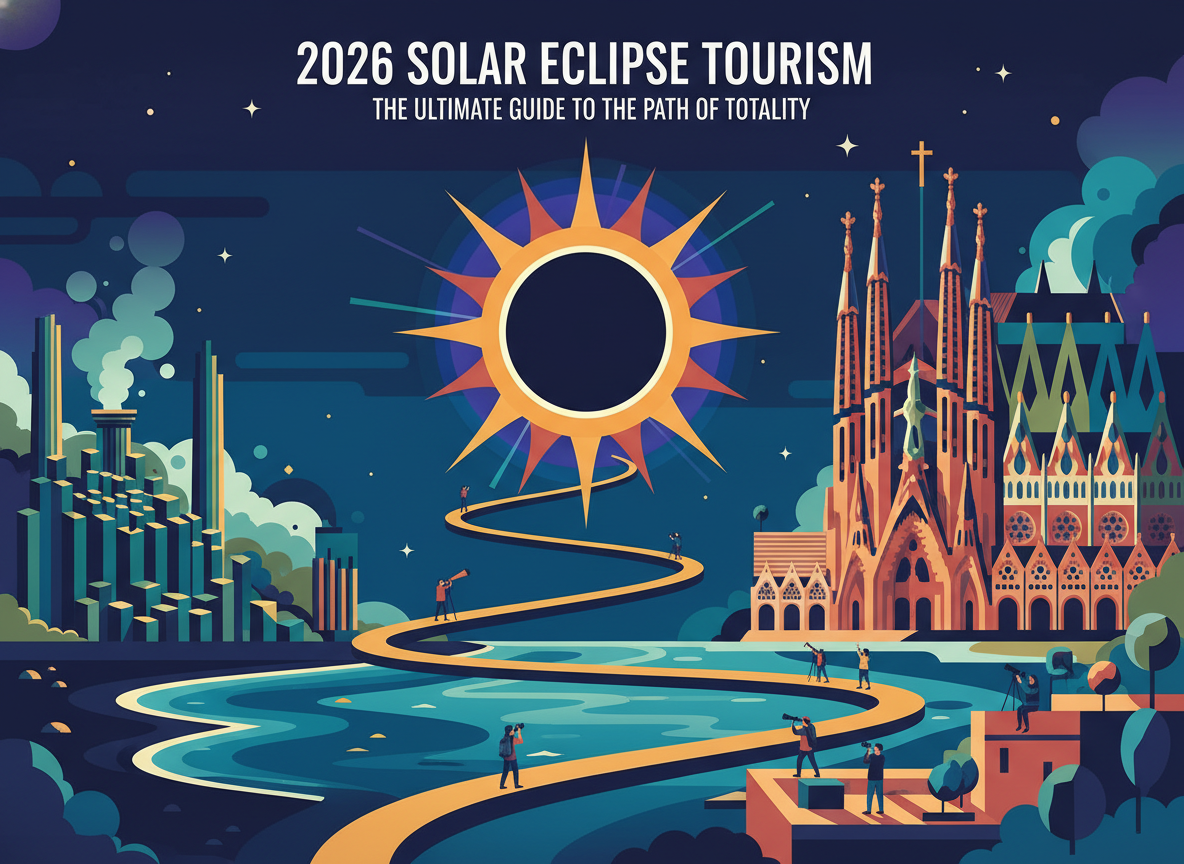
Astrotourism has officially become the dominant travel trend of 2026, and all eyes are on the upcoming total solar eclipse scheduled for August 12, 2026. This celestial event is set to be one of the most-watched natural phenomena in history, with the path of totality stretching across the Arctic, Greenland, Iceland, Spain, and a small portion of Portugal. Travelers are already mobilizing, with hotel occupancy in prime viewing zones reaching 90% as of late March, prompting a surge in 'pop-up' luxury campsites and chartered observation flights.
Iceland is positioning itself as the premier destination for the 2026 eclipse, offering a dramatic backdrop of volcanic landscapes and glaciers. The Westfjords and Reykjavik are expected to see the longest duration of totality, lasting over two minutes. Local tour operators have introduced 'Eclipse & Aurora' packages, combining the daytime solar event with nighttime northern lights viewing, capitalizing on the high solar activity predicted for the 2026 cycle. Infrastructure in Reykjavik is being temporarily expanded to handle the anticipated 500,000 additional visitors.
In Spain, the eclipse will cross several major cities, including Bilbao, Zaragoza, and Valencia, before reaching the Mediterranean coast. This has triggered a massive 'Summer of Light' marketing campaign by the Spanish Ministry of Tourism. Unlike the cooler Arctic path, Spain offers a high probability of clear skies, making it a safer bet for photographers and serious astronomers. The Balearic Islands, specifically Mallorca, will witness the eclipse just before sunset, creating a rare 'golden hour' totality that is expected to produce some of the most iconic images of the decade.
For those looking to avoid the mainland crowds, the cruise industry has pivoted heavily toward the 2026 eclipse. Several luxury lines have announced 'Eclipse Cruises' that will position ships in the middle of the North Atlantic to ensure zero cloud interference. These voyages include guest lectures from NASA scientists and renowned astrophysicists, providing an educational component to the luxury experience. These cruises sold out within hours of their release in early 2025, but secondary market cabins are occasionally appearing at premium prices.
The 2026 eclipse is also driving innovation in travel technology. New AR apps are being launched this month that allow users to simulate the eclipse's path and timing based on their exact GPS coordinates. These apps provide safety warnings, camera setting recommendations, and even historical context about solar eclipses in ancient cultures. For the first time, high-altitude balloons are being commissioned to take small groups of tourists into the stratosphere for an unobstructed, black-sky view of the moon’s shadow racing across the Earth’s surface.
Sustainability remains a concern for eclipse-related travel. With so many people descending on ecologically sensitive areas like the Icelandic Highlands, authorities are implementing strict 'Leave No Trace' mandates. Temporary viewing platforms are being constructed from recycled materials, and many tour operators are utilizing electric bus fleets to transport spectators. In Spain, special 'Eclipse Trains'—high-speed electric rail services—are being scheduled to move crowds between Madrid and the path of totality, reducing the need for thousands of rental cars.
Logistically, the 2026 eclipse poses a unique challenge for international travel. Airlines are adding hundreds of flights, yet the demand continues to outpace supply. Travel experts recommend booking 'shoulder' dates—arriving a week early or staying a week late—to avoid the peak congestion on August 11 and 13. Many travelers are turning to 'secondary cities' just outside the path of totality, planning to commute into the zone on the morning of the event to save on exorbitant lodging costs in the center of the action.
As we approach the final countdown to August, the sense of global anticipation is palpable. The 2026 solar eclipse is more than just an astronomical event; it is a unifying moment for humanity that transcends borders. Whether you are standing on a black sand beach in Iceland or a rooftop in Valencia, the shared experience of the sun vanishing in the middle of the day is a powerful reminder of the wonders of our solar system. For those who haven't yet planned their trip, the time to act is now, as 2026 is shaping up to be the year of the sun.