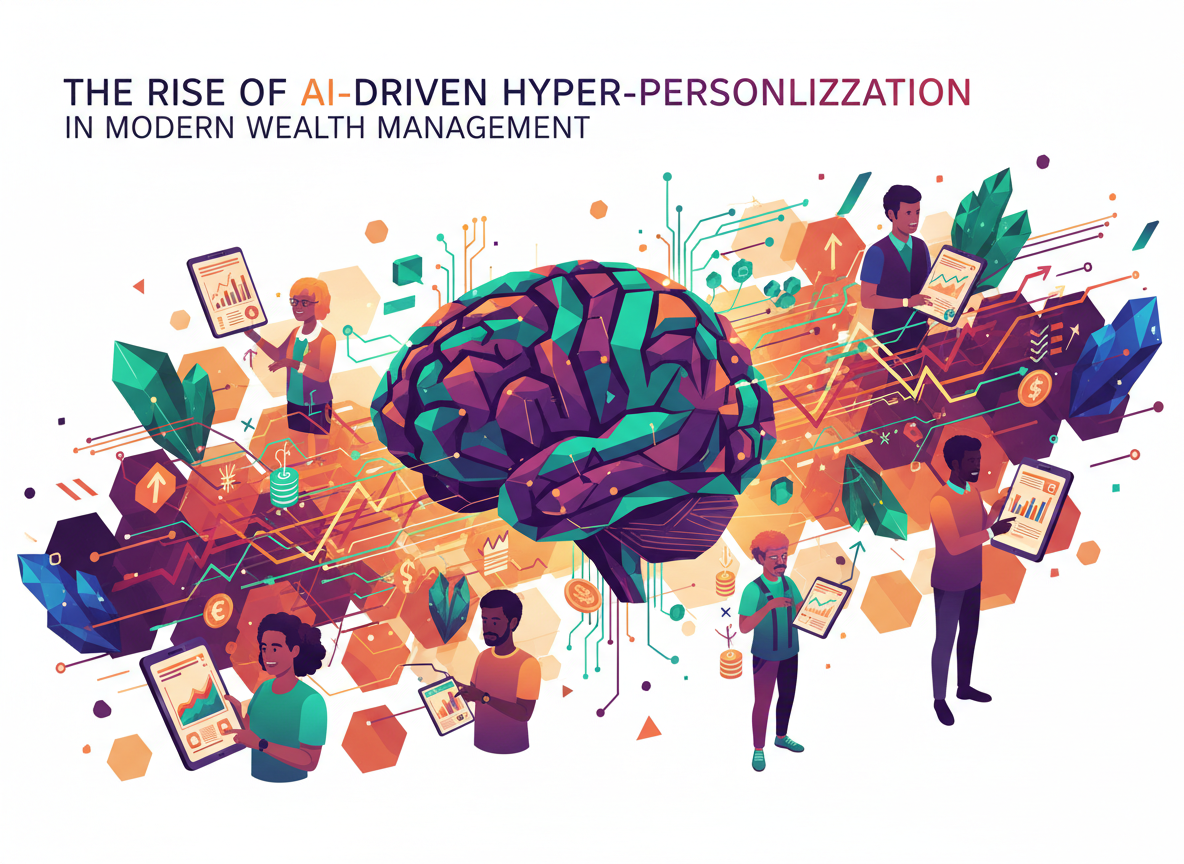
The landscape of personal finance is undergoing a seismic shift as generative artificial intelligence moves beyond mere automation into the realm of hyper-personalization. For decades, retail investors were limited to static financial plans or cookie-cutter robo-advisor portfolios based on broad risk tolerances. Today, a new generation of AI-driven platforms is emerging, capable of analyzing a user's entire financial life in real-time to provide bespoke advice that was once reserved only for ultra-high-net-worth individuals.
At the core of this breakthrough is the integration of Large Language Models (LLMs) with open banking APIs. This synergy allows financial applications to monitor spending habits, debt obligations, and investment performance simultaneously. Instead of waiting for a monthly statement, users receive proactive notifications suggesting specific actions, such as moving idle cash into a high-yield vehicle or rebalancing a portfolio based on shifting geopolitical events that could impact specific asset classes.
Predictive analytics is also playing a crucial role in behavioral finance. AI tools can now identify patterns in a consumer's spending that may lead to future liquidity issues. By flagging these trends early, these systems act as a digital financial coach, suggesting micro-adjustments to daily habits that ensure long-term goals, such as retirement or home ownership, remain on track even during periods of high inflation or market volatility.
Tax-loss harvesting has been another area of significant advancement. While traditional robo-advisors offered periodic tax optimization, modern AI engines can perform these calculations daily, identifying granular opportunities to offset capital gains with losses across a diverse range of assets, including cryptocurrencies and fractional shares. This level of precision can significantly enhance after-tax returns, adding several percentage points to a portfolio's performance over the long term.
Privacy and security remain the most significant hurdles to widespread adoption. As these systems require access to sensitive financial data, fintech companies are increasingly turning to zero-knowledge proofs and decentralized identity solutions to protect user information. Ensuring that the AI can provide insights without actually 'seeing' the underlying sensitive data in a vulnerable format is becoming the gold standard for trust in the digital finance ecosystem.
The role of the human financial advisor is also evolving rather than disappearing. Instead of spending hours on manual data entry and basic portfolio construction, advisors are utilizing AI to generate deep insights and scenarios. This allows them to focus on high-level strategy, emotional coaching, and complex estate planning. The hybrid model, combining human empathy with machine precision, is proving to be the most effective way to manage wealth in a complex global economy.
Accessibility is perhaps the most socially significant impact of this technological surge. Historically, sophisticated financial planning was locked behind high minimum balance requirements. AI democratizes these services, allowing someone with a hundred dollars to start their investment journey with the same level of algorithmic sophistication as a millionaire. This shift is vital for closing the wealth gap and fostering a more financially literate and stable population.
Looking ahead, we can expect AI to become even more integrated into our daily transactions. We are moving toward a 'self-driving' money era where financial decisions—from choosing the best mortgage rate to optimizing credit card rewards—are handled automatically by intelligent agents. As these technologies mature, the focus will stay on refining accuracy and ensuring that the algorithms remain aligned with the ethical and long-term interests of the individual user.