Newtechzy
  • Home
  • News
  • Technology and AI
  • Personal Finance and Money
  • Health and Fitness
  • Food and Recipes
  • Travel
  • Fashion and Beauty
  • Online Earning and Side Hustle
  • Gaming
  • Education and Tutorials
  • Product Reviews and Affiliate Marketing

At Newtechzy, every click is an adventure in the digital world. Whether you're a tech enthusiast or a casual user, we're your go-to for the latest technology news, innovations, and trends.

Subscribe to our newsletters. We'll keep you in the loop.

HomeAbout UsContactPrivacy PolicyTerms & ConditionsDisclaimer

© 2026 Newtechzy. All rights reserved. Technology news, reviews and innovations platform.

Home/technology-and-ai/The Neural Leap: How Brain-Computer Interfaces are Redefining Spatial Reality
The Neural Leap: How Brain-Computer Interfaces are Redefining Spatial Reality
technology-and-ai

The Neural Leap: How Brain-Computer Interfaces are Redefining Spatial Reality

As we move further into 2026, the boundary between biological intent and digital execution is blurring through advanced non-invasive brain-computer interfaces.

March 29, 20266-8 minutes

The era of physical peripherals is rapidly drawing to a close. In 2026, the primary mode of interaction with our digital surroundings has shifted from tactile surfaces and gesture tracking to direct neural interpretation. Brain-Computer Interfaces (BCIs) have evolved from niche medical tools to mainstream consumer devices, enabling a seamless bridge between human thought and spatial computing environments. This technological leap is not just about convenience; it represents a fundamental shift in how we perceive and manipulate information within our three-dimensional workspace.

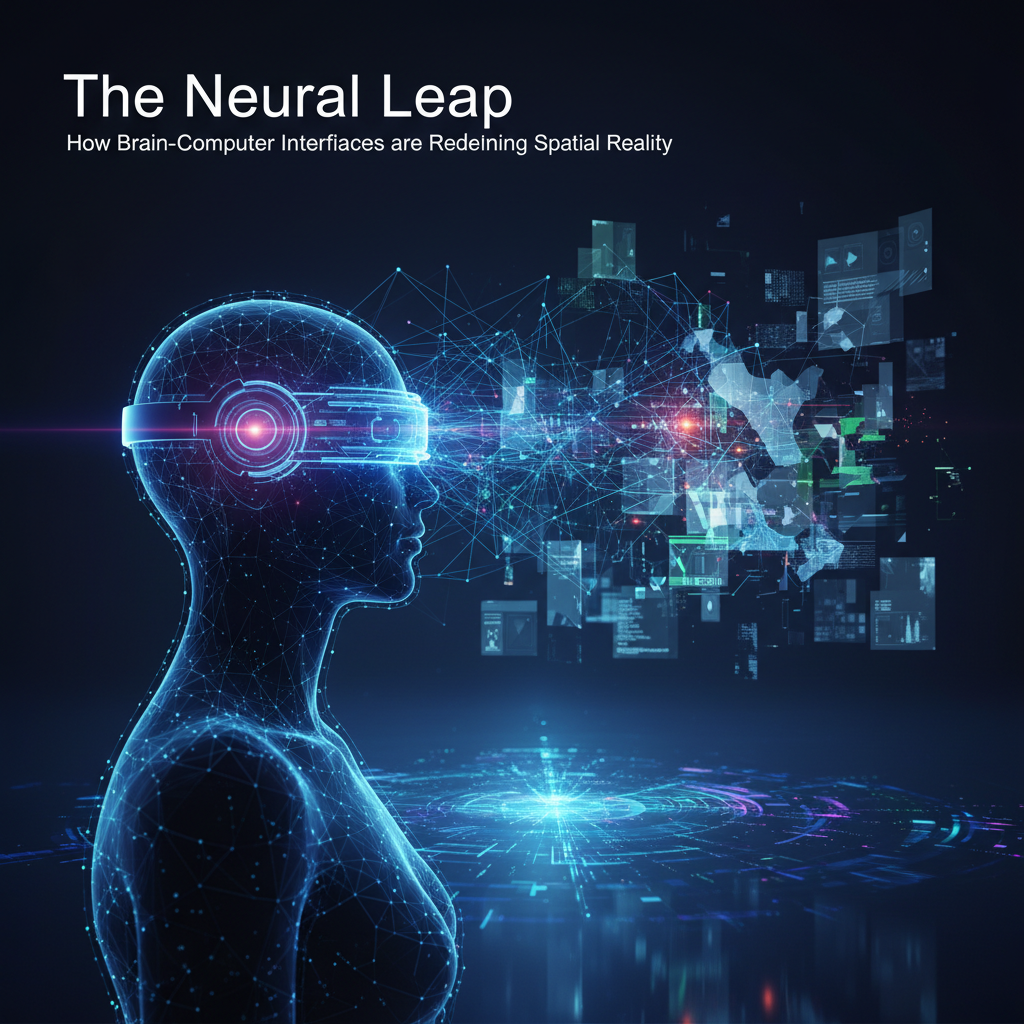
Central to this revolution is the development of high-fidelity, non-invasive sensors capable of filtering through the 'noise' of the human brain to isolate specific motor intents and cognitive commands. Unlike the bulky headsets of the past, modern BCI headbands are integrated into sleek eyewear or lightweight wearables. By utilizing advanced machine learning algorithms, these devices can predict user actions with millisecond latency, allowing for fluid navigation through augmented reality overlays without the need for hand tracking or voice commands.

The implications for the creative and professional sectors are profound. Architects can now 'think' structures into existence, manipulating complex 3D models as if they were extensions of their own bodies. In the realm of telepresence, neural links allow for the transmission of emotional nuance and focus, making remote collaboration feel more authentic than ever before. However, this level of intimacy with our technology brings significant challenges, particularly regarding the privacy of our inner monologues and the security of 'neural data' being processed in the cloud.

As we look toward the end of the decade, the integration of generative AI with neural interfaces promises even more radical changes. We are approaching a point where the lag between imagination and digital creation becomes zero. While ethical frameworks are still catching up to the speed of innovation, the potential for BCIs to restore agency to those with motor impairments and to expand the cognitive capabilities of the general population is unparalleled. The neural leap is here, and it is reshaping reality one thought at a time.


Share This:
XFBLIWA

Recent Posts

The Dawn of Reasoning: How System 2 AI is Transforming Complex Problem Solving
technology-and-ai

The Dawn of Reasoning: How System 2 AI is Transforming Complex Problem Solving

Alex Sterling
The Paradigm Shift: How On-Device AI is Redefining Privacy and Performance
technology-and-ai

The Paradigm Shift: How On-Device AI is Redefining Privacy and Performance

Elena Vance
The Rise of Agentic AI: Why Workflows are the Next Frontier
technology-and-ai

The Rise of Agentic AI: Why Workflows are the Next Frontier

Jordan Vance
The Dawn of Reasoning Models: Moving Beyond Next-Token Prediction
technology-and-ai

The Dawn of Reasoning Models: Moving Beyond Next-Token Prediction

Marcus Sterling
BCISpatial ComputingNeurotechFuture TrendsMixed Reality

Related Posts

Liquid AI Unveils Non-Transformer Models for Dynamic Data
technology-and-ai

Liquid AI Unveils Non-Transformer Models for Dynamic Data

2024-11-07
Quantum Computing Milestone: Achieving Fault-Tolerant Logical Qubits
technology-and-ai

Quantum Computing Milestone: Achieving Fault-Tolerant Logical Qubits

2024-11-09
Logical Qubits: Solving the Error Correction Puzzle in Quantum Computing
technology-and-ai

Logical Qubits: Solving the Error Correction Puzzle in Quantum Computing

2024-05-18
Quantum Computing Breakthroughs: Solving the Error Correction Puzzle
technology-and-ai

Quantum Computing Breakthroughs: Solving the Error Correction Puzzle

2023-11-21