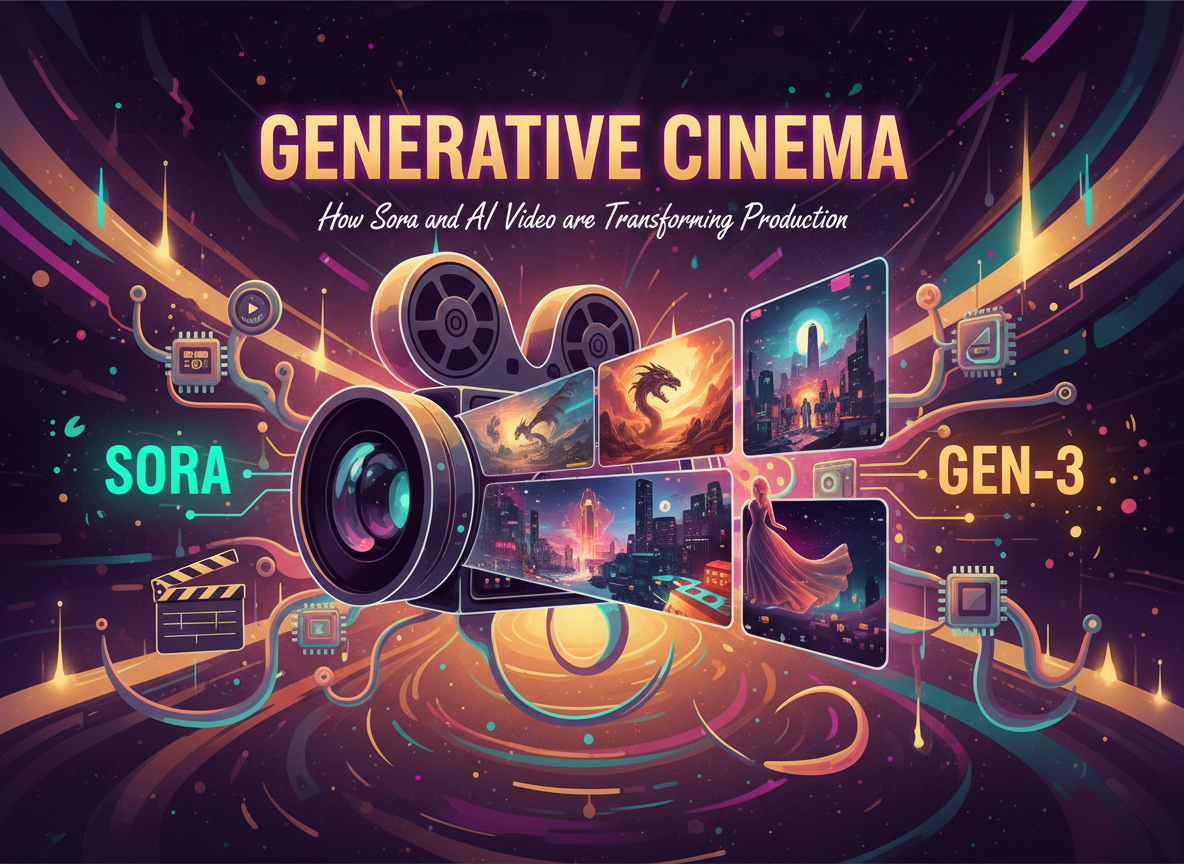
The barrier to entry for high-end visual effects is collapsing. OpenAI's Sora and Runway's Gen-3 Alpha have demonstrated the ability to create hyper-realistic video clips from simple text prompts. These models can simulate complex physics, consistent characters, and cinematic lighting, sparking a heated debate in Hollywood about the future of creative labor.
Proponents argue that AI video tools will act as a 'force multiplier' for independent filmmakers, allowing them to visualize worlds that would previously require a $100 million budget. Concept artists and pre-visualization teams are already using these tools to storyboard films in real-time, significantly shortening the development cycle for major motion pictures.
However, the technology also raises serious concerns regarding deepfakes, copyright, and job displacement for VFX artists and actors. The SAG-AFTRA strikes of the past year highlighted the need for protections against unauthorized AI replicas. As the technology moves from 10-second clips to full-length scenes, the industry must find a way to integrate AI without compromising the human elements of storytelling.