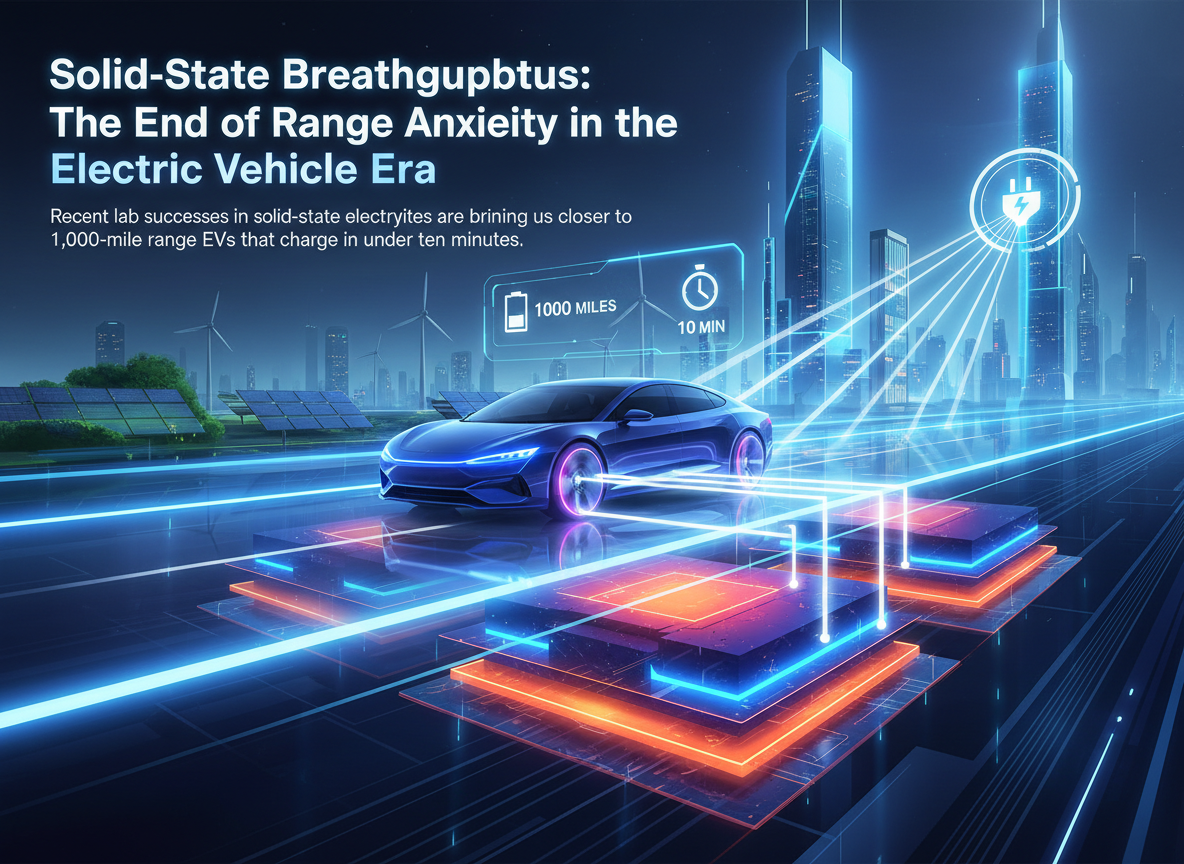
For years, the promise of solid-state batteries has been the 'holy grail' of the automotive industry. Recent developments in sulfide-based electrolytes have finally addressed the dendrite growth problem that previously plagued these cells, which often caused short circuits and premature failure.
Companies like Toyota and QuantumScape are now reporting energy densities that could double the range of current high-end EVs while reducing fire risks to almost zero. Furthermore, the transition to solid-state chemistry allows for much faster ion movement, potentially enabling a full charge in the time it takes to fill a traditional gasoline tank. This breakthrough addresses the two primary barriers to mass EV adoption: range and charging time.
While mass production remains a significant engineering challenge, the roadmap for commercial integration by late 2026 is becoming increasingly clear. Manufacturers are now pivoting their supply chains to secure rare-earth minerals and specialized ceramics required for these next-generation power cells, promising a cleaner and more efficient future for global transportation.