As we enter the second quarter of 2026, the affiliate marketing landscape has undergone a seismic shift driven by the maturity of Generative Review Engines (GREs). These sophisticated AI systems no longer just summarize existing content; they synthesize real-time user data, technical specifications, and historical price fluctuations to provide instant, hyper-personalized product recommendations. For affiliate marketers, this means the traditional static 'top 10' listicle is rapidly becoming obsolete, replaced by dynamic interfaces that adapt to a user's specific intent and budget in milliseconds.
The integration of Large Language Models (LLMs) with live e-commerce APIs has allowed platforms to offer 'conversational shopping' experiences that feel remarkably human. By April 2026, we are seeing major search engines prioritize content that demonstrates deep experiential expertise—something AI still struggles to replicate perfectly. This 'Information Gain' factor is now the primary driver of SEO success, forcing creators to move away from generic summaries and toward high-production, firsthand testing that provides data points unique to their own laboratories or home environments.
Data integrity has become the new currency in the affiliate world. With the market flooded with AI-generated fluff, consumers are gravitating toward trusted authorities who provide verifiable proof of product usage. In 2026, the most successful affiliate sites are those utilizing blockchain-verified 'Proof of Review' protocols, where every product tested is logged with timestamps, original high-resolution photography, and biometric data to prove a human actually interacted with the item. This level of transparency is no longer optional; it is a requirement for maintaining high conversion rates.
Furthermore, the regulatory environment has tightened significantly. As of today, April 1, 2026, the new FTC 'Truth in Automation' guidelines require all AI-assisted affiliate content to carry a standardized digital watermark. This disclosure must clarify exactly which parts of a review were generated by algorithms versus human insight. Marketers who fail to comply are facing unprecedented fines, while those who embrace transparency are seeing a measurable 'trust premium' in their click-through rates. This regulatory shift is cleaning up the industry, weeding out low-quality spam sites that dominated the previous decade.
Personalization has also reached a granular level never seen before. Modern affiliate funnels now use predictive analytics to suggest products before a user even realizes they need them. By analyzing a consumer's digital footprint—with strict adherence to 2026's revised privacy laws—affiliates can serve dynamic content that reflects the user's specific lifestyle, such as suggesting hiking boots based on upcoming weather patterns and local trail difficulty. This shift from reactive to proactive marketing is significantly increasing the average order value for top-tier affiliate partners.
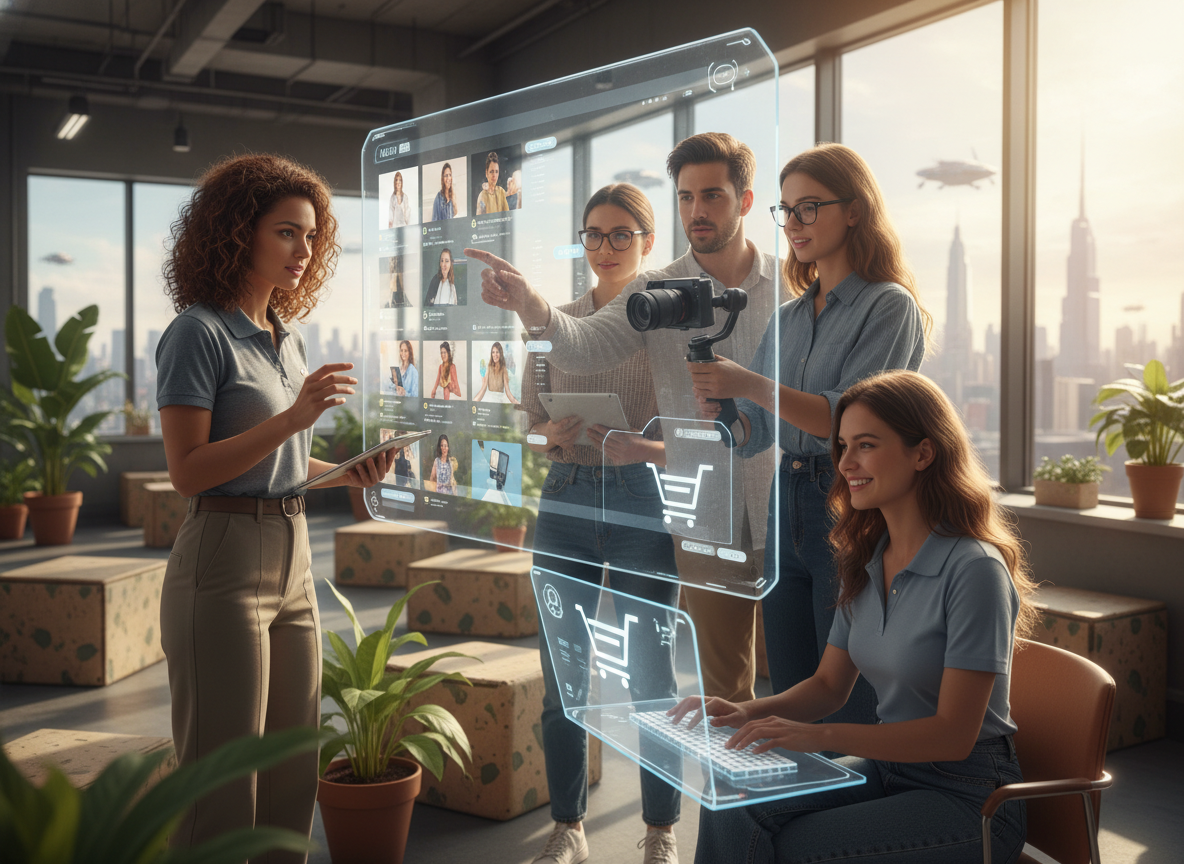
Video-centric reviews have evolved into interactive AR (Augmented Reality) experiences. In 2026, a consumer reading a review of a new espresso machine can project a life-sized 3D model of that machine onto their kitchen counter via their smart glasses or smartphone. Affiliate links are embedded directly into these AR models, allowing for a 'try-before-you-buy' sensation that has revolutionized high-ticket item sales. Creators who are not investing in spatial computing assets for their reviews are finding themselves at a distinct disadvantage compared to tech-forward competitors.
The monetization models are also diversifying. While traditional CPA (Cost Per Acquisition) remains a staple, we are seeing a surge in 'Performance-as-a-Service' models. In this setup, affiliates are paid not just for the initial sale, but for the lifetime value of the customer they brought in. This encourages reviewers to focus on product longevity and long-term satisfaction rather than just pushing for the quick impulse buy. This alignment of interests between the consumer, the creator, and the brand is fostering a much healthier ecosystem for sustainable growth.
In conclusion, the state of affiliate marketing on April 1, 2026, is one of high complexity but even higher opportunity. The winners in this new era are those who can balance the efficiency of AI with the irreplaceable nuances of human experience. As technology continues to evolve, the core principle remains the same: provide genuine value and build an unbreakable bond of trust with your audience. The future belongs to the 'Human-Plus' creator—one who uses AI as a powerful tool to amplify their authentic voice and rigorous testing methodology.