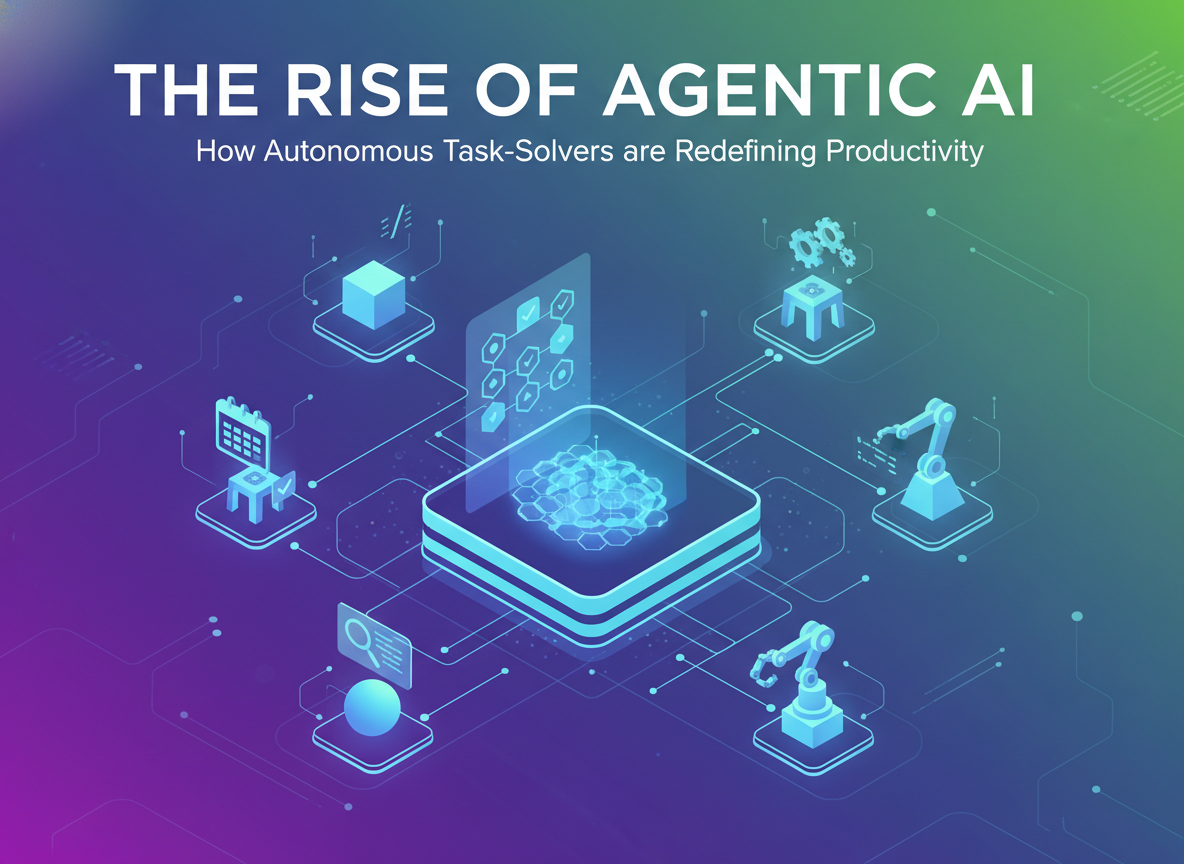
The landscape of artificial intelligence is undergoing a seismic shift, moving away from simple conversational interfaces toward what experts call Agentic AI. While the first wave of large language models (LLMs) focused on generating text and code based on prompts, the new generation of AI agents is designed to execute complex, multi-step workflows with minimal human intervention. This evolution represents a transition from AI as a consultant to AI as a collaborator.
Unlike traditional chatbots that provide static answers, agentic systems possess the ability to use tools, browse the web, and call APIs to complete specific goals. For instance, an AI agent could be tasked with researching a market trend, compiling a report in a specific document format, and emailing it to a team list—all without human prompts at each step. Companies like OpenAI and Microsoft are increasingly focusing on these autonomous capabilities, integrating them into frameworks like AutoGen and Assistants API.
One of the primary drivers of this trend is the improvement in reasoning capabilities. Newer models are better at 'chain-of-thought' processing, allowing them to break down a high-level goal into smaller, actionable tasks. This iterative loop of planning, acting, and reflecting enables the AI to correct its own errors and adapt to new information in real-time. As a result, agentic AI is finding its way into software engineering, customer service, and scientific research.
However, the rise of autonomous agents also brings significant challenges. Issues surrounding security, safety, and the 'black box' nature of AI decision-making are at the forefront of industry discussions. Developers must implement robust guardrails to ensure that agents do not perform unintended or harmful actions when granted access to personal data or corporate systems. Despite these hurdles, the momentum behind agentic workflows suggests that the future of work will be defined by our ability to manage fleets of digital agents.