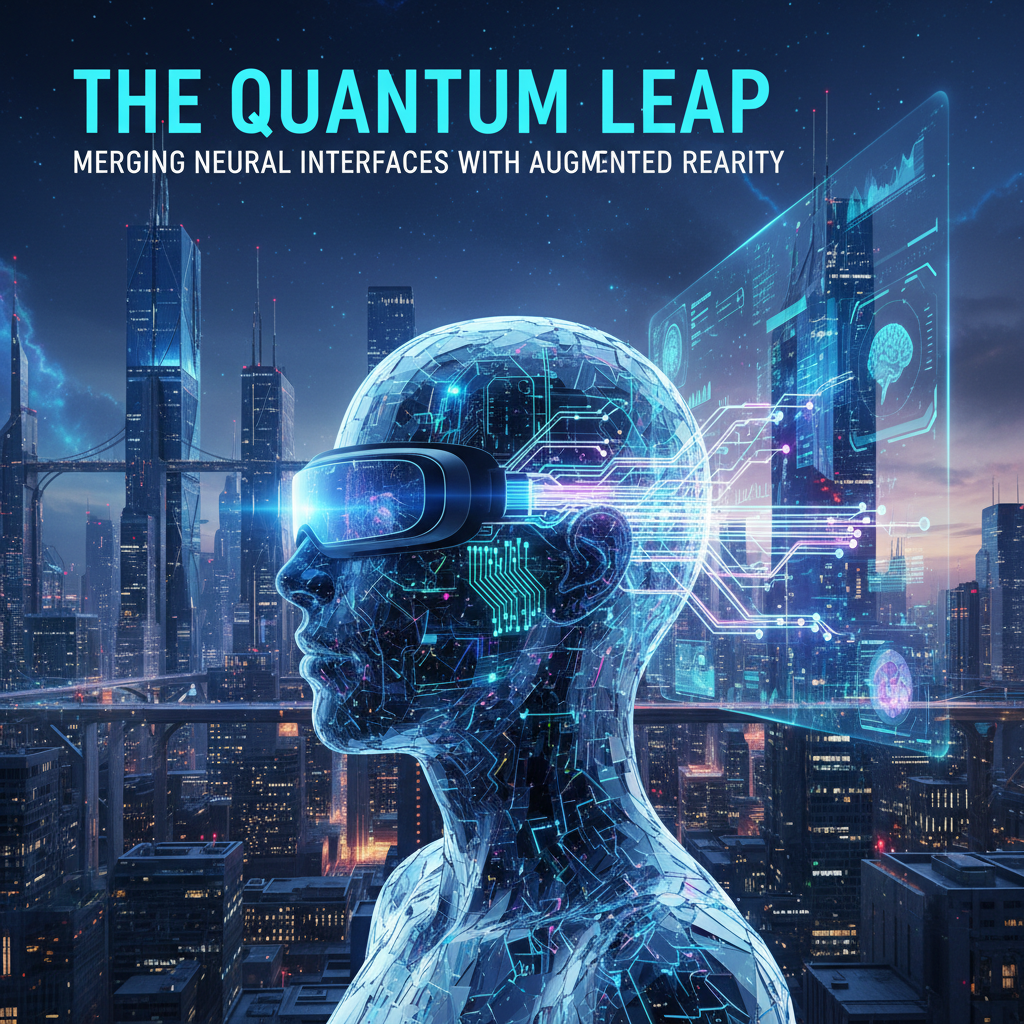
In the mid-2020s, the convergence of high-speed quantum processors and advanced neural interfaces began to shift from science fiction to a tangible reality.
Unlike traditional AR, which overlays digital information onto the visual field, Quantum-driven AR interacts directly with the brain sensory cortex to simulate physical sensations and depth.
The core of this breakthrough lies in qubit-based processing, which handles the massive datasets required for real-time spatial mapping and sensory feedback at sub-millisecond latencies.
By 2026, we are seeing the first consumer-grade headsets that do not just show you a digital world, but allow you to feel the texture of virtual objects through haptic neural pulses.
This evolution marks the end of the screen era and the beginning of a truly immersive existence where the line between physical and digital becomes indistinguishable.