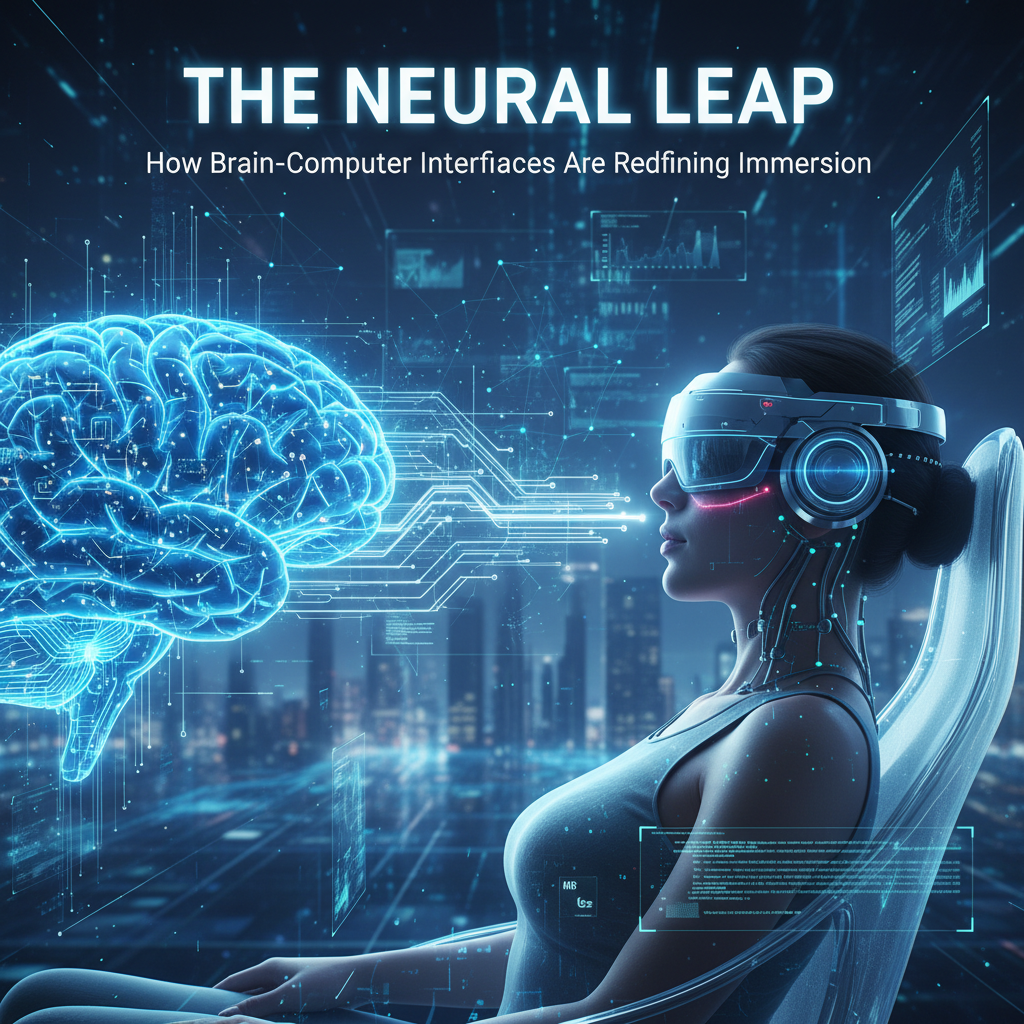
As we cross the threshold into 2026, the boundary between biological thought and digital execution has begun to dissolve. Brain-Computer Interfaces (BCI), once the realm of speculative science fiction and high-level medical rehabilitation, have transitioned into the consumer spotlight. This shift marks the beginning of the 'Neural Era,' where our interaction with the digital world is no longer mediated by physical hardware like mice, keyboards, or even haptic controllers, but by direct neural pathways.
The latest generation of non-invasive neural headbands utilizes advanced optode arrays and high-density EEG sensors to decode user intent with sub-millisecond latency. Unlike previous iterations that required intense calibration, these systems now leverage edge-AI to adapt to the wearer's unique brain signatures in real-time. This allows for 'thought-to-action' sequences in immersive environments that feel as natural as moving a limb. In virtual reality, this translates to a level of presence previously thought impossible, where the environment responds not just to your movements, but to your emotional state and focus.
Beyond gaming and entertainment, the implications for productivity and accessibility are profound. Professionals are now using 'cognitive offloading' techniques, where neural interfaces manage background tasks, allowing the user to focus deeply on creative problem-solving. For individuals with motor impairments, these advancements represent a total reclamation of digital agency, providing a bridge to the metaversal economies that are becoming central to our global workforce. However, this leap forward brings significant ethical considerations regarding mental privacy and 'neuro-data' sovereignty.
As we look toward the next decade, the integration of BCI technology into everyday wearables suggests a future where the internet is not something we browse, but something we experience as an extension of our own consciousness. The challenges of data security and ethical implementation remain, but the promise of a more intuitive and inclusive digital reality is now closer than ever. The neural leap is not just a technological upgrade; it is an evolution of what it means to be connected in a hyper-digital age.