Newtechzy
  • Home
  • News
  • Technology and AI
  • Personal Finance and Money
  • Health and Fitness
  • Food and Recipes
  • Travel
  • Fashion and Beauty
  • Online Earning and Side Hustle
  • Gaming
  • Education and Tutorials
  • Product Reviews and Affiliate Marketing

At Newtechzy, every click is an adventure in the digital world. Whether you're a tech enthusiast or a casual user, we're your go-to for the latest technology news, innovations, and trends.

Subscribe to our newsletters. We'll keep you in the loop.

HomeAbout UsContactPrivacy PolicyTerms & ConditionsDisclaimer

© 2026 Newtechzy. All rights reserved. Technology news, reviews and innovations platform.

Home/technology-and-ai/The Internet of Senses: Beyond the Digital Screen
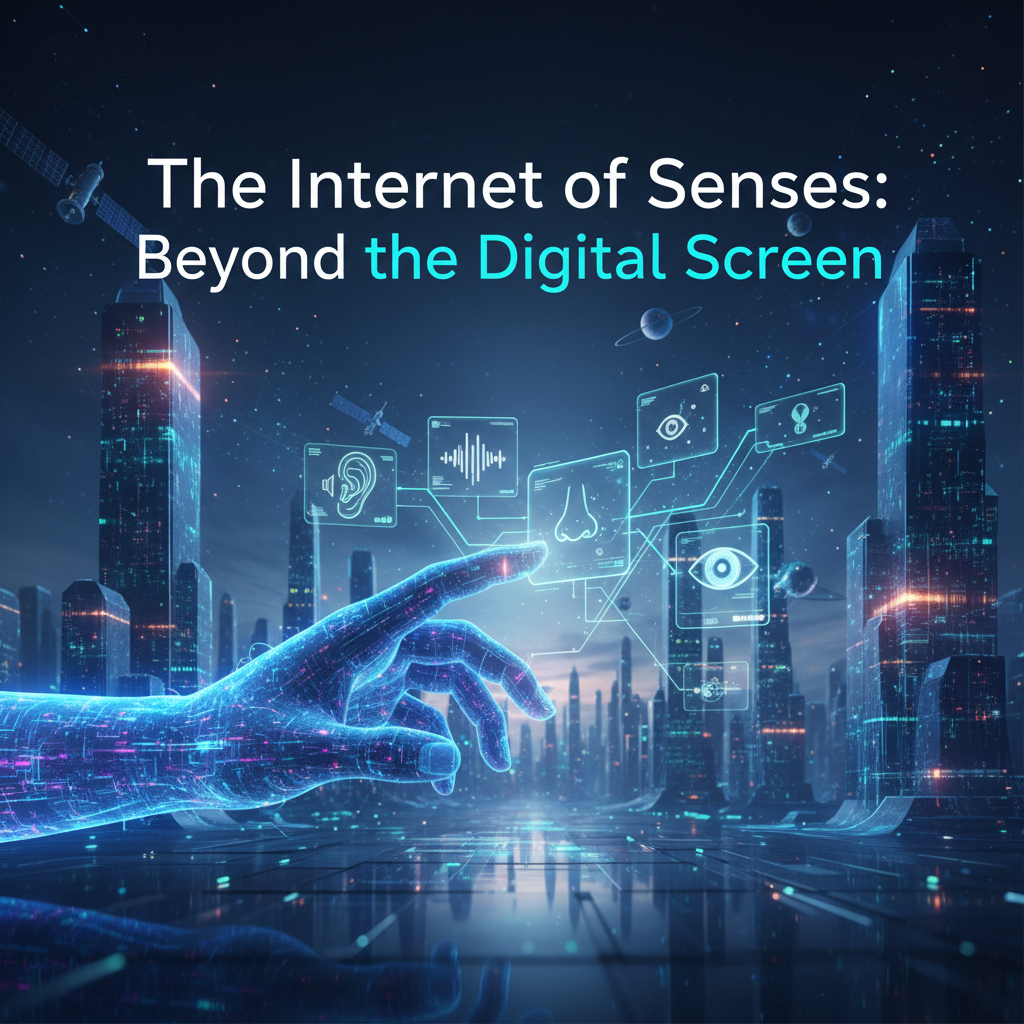
The Internet of Senses: Beyond the Digital Screen
technology-and-ai

The Internet of Senses: Beyond the Digital Screen

Explore how neural interfaces and haptic feedback are evolving to create a fully immersive digital reality where we can touch, smell, and taste across the web.

March 29, 20266-8 minutes

The evolution of the digital landscape has traditionally focused on sight and sound, moving from static text and images to high-definition video and immersive 3D environments. However, as we approach the mid-2020s, the paradigm is shifting toward a more holistic sensory experience known as the Internet of Senses. This technological leap aims to bridge the gap between digital data and physical biological response, allowing users to experience the virtual world through all five human senses.

At the heart of this revolution are non-invasive Brain-Computer Interfaces (BCI) and advanced 6G networks. These technologies work in tandem to transmit sensory information with near-zero latency, enabling the brain to interpret digital signals as physical sensations. By stimulating specific neural pathways, users can feel the texture of a virtual fabric or the warmth of a simulated sun, effectively removing the barrier of the glass screen that has defined the last two decades of computing.

Haptic feedback is also evolving beyond simple vibrations. Next-generation haptic suits and exoskeletons now utilize soft robotics and electro-tactile stimulation to provide resistance and pressure. This allows architects to feel the weight of digital materials during a design session or surgeons to practice complex procedures with the same tactile feedback they would receive in a real operating room. The physical world is no longer the sole domain of touch.

Perhaps more experimental is the digitization of smell and taste. Digital scent technology uses miniaturized cartridges that release precise combinations of aromatic chemicals, synced with visual content. Imagine browsing a travel website and catching the scent of Mediterranean salt air, or attending a digital cooking class where you can actually sample the flavor profile of a dish through specialized gustatory devices. While still in its infancy, these interfaces are completing the sensory loop of immersion.

As we integrate these technologies, we must confront significant ethical questions regarding privacy and sensory manipulation. The ability to bypass external senses and communicate directly with the brain opens doors to unprecedented marketing influence and potential psychological effects. As the line between the physical and digital blurs, the Internet of Senses will redefine what it means to experience reality, requiring a robust framework of sensory rights to protect the sanctity of the human mind.


Share This:
XFBLIWA

Recent Posts

The Dawn of Reasoning: How System 2 AI is Transforming Complex Problem Solving
technology-and-ai

The Dawn of Reasoning: How System 2 AI is Transforming Complex Problem Solving

Alex Sterling
The Paradigm Shift: How On-Device AI is Redefining Privacy and Performance
technology-and-ai

The Paradigm Shift: How On-Device AI is Redefining Privacy and Performance

Elena Vance
The Rise of Agentic AI: Why Workflows are the Next Frontier
technology-and-ai

The Rise of Agentic AI: Why Workflows are the Next Frontier

Jordan Vance
The Dawn of Reasoning Models: Moving Beyond Next-Token Prediction
technology-and-ai

The Dawn of Reasoning Models: Moving Beyond Next-Token Prediction

Marcus Sterling
NeuralinkHapticsFuture TrendsBCIMetaverse

Related Posts

Beyond the Screen: How OpenAI's Sora is Transforming Digital Storytelling
technology-and-ai

Beyond the Screen: How OpenAI's Sora is Transforming Digital Storytelling

2024-05-17
OpenAI Sora: Redefining the Boundaries of AI Video
technology-and-ai

OpenAI Sora: Redefining the Boundaries of AI Video

2024-05-20
The Future of Large Language Models: GPT-5 and the Quest for Artificial General Intelligence
technology-and-ai

The Future of Large Language Models: GPT-5 and the Quest for Artificial General Intelligence

2023-11-20
The Rise of the Humanoids: How AI is Powering the Next Generation of Autonomous Robots
technology-and-ai

The Rise of the Humanoids: How AI is Powering the Next Generation of Autonomous Robots

2024-05-22