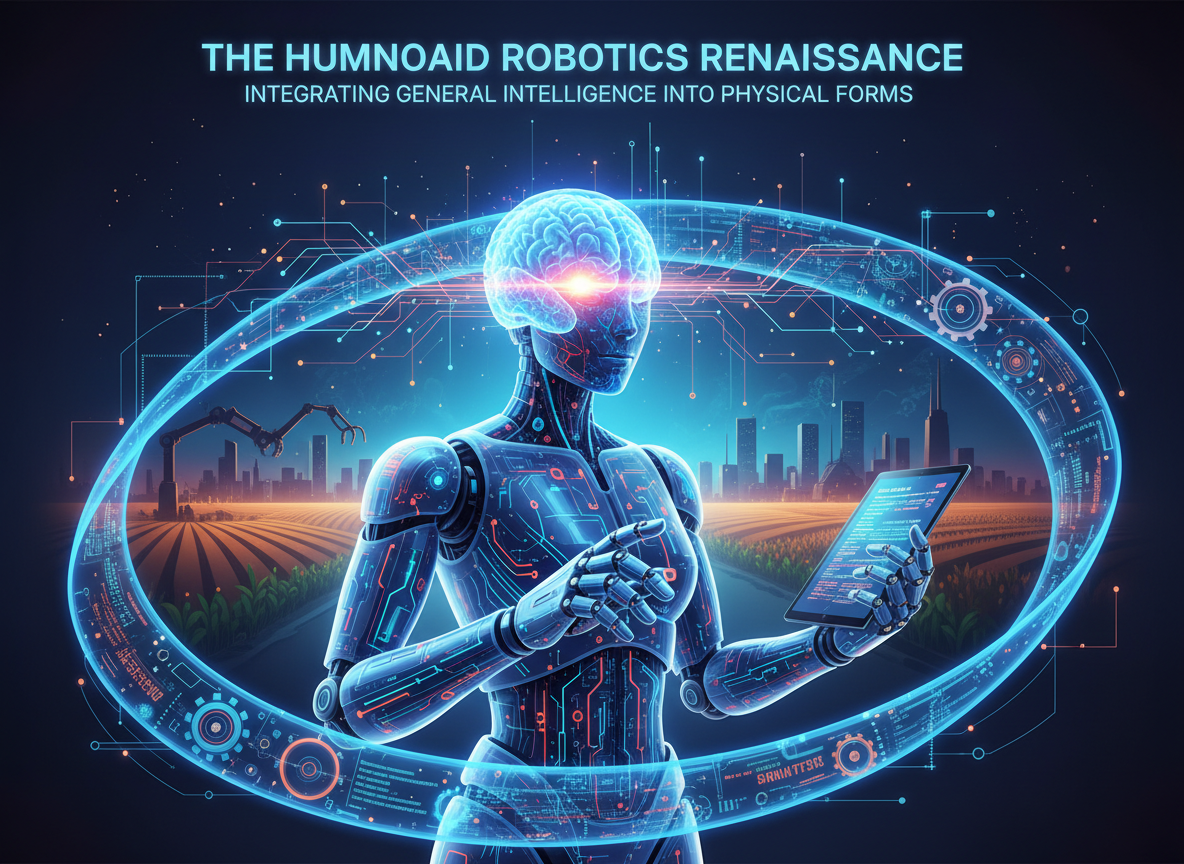
For decades, humanoid robots were largely confined to the realms of science fiction and experimental laboratories. However, a recent convergence of breakthroughs in battery density, actuator precision, and generative AI has ignited a true robotics renaissance. Companies like Figure AI and Tesla are no longer just building machines that can walk; they are creating embodied agents that can perceive their surroundings and perform useful, non-repetitive manual labor in unstructured environments.
Figure AI's recent demonstration of the Figure 01 robot, powered by OpenAI's visual-language models, showcased a level of interaction never before seen in a bipedal machine. The robot was able to describe its environment, reason about why it should perform a specific action, and execute a task—like handing a person an apple—while simultaneously explaining its thought process. This integration of 'brain' and 'body' represents the missing link that will move robots from factory cages into the open world.
Tesla's Optimus Gen 2 has also made significant strides, particularly in its tactile sensing and delicate motor control. By utilizing end-to-end neural networks trained on human movement data, Optimus can now handle fragile objects like eggs without breaking them. Elon Musk's vision of a robot that costs less than a car and can perform any task a human can is quickly moving from a bold claim to a tangible engineering roadmap, with trial deployments already occurring in Tesla's own manufacturing facilities.
The underlying technology driving this physical agility is 'Foundation Models for Motion.' Just as GPT models are trained on the internet's text to understand language, these robotic models are trained on massive datasets of video and teleoperated movements to understand physics. Through reinforcement learning in simulated environments, robots can 'practice' a task millions of times in a matter of hours, learning how to balance, lift, and navigate before they ever take a step in the real world.
This shift toward general-purpose robotics has massive implications for the global economy, particularly in sectors facing chronic labor shortages such as logistics, construction, and elder care. Humanoid robots offer a versatile solution because they are designed to operate in a world built for humans. They can use the same tools, climb the same stairs, and navigate the same doorways as we do, eliminating the need for expensive facility retrofitting that specialized automation typically requires.
However, the transition to a robot-integrated society is not without its hurdles. Power efficiency remains a major challenge, as current humanoid designs struggle to operate for more than a few hours on a single charge. Developing high-torque, low-power actuators and more efficient cooling systems is critical for making these machines commercially viable for full work shifts. Additionally, the high initial cost of production must be brought down through massive economies of scale.
Safety is another critical area of research, as a 300-pound metal machine operating in close proximity to humans poses inherent risks. Modern humanoids are being equipped with 'soft' actuators and comprehensive sensor suites that allow them to detect and respond to human presence instantly. This ensures that any accidental contact is minimized, and the robot can immediately enter a safe state, fostering a collaborative rather than a hazardous environment.
As we move into the late 2020s, the focus will likely shift from basic locomotion to 'semantic intelligence'—the ability for a robot to understand not just what a task is, but why it is doing it and how to prioritize in a complex setting. The dream of a general-purpose robotic assistant is finally within reach, and its realization will likely be remembered as one of the most significant technological achievements of the 21st century, fundamentally changing our relationship with labor and technology.