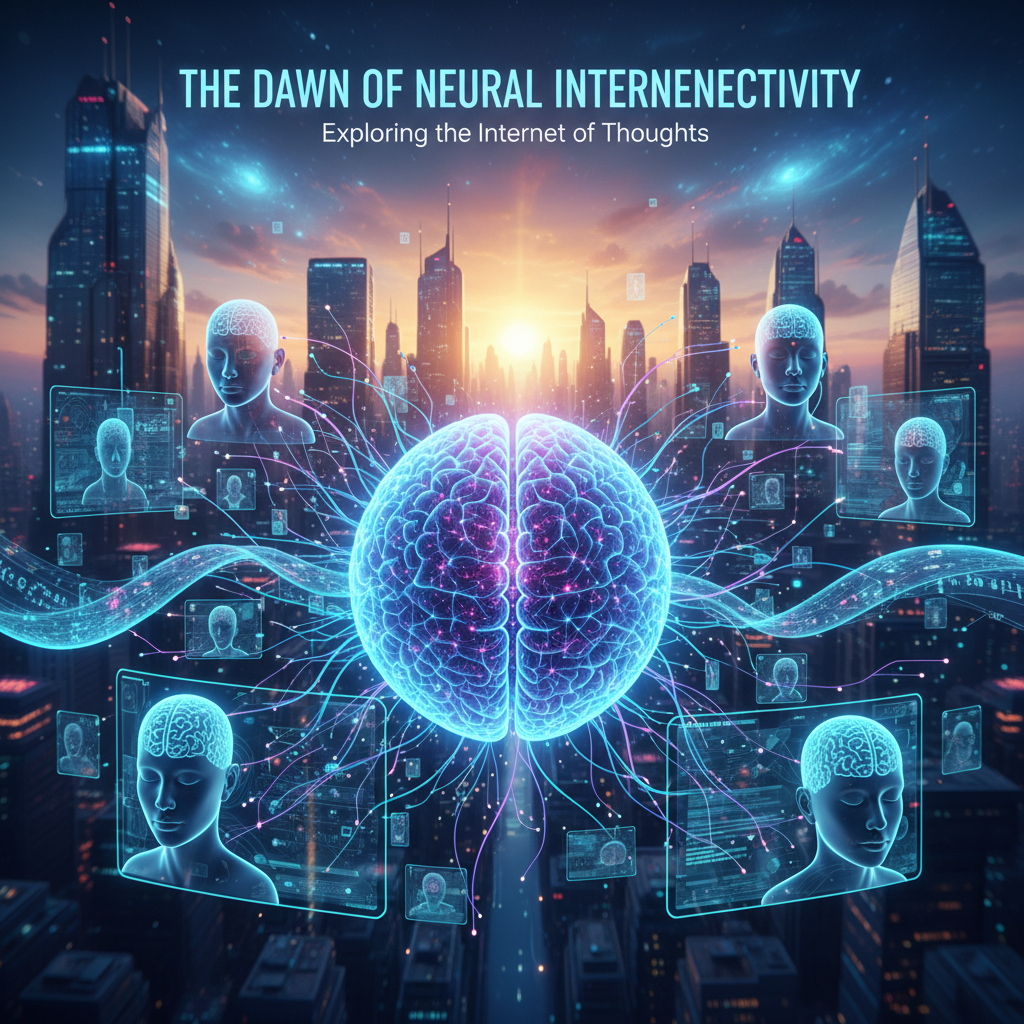
In the mid-2020s, the concept of a Brain-Computer Interface (BCI) was largely confined to medical trials and niche research. However, as we approach the twilight of the decade, the landscape has shifted toward a seamless integration of thought and digital action. This transition marks the birth of what researchers are calling the 'Internet of Thoughts' (IoT 2.0), a network where information is exchanged at the speed of synaptic firing.
Recent breakthroughs in non-invasive neural sensors have allowed for high-fidelity signal processing without the need for surgical implants. Using a combination of near-infrared spectroscopy and high-density EEG, consumer-grade wearables can now interpret complex motor intents and linguistic patterns. This eliminates the 'bottleneck' of physical input devices like keyboards or voice commands, enabling users to navigate virtual spaces or compose messages by simply conceptualizing the intent.
The implications for immersive experiences are profound. In the realm of virtual and augmented reality, neural feedback loops allow the environment to adapt in real-time to a user's emotional state. If the system detects cognitive load is too high, it can automatically simplify the UI; if it senses boredom, it can introduce more stimulating elements. This creates a deeply personalized digital existence where the line between the self and the software begins to blur.
Ethical considerations, however, remain at the forefront of the discussion. The ability to read neural data brings unprecedented risks regarding cognitive privacy and 'brain-jacking'. Security protocols for neural interfaces must be robust enough to prevent unauthorized access to one's sensory inputs or, more alarmingly, their subconscious thoughts. Regulatory bodies are currently debating the 'Neural Bill of Rights' to protect cognitive liberty in this hyper-connected era.
As we look toward the 2030s, the synergy between artificial intelligence and human cognition will likely become the standard for professional and creative endeavors. We are no longer just users of technology; we are becoming extensions of it. The Internet of Thoughts is not just a new way to browse the web—it is the next evolutionary step in human communication.