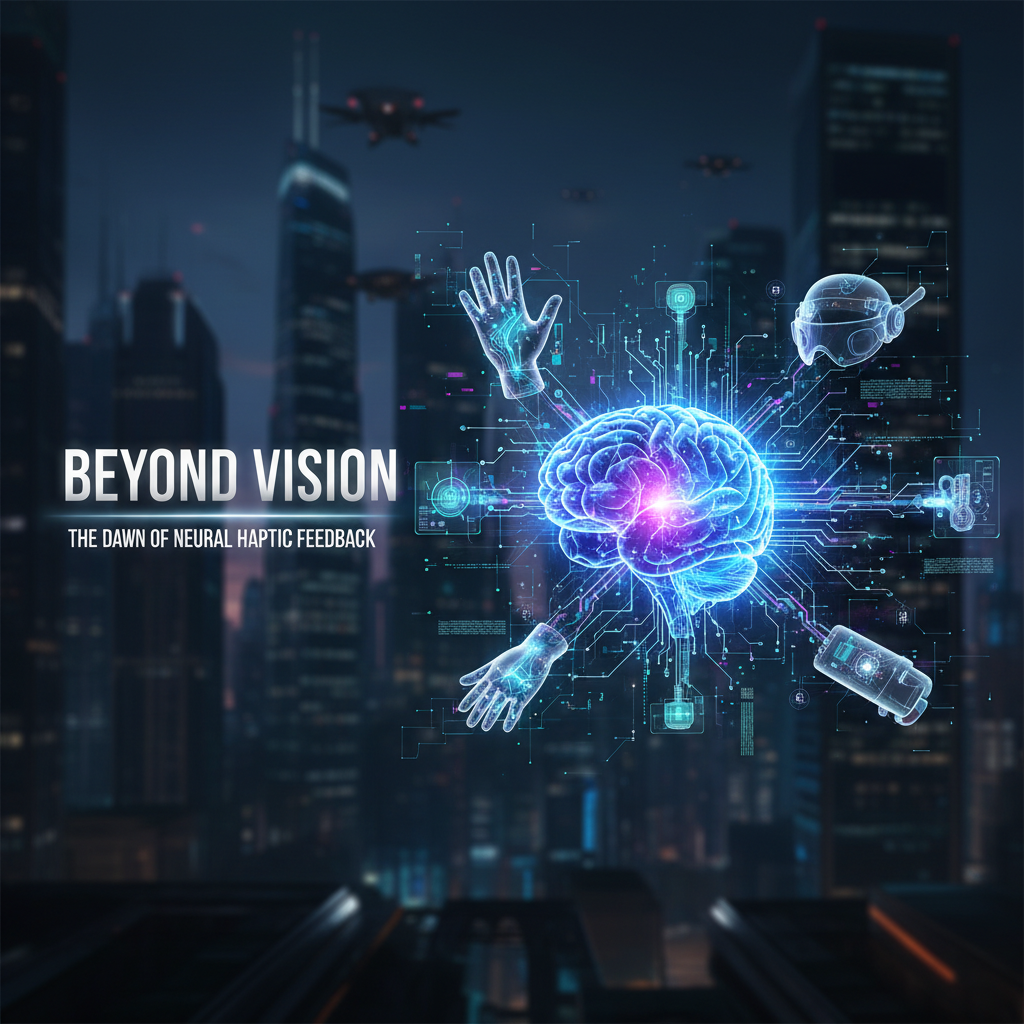
In the mid-2020s, the dream of a truly immersive digital world was often limited by the visual and auditory boundaries of our headsets. While high-resolution displays and spatial audio provided a convincing sense of presence, the touch barrier remained the final frontier. Today, we are witnessing a paradigm shift as neural haptic feedback moves from clinical trials to mainstream integration.
Unlike traditional haptic gloves that rely on physical actuators or vibrations against the skin, neural haptics interface directly with the nervous system. By utilizing non-invasive transcutaneous electrical nerve stimulation calibrated by machine learning algorithms, hardware can now simulate the resistance of a digital object or the texture of a virtual fabric directly within the brain's sensory cortex.
The implications for this technology extend far beyond gaming and entertainment. In the field of remote surgery, specialists can now feel the tension of a suture or the density of tissue from thousands of miles away, providing a level of precision previously thought impossible. Similarly, in industrial design, engineers can physically manipulate holographic prototypes, sensing structural weaknesses through simulated tactile resistance.
However, this leap forward brings significant ethical and privacy concerns. As we bridge the gap between biological signals and digital data, the security of our sensory perceptions becomes paramount. Developers are now grappling with sensory encryption to ensure that the neural pathways used for digital touch cannot be exploited or manipulated by unauthorized third parties.
As we look toward the 2030s, the line between the physical and the digital continues to blur. Neural haptics are not just a peripheral enhancement; they are the bridge to a multi-sensory internet where experiences are felt as much as they are seen. The evolution of this technology marks the beginning of an era where digital distance no longer equates to a lack of physical connection.