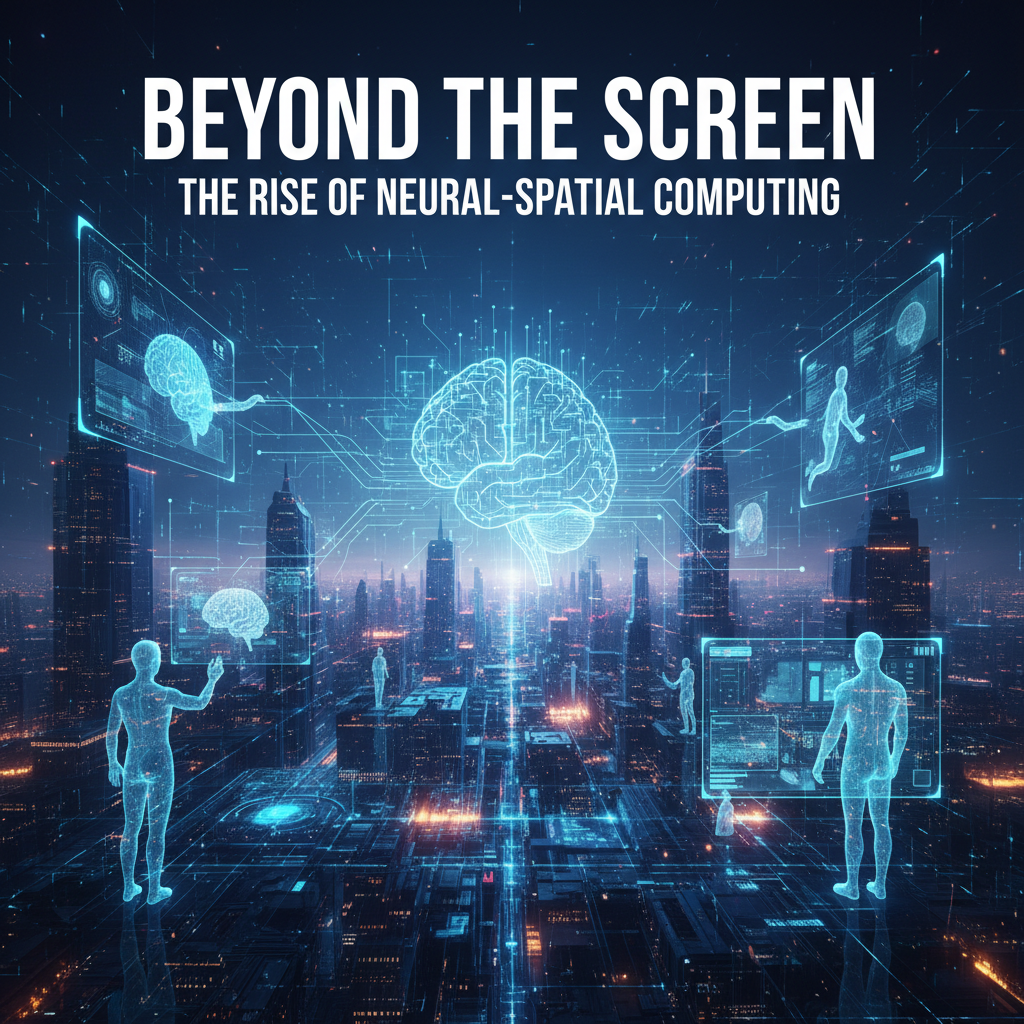
As we cross the threshold into 2026, the traditional boundaries of hardware are dissolving. The shift from mobile-first to spatial-first computing is being accelerated by the sudden commercial viability of high-fidelity Neural Interfaces. No longer restricted to medical applications, these non-invasive BCI (Brain-Computer Interface) headbands are beginning to synchronize with spatial operating systems, allowing users to manipulate 3D environments with thought-intent alone.
The core of this revolution lies in the latency-free translation of neurological signals into digital commands. By bypassing physical input devices like controllers or even hand-tracking cameras, neural-spatial computing provides an unparalleled level of immersion. In this new ecosystem, the 'interface' is no longer something you look at, but something you inhabit. Digital objects respond to cognitive focus, and data visualizations can be restructured with a mere mental shift, creating a truly symbiotic relationship between mind and machine.
However, this leap forward brings significant ethical considerations. The democratization of neural data raises urgent questions regarding cognitive liberty and data privacy. As these devices become as ubiquitous as smartphones, industry leaders are calling for a 'Neural Bill of Rights' to protect the sanctity of internal thought. Despite these hurdles, the potential for accessibility and creative expression is boundless, marking the beginning of an era where our digital and biological realities are inextricably linked.