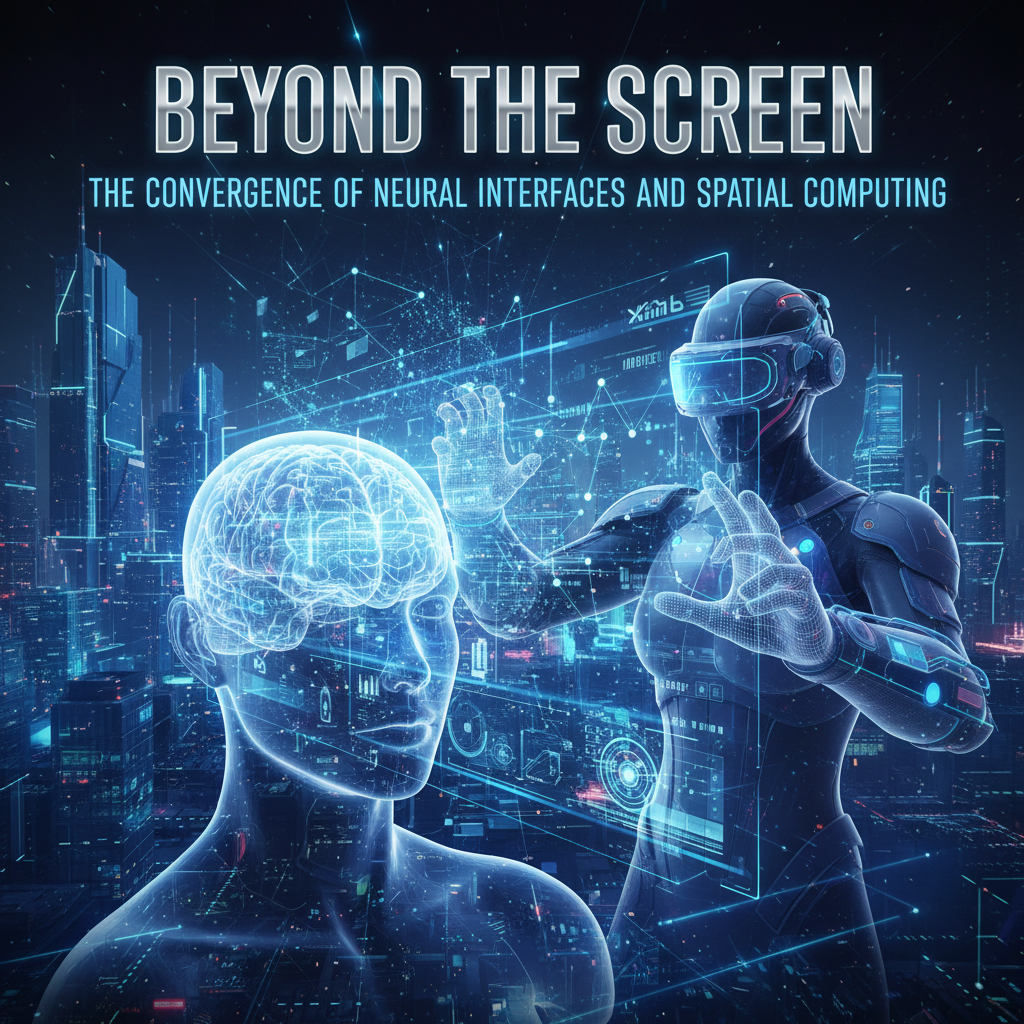
The dawn of 2026 has brought about a paradigm shift in how we perceive the boundary between the physical and digital realms. No longer confined to the glass panes of smartphones or the bulky headsets of the early 2020s, the next frontier of human-computer interaction is being written directly into our neural pathways. Spatial computing has evolved from simple augmented reality overlays into fully immersive environments that react not just to our gestures, but to our intent.
The breakthrough lies in non-invasive neural interfaces that utilize high-fidelity electroencephalography sensors embedded in everyday wearables. These devices can now decode motor cortex signals with near-zero latency, allowing users to manipulate digital objects in three-dimensional space as naturally as they would move their own limbs. This synergy between the mind and the machine is dismantling the traditional user interface, replacing menus and buttons with intuitive thought-based commands.
Furthermore, the implications for accessibility and remote collaboration are profound. Imagine a world where physical distance and motor impairments are no longer barriers to productivity or social connection. Professionals across the globe are already using these technologies to co-design complex architectural structures in shared virtual voids, feeling the haptic feedback of digital materials through neural stimulation. As we look toward the end of the decade, the integration of AI-driven predictive modeling within these neural loops promises to make our digital extensions feel less like tools and more like a second nature.