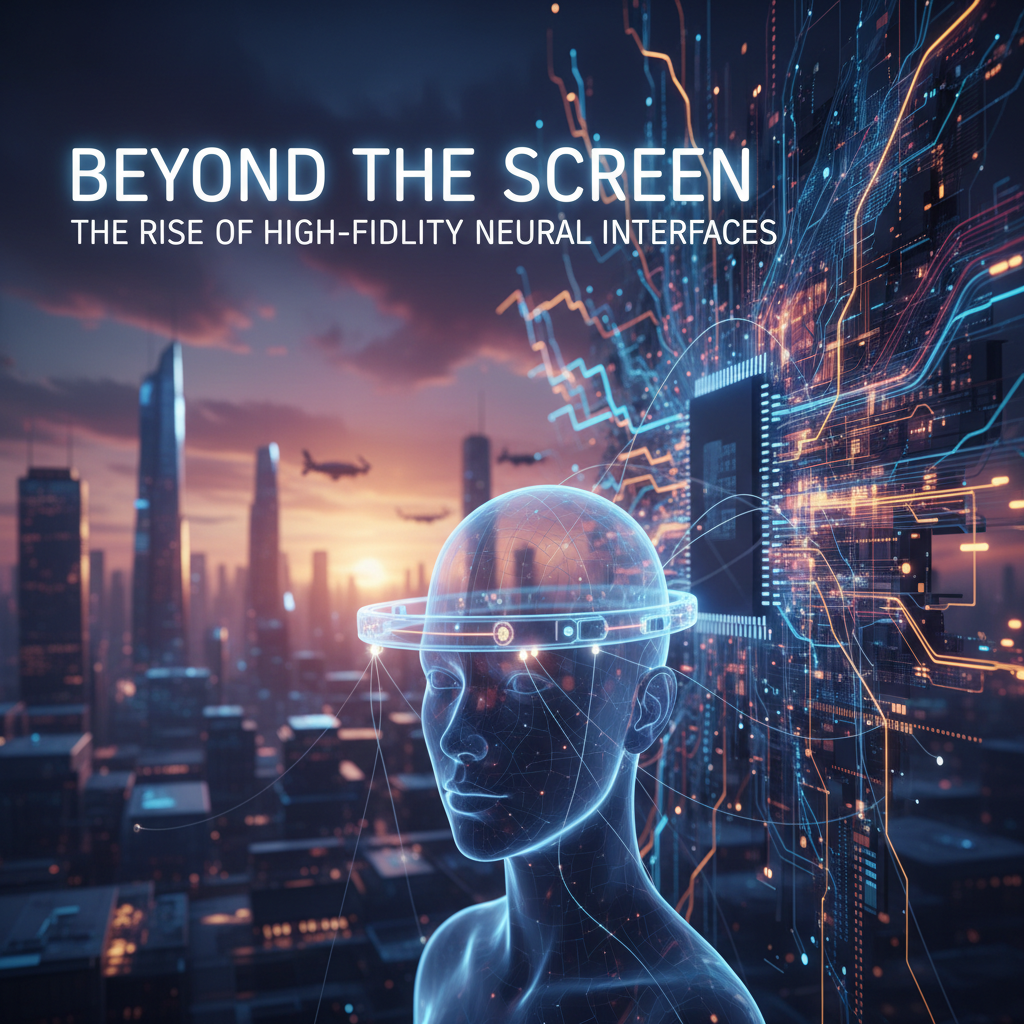
For decades, the keyboard and mouse served as the primary conduits between human intent and machine execution. However, we are entering an era where these physical intermediaries are becoming obsolete. High-fidelity neural interfaces (BCIs) are moving from the realm of clinical trials into consumer-ready ecosystems, promising a seamless integration of thought and digital reality.
Recent breakthroughs in signal processing and graphene-based electrodes have significantly reduced the noise-to-signal ratio, allowing for granular control over virtual environments without the need for invasive surgery. These devices can now interpret motor intent with millisecond latency, enabling users to navigate complex 3D spaces or manipulate robotic limbs as naturally as their own biological counterparts.
The implications for immersive experiences are profound. In the gaming and professional visualization sectors, the sense of presence—the feeling of truly being inside a digital space—is reaching near-perfect levels. When the brain receives haptic feedback directly through neural pathways, the distinction between the physical and the virtual begins to blur, opening up new frontiers for remote collaboration and digital tourism.
Ethical considerations, however, remain at the forefront of the conversation. As we bridge the gap between mind and machine, questions regarding data privacy, neural sovereignty, and the potential for cognitive augmentation come into sharp focus. Developers and regulators must work in tandem to ensure that this technology empowers humanity while protecting our most private domain: our thoughts.
Looking ahead to the next decade, the convergence of AI-driven decoding and neural hardware suggests a future where communication transcends language. Direct thought-to-thought interfaces and shared cognitive workspaces could redefine what it means to collaborate, effectively turning the internet into a collective extension of the human mind.