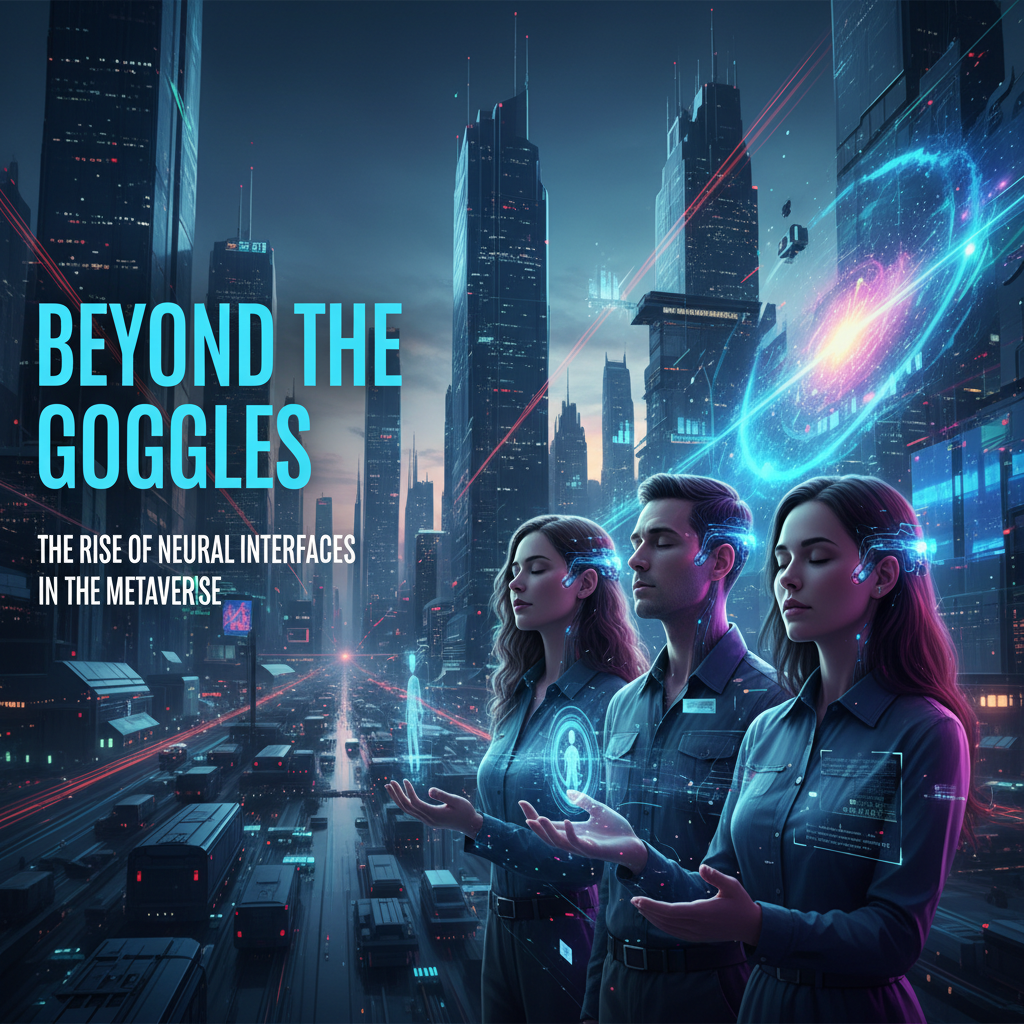
The transition from two-dimensional screens to three-dimensional environments was only the beginning of our digital evolution. For years, we have relied on heavy headsets and haptic gloves to bridge the gap between our physical bodies and virtual spaces. However, the year 2026 marks a pivotal shift toward neural interfacing, where the hardware disappears and the interface becomes the mind itself.
Neuro-linkage technology has progressed from experimental medical applications to consumer-grade cognitive peripherals. By utilizing high-density EEG sensors and non-invasive trans-cranial magnetic stimulation, users can now navigate complex digital landscapes with nothing more than a focused thought. This 'silent communication' removes the latency inherent in physical movement, allowing for an instantaneous interaction that feels more like dreaming than gaming.
The implications for the Metaverse are profound. In these neuro-responsive environments, the sense of 'presence' is no longer simulated through ocular trickery but through direct sensory substitution. We are seeing the first generation of users who can 'feel' the texture of virtual objects or 'smell' the digital rain of a simulated rainforest. This level of immersion is fundamentally changing how we define experience, blurring the lines between what is synthesized and what is real.
Of course, this leap forward brings significant ethical challenges. The harvesting of neural data—often referred to as 'thought-logging'—poses a privacy risk unlike any we have seen before. When a machine can interpret your subconscious reactions to a digital stimulus, the concept of a private inner life becomes fragile. Regulatory bodies are currently racing to establish 'Neuro-Rights' to protect individuals from unauthorized cognitive profiling by corporations.
As we look toward the end of the decade, the integration of Artificial General Intelligence with neural interfaces suggests a future of collective intelligence. We are moving toward a symbiotic relationship with our tools, where the distinction between human intent and machine execution becomes invisible. The goggles were just a prototype for a much deeper connection that is finally beginning to take shape.