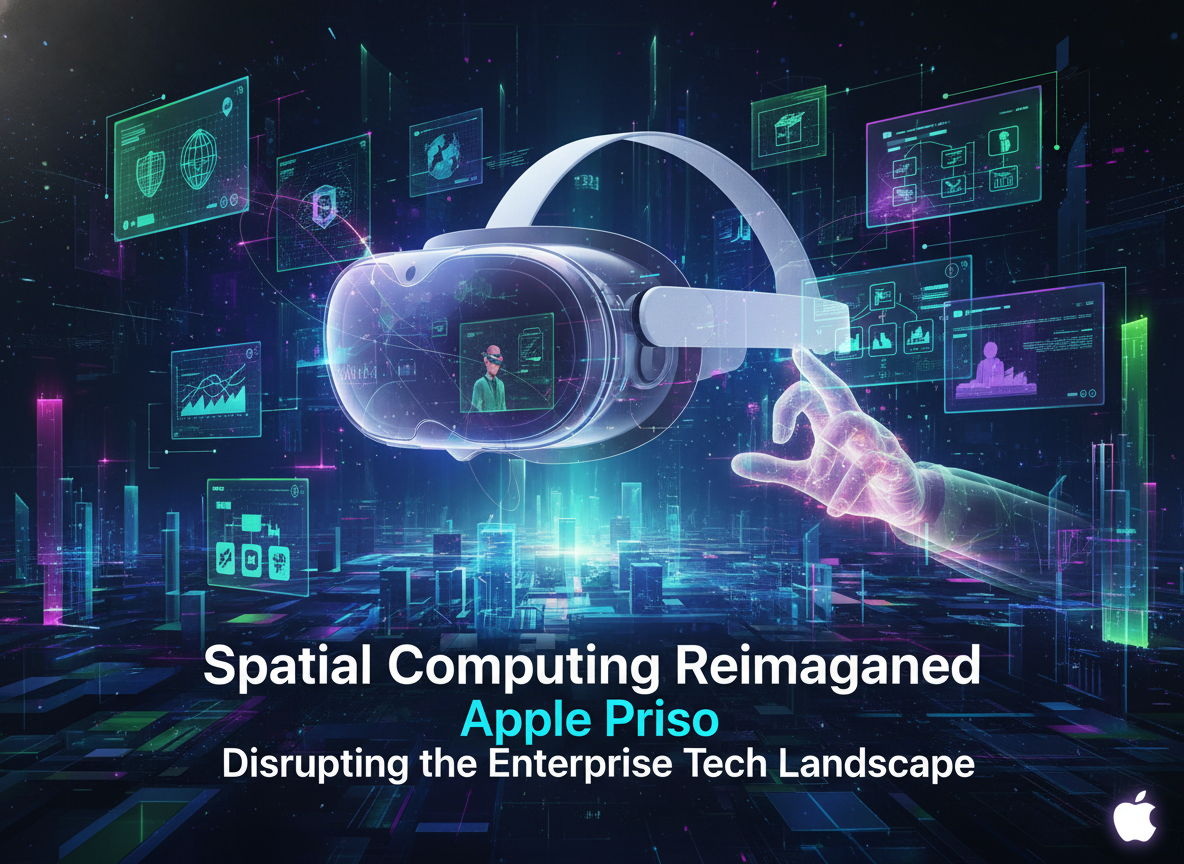
Apple's entry into the wearable headset market with the Vision Pro has officially moved spatial computing from the realm of science fiction into the everyday reality of the enterprise. By blending digital content with the physical world, the Vision Pro offers a level of immersion that traditional monitors and mobile devices simply cannot match. This disruption is most visible in the professional sector, where the ability to manipulate 3D models, visualize data in a physical space, and collaborate in lifelike virtual environments is fundamentally changing the way high-level work is conducted. Apple's 'infinite canvas' approach allows users to break free from the constraints of physical screens.
The heart of this revolution is visionOS, an operating system designed from the ground up to support three-dimensional interactions. Unlike previous VR headsets that felt isolated, the Vision Pro uses advanced pass-through technology to ensure the user remains grounded in their environment. This is critical for professional settings where eye contact and social presence are necessary for effective teamwork. By utilizing eye-tracking and hand-gestures as the primary interface, Apple has eliminated the need for clunky controllers, making the interaction with digital objects feel as intuitive as interacting with physical ones in a room.
In industries like healthcare and surgical training, the impact of spatial computing is already proving to be life-saving. Surgeons can now use the Vision Pro to view high-resolution 3D reconstructions of a patient's anatomy during pre-operative planning or even during procedures to overlay vital data directly into their field of view. This level of precision reduces errors and improves patient outcomes, showcasing the device's potential as a specialized medical tool. The high-fidelity display, boasting more pixels than a 4K TV for each eye, ensures that every detail is visible with clinical clarity, setting a new benchmark for medical imaging technology.
The architectural and design sectors are also undergoing a massive transformation thanks to the Vision Pro's spatial capabilities. Architects can now walk through their blueprints at a 1:1 scale before a single brick is laid, allowing them to spot design flaws and aesthetic inconsistencies that would be invisible on a 2D screen. Clients can be taken on virtual tours of their future homes or office buildings, providing a visceral sense of space and light that traditional renders fail to capture. This immersive feedback loop accelerates the design process and significantly reduces the need for expensive physical prototypes and revisions.
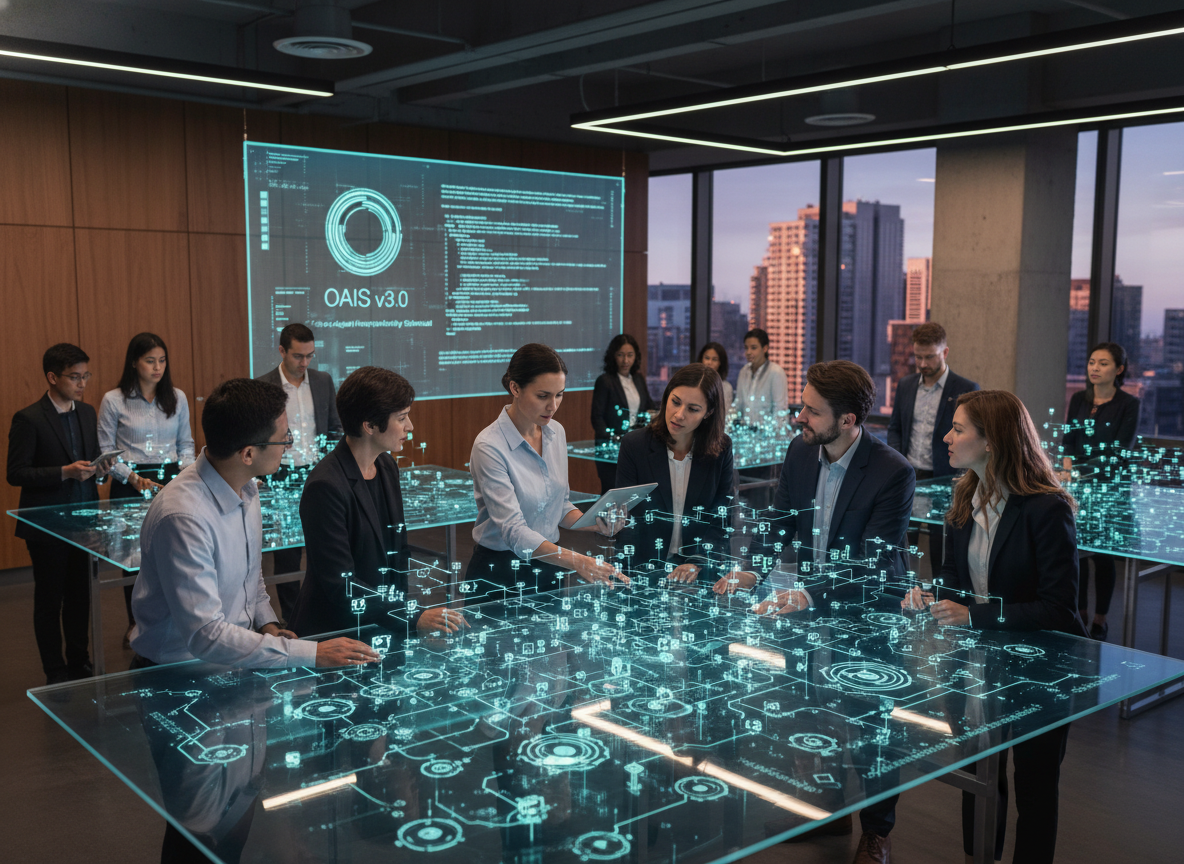
Remote work and global collaboration are being redefined through the use of spatial Personas. Unlike a flat video call on a laptop, a Vision Pro Persona allows users to see their colleagues as realistic 3D avatars that appear to be sitting in the same physical space. This creates a sense of 'co-presence' that fosters better communication and team bonding. For global companies, this means the end of the traditional 'Zoom fatigue' as interactions become more natural and less taxing on the brain. The ability to share and manipulate 3D objects in real-time within these calls further enhances the collaborative experience for engineers and creative teams.
From a hardware perspective, the Vision Pro is a masterclass in engineering, featuring a dual-chip design with the M2 and R1 processors. The R1 chip is specifically dedicated to processing input from 12 cameras, five sensors, and six microphones to ensure that content feels as if it is appearing right in front of the user's eyes in real-time. This nearly lag-free experience is what separates the Vision Pro from its competitors, providing a level of comfort that prevents the motion sickness often associated with head-mounted displays. This technical superiority is why enterprise clients are willing to overlook the premium price tag in favor of a reliable and high-performance solution.
The developer ecosystem around visionOS is growing at an exponential rate, with thousands of apps already optimized for spatial computing. Major software providers like Microsoft, Adobe, and SAP have integrated their core business tools into the platform, ensuring that the Vision Pro is a productive device out of the box. Whether it is managing complex spreadsheets in a 180-degree virtual environment or editing high-definition video on a massive virtual screen while on a plane, the versatility of the device is its greatest asset. As more developers explore the possibilities of 'spatial' UI, we can expect a new wave of innovative applications that we haven't even imagined yet.
Looking ahead, the Vision Pro is merely the first step in Apple's long-term strategy to replace the traditional computer. While the current model is a high-end 'Pro' device, it paves the way for future versions that will be lighter, more affordable, and more integrated into our daily lives. The shift toward spatial computing represents a major turning point in the history of human-computer interaction, where the screen finally disappears and the world itself becomes our interface. For businesses and tech enthusiasts, the message is clear: the future of work is not flat, and those who embrace spatial technology now will be the leaders of tomorrow.