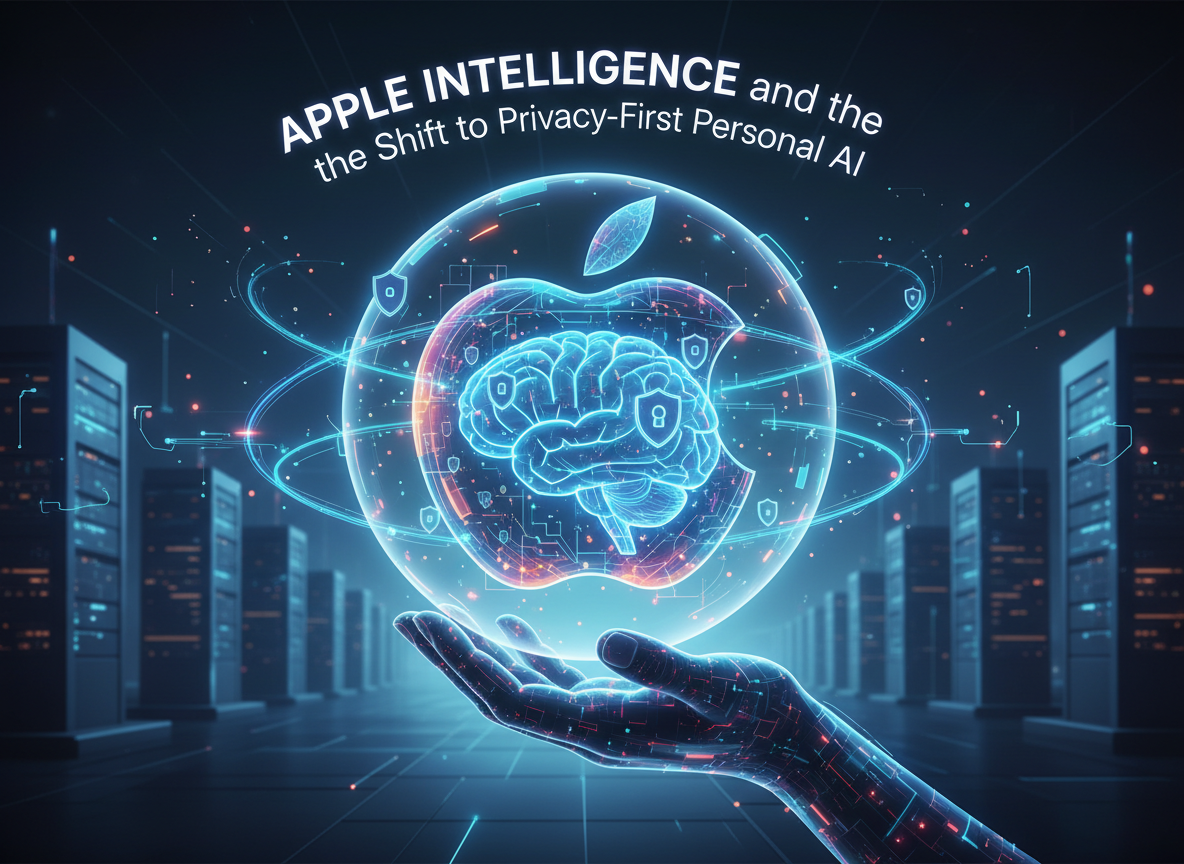
The tech world was recently captivated by the unveiling of 'Apple Intelligence,' a deeply integrated AI system designed for iPhone, iPad, and Mac. While competitors have focused on massive, cloud-based models, Apple has taken a distinct path by emphasizing on-device processing and personal context. This approach aims to provide the benefits of advanced generative AI without compromising the stringent privacy standards that have become a core pillar of the Apple brand identity.
At the heart of Apple Intelligence is the ability for the system to understand the user's personal data across various apps—emails, calendar events, messages, and photos—without ever uploading that data to a central server. By leveraging the powerful Neural Engine in Apple's silicon chips, the device can perform complex tasks like summarizing long email threads or creating custom 'Genmojis' locally. This not only ensures data security but also results in significantly lower latency compared to cloud-reliant alternatives.
For tasks that require more computational power than a handheld device can provide, Apple introduced 'Private Cloud Compute.' This innovative infrastructure uses dedicated Apple Silicon servers designed with the same security properties as the iPhone. When a request is sent to the cloud, the data is never stored or made accessible to Apple, and the code running on the servers is publicly verifiable by independent security researchers, setting a new industry benchmark for cloud AI transparency.
The transformation of Siri is perhaps the most visible aspect of this new AI strategy. Long criticized for its limitations, the new Siri features enhanced natural language understanding and 'onscreen awareness.' It can now follow complex commands that span multiple apps, such as 'Send the photos from Saturday's barbecue to my brother.' This level of deep integration is made possible because the AI understands the relationships between the entities on the screen and the user's intent.
Apple's partnership with OpenAI to integrate ChatGPT-4o as an optional feature represents a pragmatic move to offer world-class general knowledge alongside its specialized personal AI. Users are prompted before any request is sent to ChatGPT, and their IP addresses are obscured to ensure anonymity. This modular approach allows Apple to provide the best of both worlds: highly secure, personal assistance for daily tasks and a powerful external engine for creative writing and global information.
The design philosophy behind Apple Intelligence also focuses heavily on 'meaningful' AI features rather than novelty. Tools like 'Image Wand' in the Notes app, which can turn a rough sketch into a polished illustration, or the 'Clean Up' tool in Photos for removing distracting objects, are designed to solve real-world user frustrations. This focus on utility over hype is intended to make AI an invisible but indispensable part of the user experience, rather than a standalone gimmick.
Developers are also being given unprecedented access to these new capabilities through a suite of updated APIs. This allows third-party apps to tap into the system's ability to understand language and images, enabling a whole new class of 'intelligent' applications. By providing these tools at the system level, Apple is effectively raising the floor for app functionality, ensuring that even small developers can offer advanced AI features to their users.
As the rollout of Apple Intelligence begins, the broader industry is watching closely to see if this 'privacy-first' model can compete with the raw power of more data-hungry systems. If successful, Apple will have proved that the future of AI doesn't have to be a trade-off between capability and confidentiality. This could lead to a significant paradigm shift in how all consumer electronics companies approach machine learning, making privacy the default state rather than an afterthought.