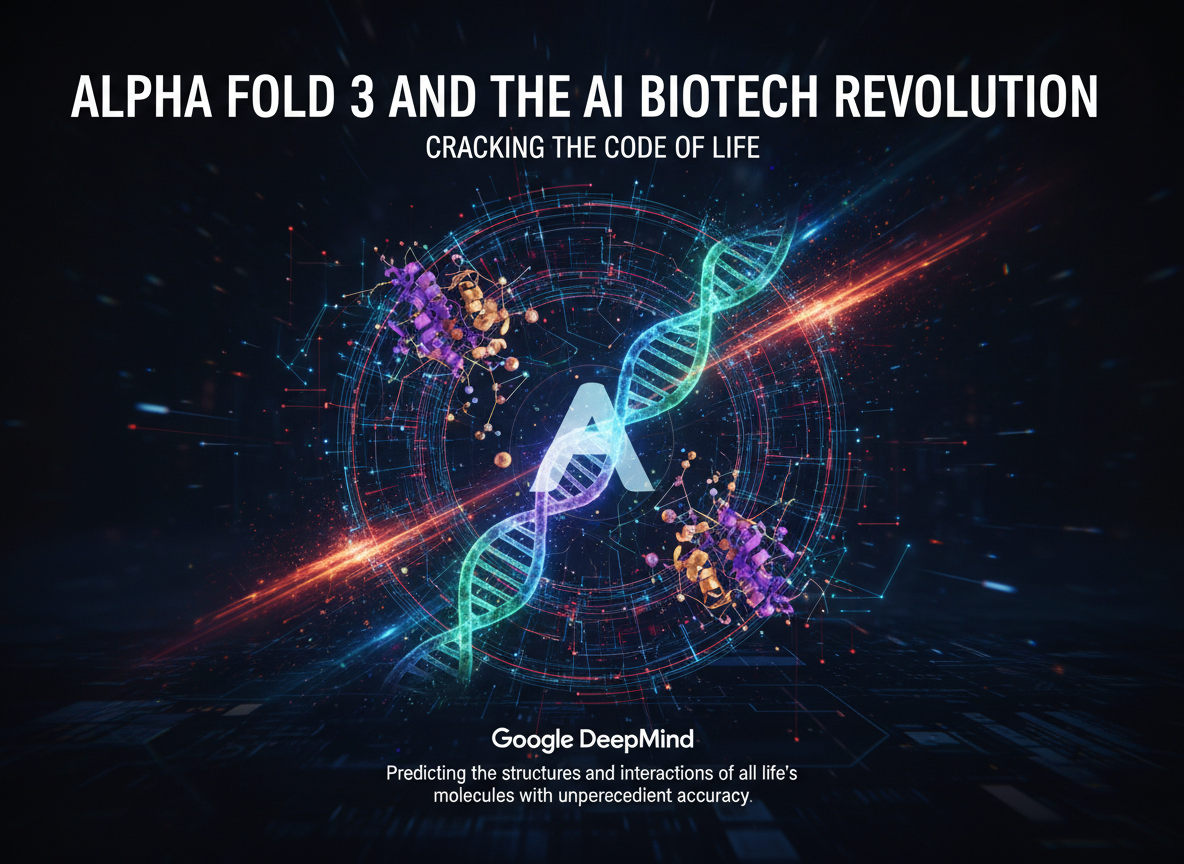
The intersection of artificial intelligence and biology has reached a historic milestone with the release of AlphaFold 3 by Google DeepMind. While its predecessor famously solved the 'protein folding problem,' AlphaFold 3 goes significantly further by predicting the structures and interactions of all of life's molecules, including DNA, RNA, and ligands. This capability is essentially a 'Google Maps' for the microscopic world, allowing scientists to see how different biological components fit together and interact. By understanding these complex relationships, researchers can unlock new treatments for diseases that were previously considered untreatable, moving us closer to an era of truly personalized medicine.
Traditional drug discovery is a notoriously slow and expensive process, often taking over a decade and billions of dollars to bring a single drug to market. A major bottleneck has been the trial-and-error method of finding molecules that can effectively bind to target proteins. AlphaFold 3 changes this dynamic by allowing for 'in silico' testing—simulating these interactions on a computer before ever stepping into a wet lab. This predictive power could slash years off the development timeline, potentially saving millions of lives by accelerating the delivery of vaccines and therapies for emerging global health threats.
The impact on genomics is equally profound. By accurately predicting how proteins interact with DNA and RNA, AlphaFold 3 is helping scientists understand the fundamental mechanisms of gene expression and regulation. This is critical for developing gene-editing technologies like CRISPR, as it allows researchers to predict the 'off-target' effects of their edits with much higher precision. The ability to model the entire molecular machinery of a cell in high definition is a dream realized for biologists, providing a foundational tool that will underpin decades of future research.
Beyond healthcare, the AI biotech revolution is poised to address environmental challenges. Scientists are using AlphaFold to design synthetic enzymes that can break down plastics more efficiently or capture carbon dioxide from the atmosphere. By engineering biology to perform specific industrial tasks, we can create more sustainable manufacturing processes and reduce our reliance on petrochemicals. The versatility of these AI-designed biological tools is limited only by our imagination, opening up new possibilities for the bio-economy.
However, the power to design and manipulate biological systems also brings significant biosecurity risks. There are concerns that such advanced tools could be misused to design more potent pathogens or toxins. This has sparked a global debate on the 'openness' of biological AI models. While DeepMind has released many of its findings, it has also implemented restrictions on certain capabilities of AlphaFold 3 to prevent misuse. Balancing the need for scientific transparency with the necessity of global security will be one of the most difficult policy challenges of the coming decade.
The democratization of high-level biology is another key outcome of this technology. Previously, only the most well-funded labs had access to the cryo-electron microscopy and X-ray crystallography needed to determine molecular structures. Now, a researcher with a standard internet connection can access these insights through DeepMind's web portal. This levels the playing field for scientists in developing nations, fostering a more global and inclusive scientific community. We are seeing a surge in collaborative projects that span continents, all powered by shared AI resources.
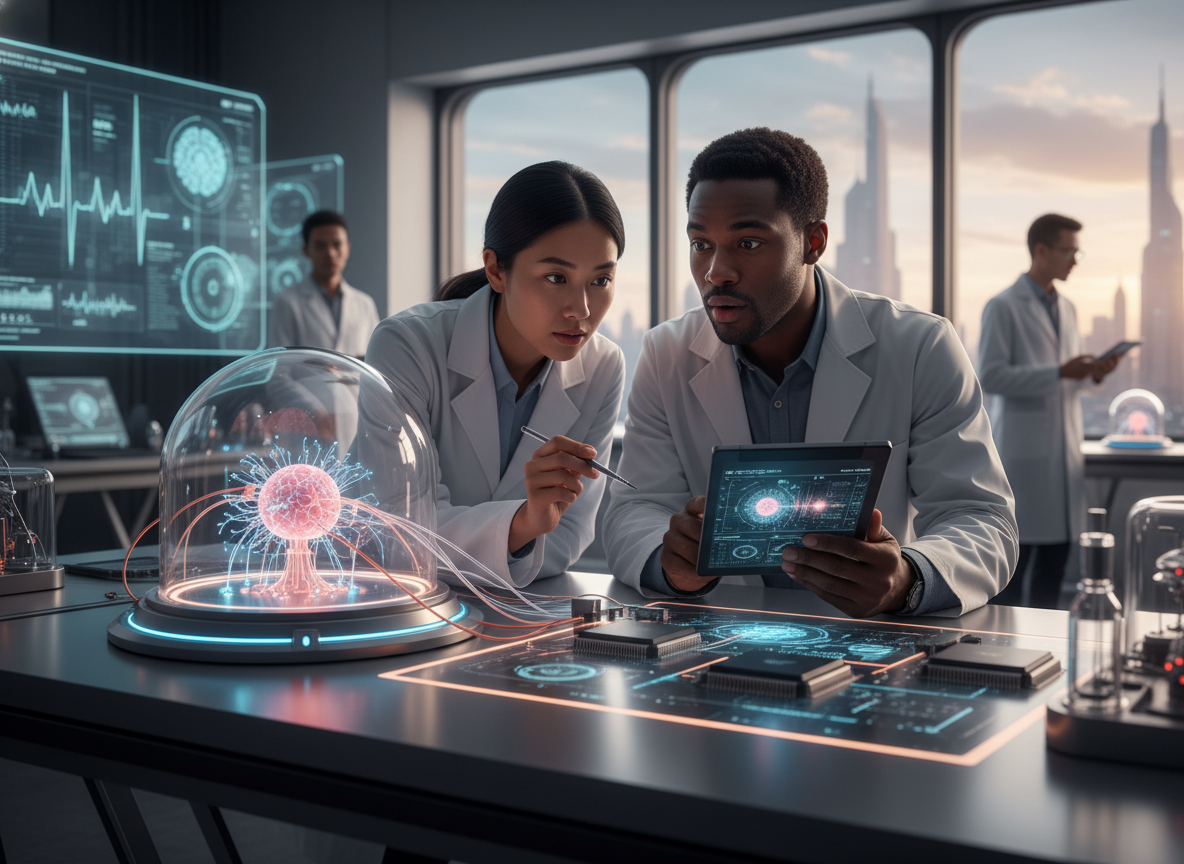
The role of the 'AI-driven lab' is the next logical step in this evolution. We are seeing the rise of 'robotic clouds' where AI models not only design the experiments but also instruct robotic arms to carry them out. This closed-loop system can run thousands of experiments 24/7, learning from each failure and success to optimize biological designs at a pace no human team could match. The shift from manual pipetting to automated AI discovery is as significant as the transition from hand-weaving to the industrial loom.
As we stand at the dawn of the AI-powered biological age, the potential for human benefit is staggering. From curing rare genetic disorders to reversing the effects of aging, the tools we are building today will redefine what it means to be healthy. The journey from AlphaFold 1 to AlphaFold 3 has been remarkably swift, and if this trajectory continues, the next decade of biotechnology will be characterized by a shift from 'searching' for solutions to 'designing' them. The code of life has been cracked, and we are now learning how to write it for the better.